
Amazon Black Hat Tactics Unveiled: What’s at Stake and How to Play It Safe
Introduction
Selling on Amazon offers enormous opportunities, but it also comes with strict policies. While many sellers grow their businesses using ethical and compliant strategies, some try to manipulate the system using what are known as Amazon Black Hat tactics. Understanding these tactics is important—not to use them, but to avoid them. Engaging in black hat practices can lead to listing suspension, account deactivation, financial loss, and even permanent bans.
However, in this blog, we’ll break down what Amazon Black Hat tactics are, common examples, why sellers use them, and the serious risks involved.
What Are Amazon Black Hat Tactics?
Amazon Black Hat tactics refer to unethical, deceptive, or policy-violating methods used by sellers to gain an unfair advantage on the platform.
These tactics are designed to:
- Manipulate rankings
- Inflate reviews
- Sabotage competitors
- Bypass Amazon’s rules
- Artificially increase sales or visibility
While they may deliver short-term results, they almost always lead to long-term consequences.
Here are some of the most common black hat strategies used by unethical sellers:
1. Fake or Incentivized Reviews
One of the most common violations is generating fake positive reviews.
This includes:
- Paying people to leave 5-star reviews
- By offering refunds or free products in exchange for reviews
- Using multiple fake buyer accounts
- Joining review exchange groups
Also amazon has strict review policies, and violating them can result in immediate listing removal.
2. Review Manipulation and Review Hijacking
Some sellers try to:
- Merge unrelated listings to inherit positive reviews
- Change a product after gaining reviews (known as “review hijacking”)
- Use bots to upvote helpful reviews
This misleads customers and violates Amazon’s product detail page policies.
3. Keyword Stuffing
Keyword stuffing involves adding irrelevant or excessive keywords in:
- Product titles
- Bullet points
- Backend search terms
Even Some sellers insert competitor brand names into backend fields to appear in their search results. That is against Amazon’s policies and can result in suppression.
4. Click Farms and Rank Manipulation
Some sellers use click farms or artificial traffic services to:
- Generate fake clicks
- Boost conversion rates
- Manipulate Amazon’s A9 algorithm
These are the services attempt to simulate buyer behavior to improve organic ranking. However, Amazon actively monitors suspicious traffic patterns.
5. Listing Hijacking
Hijackers attach themselves to successful listings and:
- Sell counterfeit versions
- Offer lower-quality products
- Underprice to win the Buy Box
This not only harms the original seller but also damages brand reputation.
6. Competitor Sabotage
Unethical sellers sometimes:
- Leave fake negative reviews on competitors’ listings
- File false IP complaints
- Send fake safety claims
- Purchase competitors’ products and return them damaged
These tactics can temporarily disrupt a competitor’s sales but often backfire when investigated.
7. Fake Variations and Listing Merges
Some sellers create unrelated variations to:
- Combine reviews from multiple products
- Appear as a best-seller
- Boost credibility
Amazon strictly prohibits merging unrelated ASINs.
8. Rebates and External Refund Schemes
Certain sellers offer full rebates through:
- Messenger apps
- Social media groups
- Cashback programs
Even though Customers buy the product at full price, and leave a positive review. But, we receive a refund from outside Amazon. It’s a direct violation of review manipulation policies.
Why Do Sellers Use Black Hat Tactics?
In the highly competitive world of eCommerce, especially on platforms like Amazon, some sellers resort to black hat tactics to gain a competitive edge. These unethical practices may promise quick results, but they come with serious risks. By understanding that why sellers choose these tactics helps businesses recognize. The pressures behind them is more, to avoid making the same costly mistakes.
1. Intense Competition
Now a days online marketplaces are overcrowded because thousands of sellers often compete in the same niche, offering similar products at similar prices. When organic growth feels slow, some sellers turn to black hat strategies such as fake reviews, keyword manipulation, or competitor sabotage to stand out quickly.
2. Pressure for Fast Results
Many of the sellers enter ecommerce expecting rapid profits. However, building rankings, reviews, and customer trust takes time. Impatience often drives sellers toward shortcuts that promise instant visibility and sales boosts.
3. High Advertising Costs
With rising PPC (Pay-Per-Click) costs, some sellers struggle to maintain profitability. Instead of optimizing campaigns or improving product quality, they may attempt to manipulate rankings artificially to reduce dependence on paid ads.
4. Lack of Knowledge About Policies
Some sellers unknowingly violate marketplace rules due to poor understanding of platform policies. Hiring unreliable agencies or freelancers who use black hat methods without transparency can also lead to unintended policy breaches.
5. Fear of Negative Reviews
Negative reviews can significantly impact sales. To protect ratings, some sellers attempt review manipulation, including incentivized reviews or removal tactics that violate platform guidelines.
6. Short-Term Profit Mindset
Not all sellers plan for long-term brand building. Some focus purely on short-term gains, intending to make quick profits before account suspension becomes a concern. This mindset often leads to risky decisions.
7. Influence of “Success Stories”
Online forums and social media sometimes glorify rapid growth achieved through questionable methods. New sellers may feel tempted after hearing exaggerated success stories without understanding the hidden consequences.
The Real Cost of Black Hat Tactics
In the competitive world of ecommerce, black hat tactics often appear tempting. They promise faster rankings, more reviews, and higher sales in a short time. However, what many sellers fail to realize is that these shortcuts come with serious and long-lasting consequences. The real cost of black hat tactics goes far beyond temporary gains.

1. Account Suspension or Permanent Ban
Marketplaces like Amazon have strict policies and advanced detection systems. If a seller is caught manipulating reviews, using fake accounts, or sabotaging competitors, the consequences can be immediate. Account suspension—or even permanent removal—can wipe out years of hard work overnight.
For many sellers, losing access to their account also means losing access to funds, customer data, and inventory stored in fulfillment centers.
2. Financial Losses
Black hat strategies may require payments to third-party services that promise guaranteed results. When these tactics fail or get detected, sellers not only lose their accounts but also:
- Forfeit inventory
- Lose advertising investments
- Face chargebacks and refunds
- Pay legal or reinstatement fees
The financial damage can be devastating, especially for small businesses.
3. Brand Reputation Damage
Trust is everything in ecommerce. If customers discover fake reviews, manipulated listings, or misleading claims, brand credibility suffers. Negative publicity spreads quickly online, and rebuilding trust can take years.
A damaged reputation often leads to:
- Lower customer retention
- Poor word-of-mouth
- Reduced conversion rates
4. Legal Consequences
Certain black hat practices, such as review manipulation or counterfeit selling, may violate consumer protection laws. This can lead to legal notices, fines, or even lawsuits in severe cases.
What starts as a shortcut can escalate into serious legal trouble.
5. Emotional and Operational Stress
Operating under constant fear of detection creates stress. Sellers using black hat methods often:
- Worry about account health notifications
- Struggle with unpredictable performance drops
- Face sudden listing removals
This instability disrupts long-term planning and business growth.
6. Loss of Long-Term Opportunities
A suspended account means losing future growth potential. Sellers miss out on:
- Expanding product lines
- Building a loyal customer base
- Scaling into international markets
Short-term gains can destroy long-term success.
Shortcuts Are Expensive
Black hat tactics may deliver temporary results, but they come at a high price. Sustainable businesses are built on compliance, transparency, quality products, and customer satisfaction.
In ecommerce, patience and ethical strategy are not weaknesses—they are competitive advantages. The real cost of black hat tactics is not just money; it is lost trust, lost opportunity, and lost future growth.
Risks of Using Amazon Black Hat Tactics
Engaging in black hat strategies can result in:
1. Listing Suppression
Amazon may remove your listing from search results.
2. Account Suspension
Your seller account can be temporarily or permanently deactivated.
3. Funds Withholding
Amazon may hold your payouts for up to 90 days or more.
4. Legal Consequences
In serious cases involving fraud or counterfeit goods, legal action may be taken.
5. Brand Damage
Losing customer trust can permanently hurt your business reputation.
How Amazon Detects Black Hat Activity
Amazon uses:
- Advanced AI systems
- Machine learning algorithms
- Pattern recognition technology
- Manual investigations
- Customer behavior analysis
Even sophisticated black hat methods are eventually detected.

The Right Approach: White Hat Strategies
Instead of risking your business, focus on ethical growth strategies such as:
- High-quality product research
- Optimized listings with relevant keywords
- Legitimate PPC campaigns
- Excellent customer service
- Compliant review request methods
- Strong branding and packaging
Building a sustainable Amazon business takes time, but it protects your account and long-term revenue.
Final Thoughts
Amazon Black Hat tactics may seem tempting in a competitive marketplace, but they carry serious risks. What looks like a shortcut can quickly turn into a permanent account suspension.
If you want lasting success on Amazon, focus on compliance, transparency, and customer satisfaction. Ethical growth may be slower—but it’s safer, stronger, and far more sustainable. In the long run, playing by the rules always wins.
Common Amazon Black Hat Strategies
Amazon is one of the most competitive ecommerce marketplaces in the world. With millions of sellers competing for visibility, some attempt to take shortcuts using unethical methods known as black hat strategies.
These tactics are designed to manipulate Amazon’s algorithm, mislead customers, or harm competitors. While they may produce short-term gains, they often lead to severe penalties, including listing removal or permanent account suspension. In this blog, we’ll explore the most common Amazon black hat strategies and why sellers should avoid them.
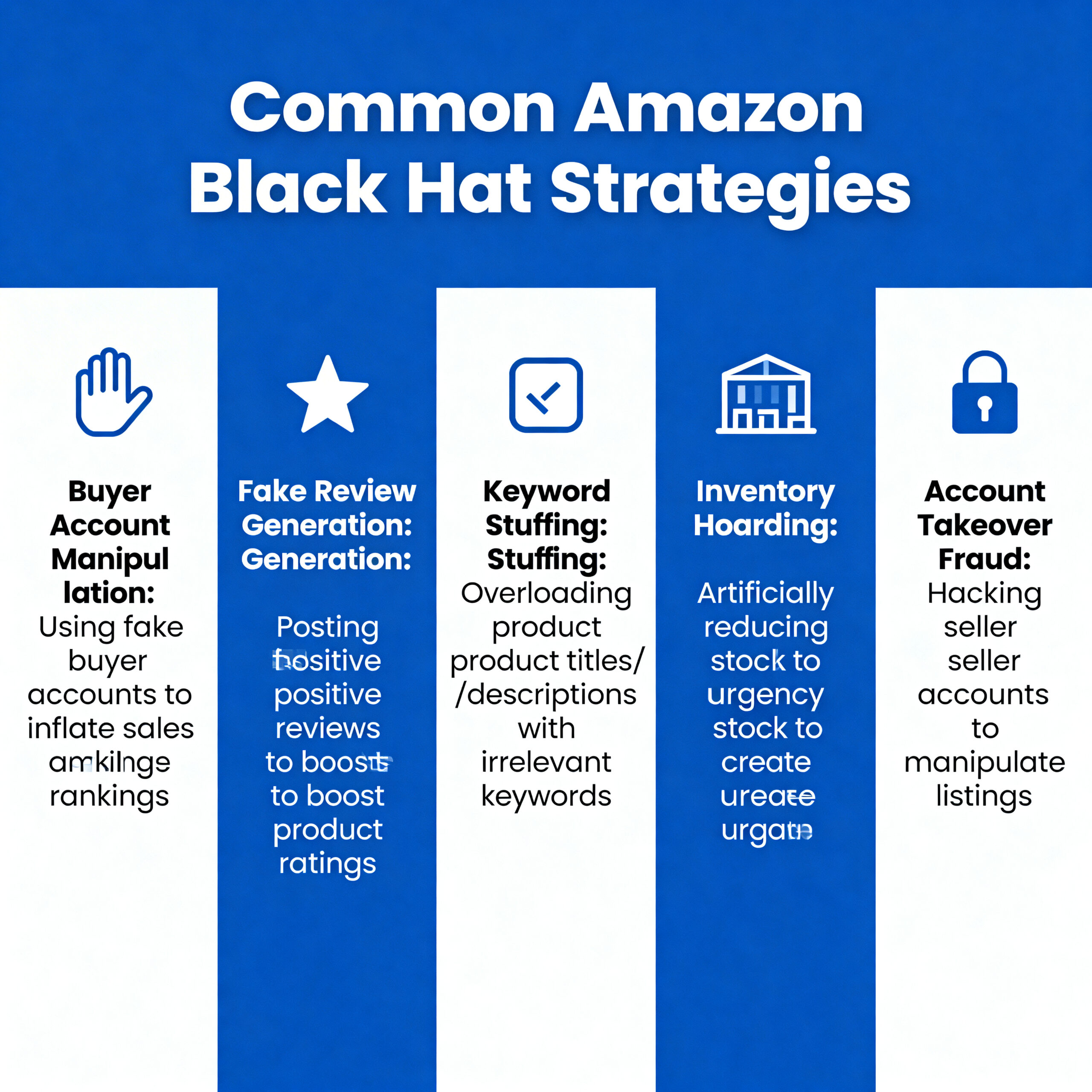
What Are Amazon Black Hat Strategies?
Amazon black hat strategies are unethical or policy-violating techniques used to gain unfair advantages on the platform. These methods attempt to:
- Artificially boost rankings
- Manipulate reviews
- Sabotage competitors
- Game the Buy Box
- Bypass Amazon’s rules
Amazon actively monitors and penalizes such activities.
1. Fake and Incentivized Reviews
One of the most widespread black hat strategies involves generating fake reviews.
This includes:
- Paying customers for 5-star reviews
- Offering free products in exchange for positive feedback
- Using multiple fake buyer accounts
- Joining review exchange groups
Amazon strictly prohibits incentivized or manipulated reviews. Violations often result in listing suspension.
2. Review Hijacking
Review hijacking occurs when a seller:
- Launches a product, gathers positive reviews
- Later changes the product completely while keeping the same ASIN
- Merges unrelated products to inherit reviews
This misleads customers and violates Amazon’s product detail page policies.
3. Search Rank Manipulation
Some sellers try to manipulate Amazon’s search algorithm (A9) by:
- Using click farms to generate artificial traffic
- Purchasing their own products to inflate sales velocity
- Running rebate campaigns outside Amazon
These actions create fake demand signals. Amazon’s system is designed to detect unnatural behavior patterns.
4. Keyword Stuffing and Competitor Brand Targeting
Keyword stuffing involves adding excessive or irrelevant keywords into:
- Product titles
- Bullet points
- Backend search terms
Even some sellers include their competitor brand names in hidden fields to appear in their search results. It violates Amazon’s content guidelines and can lead to suppression.
5. Listing Hijacking
Listing hijacking happens when sellers:
- Attach their offers to another seller’s successful listing
- Sell counterfeit or lower-quality versions
- Undercut prices to win the Buy Box
This damages brand reputation and customer trust.
6. Fake Negative Reviews on Competitors
A harmful black hat tactic involves leaving fake 1-star reviews on competitors’ listings to lower their ratings.
Other sabotage tactics include:
- Filing false intellectual property complaints
- Reporting fake policy violations
- Sending false safety claims
Amazon investigates suspicious patterns and can take action against abusive sellers.
7. Variation Abuse
Some sellers create unrelated product variations to:
- Combine reviews from different products
- Increase perceived credibility
- Boost Best Seller Rank (BSR)
Amazon only allows legitimate variations (such as size or color). Unrelated variations violate policy.
8. Rebate and Cashback Schemes
Certain sellers use external rebate programs where:
- Customers purchase the product at full price
- Leave a positive review
- Receive a refund outside Amazon
This artificially inflates sales and reviews and is strictly prohibited.
9. Brushing Scams
In a brushing scam, sellers send products to random addresses to create fake verified purchase reviews.
This fraudulent activity is illegal and can result in serious penalties.
10. Counterfeit or Trademark Violations
Selling counterfeit products or using copyrighted images and brand names without authorization is another major black hat strategy.
Consequences include:
- Immediate listing removal
- Account suspension
- Legal action
Why Black Hat Strategies Are Risky
Although these tactics may produce quick results, the risks are significant:
- Account suspension or permanent ban
- Loss of inventory and funds
- Legal consequences
- Damage to brand credibility
- Long-term business instability
Amazon continuously upgrades its detection systems using AI and machine learning to identify suspicious activity.
The Smarter Alternative: Ethical Growth
Instead of risking your business, focus on sustainable strategies such as:
- High-quality product research
- Optimized, compliant listings
- Legitimate PPC campaigns
- Excellent customer service
- Using Amazon’s “Request a Review” button properly
- Building brand trust
Ethical growth may take time, but it ensures long-term success and stability.
Final Thoughts
Common Amazon black hat strategies may promise fast growth, but they come with severe consequences. The short-term gains are rarely worth the long-term damage.
If you want to build a successful Amazon business, prioritize transparency, compliance, and customer satisfaction. Playing by the rules not only protects your account but also builds a strong and trusted brand in the marketplace. In the competitive world of Amazon selling, integrity is your greatest competitive advantage.
How Amazon Detects Black Hat Activities
Amazon is one of the most advanced ecommerce platforms in the world, powered by complex algorithms, artificial intelligence, and strict compliance systems. While some sellers attempt to manipulate the system using black hat tactics, Amazon continuously invests in technology and enforcement teams to detect and eliminate such activities.
If you sell on Amazon, understanding how Amazon detects black hat activities can help you protect your account and avoid costly mistakes.
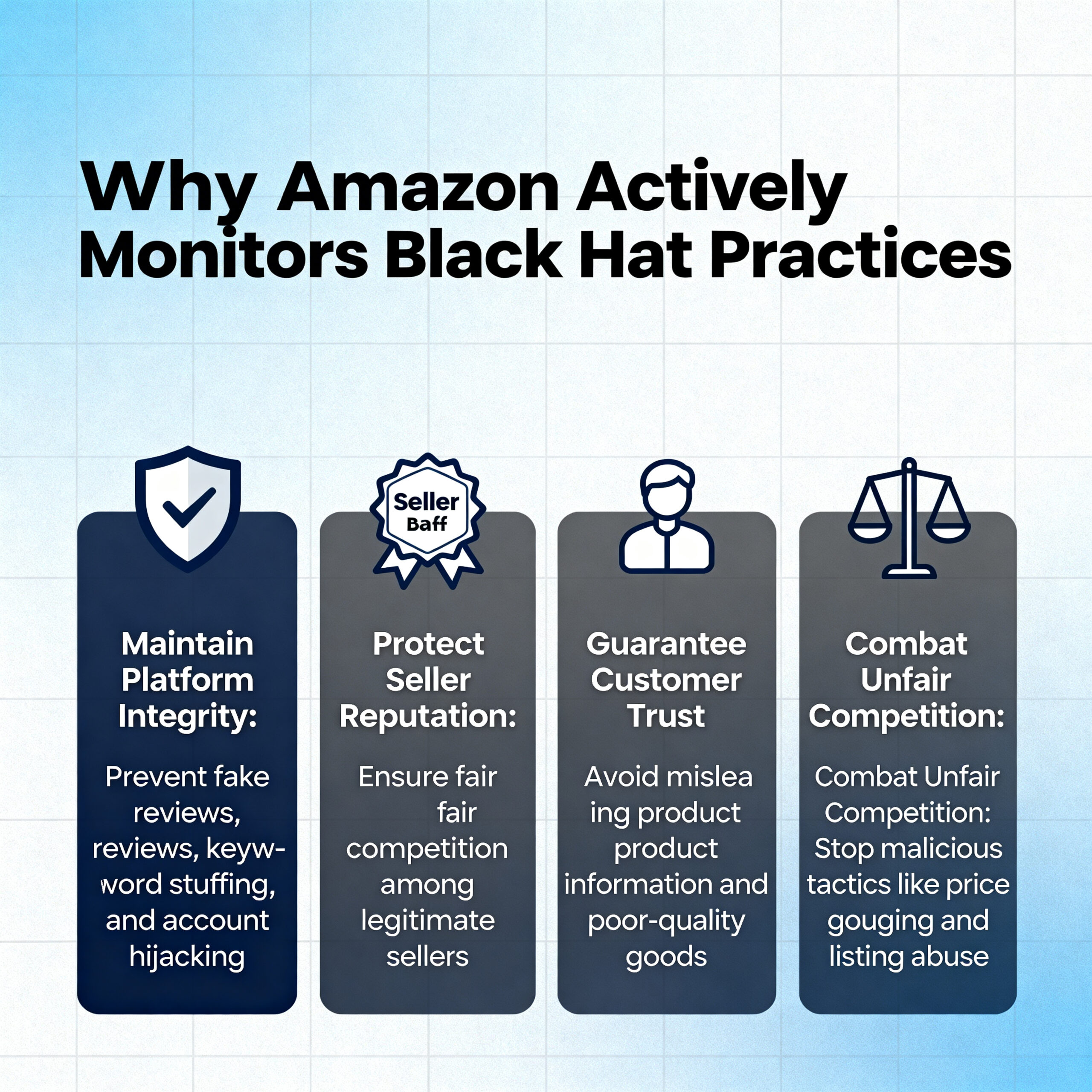
Why Amazon Actively Monitors Black Hat Practices
Amazon’s primary goal is to protect:
- Customer trust
- Marketplace integrity
- Fair competition
- Brand reputation
Any manipulation—whether fake reviews, rank boosting, or competitor sabotage—damages the customer experience. That’s why Amazon enforces strict detection systems.
1. AI and Machine Learning Algorithms
Amazon uses advanced AI-driven systems to monitor seller behavior and customer interactions.
These systems analyze:
- Sudden spikes in sales
- Unusual traffic patterns
- Abnormal review activity
- Conversion rate inconsistencies
- Keyword manipulation
If a listing shows unnatural growth patterns, it may trigger an automated investigation.
For example, if a new product suddenly receives hundreds of 5-star reviews within days, Amazon’s algorithm flags it for review.
2. Review Pattern Analysis
Amazon closely monitors review behavior using data analytics.
It detects:
- Multiple reviews from the same IP address
- Similar writing styles across accounts
- Review timing patterns
- Repeated reviewer activity across related products
- Incentivized review signals
Even private messaging patterns between buyers and sellers are monitored for compliance.
If suspicious activity is detected, Amazon may remove reviews, suppress listings, or suspend accounts.
3. Purchase Behavior Monitoring
Amazon tracks buying patterns to identify artificial sales manipulation.
Red flags include:
- Multiple orders from related accounts
- Bulk purchases followed by immediate returns
- Orders from suspicious geographic clusters
- High refund rates linked to rebate schemes
If sales velocity appears artificially inflated, Amazon may investigate.
4. Backend Keyword and Content Audits
Amazon regularly audits product listings for:
- Keyword stuffing
- Hidden competitor brand names
- Misleading claims
- Unauthorized trademarks
- Irrelevant variations
Automated systems scan backend search terms and product content to ensure compliance with guidelines. Listings violating content rules may be suppressed without warning.
5. Variation and ASIN Merge Monitoring
Amazon detects improper variation abuse by analyzing:
- Product attributes
- Category mismatches
- Sudden ASIN merges
- Review transfers across unrelated products
If unrelated items are grouped under a single listing, Amazon may separate them and take action against the seller.
6. Intellectual Property Complaint Systems
Amazon has dedicated systems for IP protection, including:
- Brand Registry
- Automated counterfeit detection
- Rights owner reporting tools
False claims or abusive reporting patterns are also monitored. Sellers who misuse complaint systems may face penalties.
7. Customer Feedback and Reporting
Customers play a major role in detecting black hat activity.
They can report:
- Fake reviews
- Counterfeit products
- Misleading listings
- Suspicious seller behavior
Amazon investigates customer complaints seriously, especially if multiple reports are received.
8. Internal Investigation Teams
Beyond automation, Amazon employs compliance and investigation teams who:
- Review flagged accounts manually
- Analyze transaction histories
- Track communication logs
- Examine linked accounts
These teams often uncover networks of related accounts involved in coordinated manipulation.
9. Linked Account Detection
Amazon tracks connections between accounts using:
- IP addresses
- Device fingerprints
- Bank account information
- Tax details
- Login patterns
If one account is suspended for black hat activity, linked accounts may also be affected.
10. Data Pattern Recognition Over Time
Amazon doesn’t just analyze isolated incidents—it looks at long-term patterns. Even if a seller avoids detection initially, suspicious behavior accumulated over time can trigger enforcement later. This is why some accounts get suspended months after engaging in black hat tactics.
What Happens When Amazon Detects Black Hat Activity?
Consequences may include:
- Review removal
- Listing suppression
- ASIN suspension
- Account deactivation
- Funds withheld for 90 days or more
- Permanent bans
In severe cases, legal action may follow.
How to Stay Safe
To avoid detection and penalties:
- Follow Amazon’s policies strictly
- Avoid review manipulation
- Use legitimate marketing strategies
- Do not participate in rebate schemes
- Monitor your listing content regularly
- Maintain clean account practices
Building a compliant business may take longer, but it protects your long-term success.
Final Thoughts
Amazon’s detection systems are highly advanced and continuously improving. While black hat tactics may seem tempting in a competitive marketplace, they rarely go unnoticed.
Understanding how Amazon detects black hat activities reinforces one key lesson: sustainable success comes from ethical selling, transparency, and customer satisfaction.
In the long run, compliance is not just safer—it’s smarter.
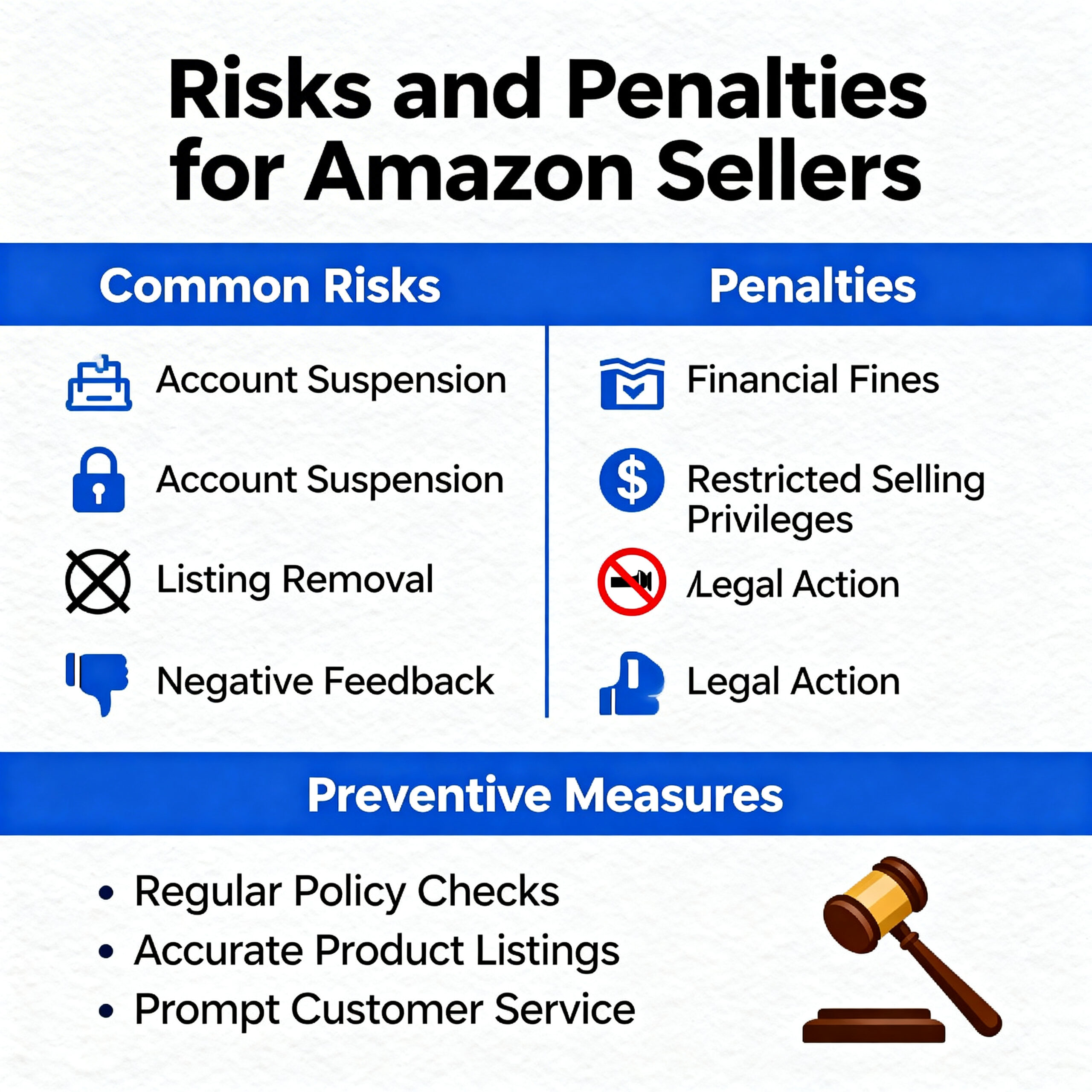
Risks and Penalties for Amazon Sellers
Selling on Amazon offers massive opportunities for growth, but it also comes with strict rules and high accountability. Amazon prioritizes customer trust above everything else. As a result, sellers who violate policies—intentionally or unintentionally—can face serious risks and penalties.
Understanding these risks is essential if you want to build a stable and long-term Amazon business. In this blog, we’ll explore the common risks Amazon sellers face and the penalties that can follow policy violations.
Why Amazon Enforces Strict Rules
Amazon’s marketplace operates on one key principle: customer trust.
To protect buyers, Amazon enforces policies related to:
- Product authenticity
- Review integrity
- Intellectual property
- Listing accuracy
- Seller performance metrics
If any activity that harms customer experience or creates unfair competition can result in enforcement action.
Common Risks Amazon Sellers Face
1. Policy Violations
Amazon frequently updates its policies. Sellers who fail to stay informed risk violating rules related to:
- Review manipulation
- Restricted products
- Keyword abuse
- Variation misuse
- Pricing practices
Eventually, unintentional violations can trigger warnings or suspensions.
2. Poor Performance Metrics
Amazon monitors seller performance through metrics such as:
- Order Defect Rate (ODR)
- Late Shipment Rate
- Cancellation Rate
- Valid Tracking Rate
If these metrics exceed Amazon’s acceptable thresholds, your account may be at risk.
3. Intellectual Property Complaints
Sellers may receive complaints related to:
- Trademark infringement
- Copyright violations
- Counterfeit claims
- Patent issues
Even though one serious IP complaint can result in listing removal or account suspension.
4. Review-Related Violations
Amazon has strict rules regarding customer reviews. Risks include:
- Incentivized reviews
- Fake reviews
- Review manipulation
- Abuse of the “Request a Review” feature
Such violations in this area are treated very seriously.
5. Listing Suppression
Listings may be suppressed due to:
- Misleading product information
- Safety concerns
- Prohibited claims
- Missing compliance documents
Suppressed listings lose visibility and sales until corrected.
Major Penalties Amazon Sellers May Face
1. Listing Removal
Amazon may remove individual product listings if they violate policies. This results in immediate loss of sales for that ASIN.
2. Account Suspension
Account suspension is one of the most serious penalties. When suspended:
- Your listings become inactive
- You cannot sell
- Funds may be frozen
- You must submit a Plan of Action
Reinstatement is not guaranteed.
3. Funds Withholding
Amazon may hold seller funds for 90 days or longer if there are:
- Policy violations
- Chargeback disputes
- Suspected fraudulent activity
This can severely impact cash flow.
4. Permanent Account Ban
Repeated violations or serious misconduct may lead to permanent deactivation.
In such cases:
- You may not be allowed to create a new account
- Linked accounts may also be suspended
- Inventory may be disposed of
5. ASIN-Level Suspension
Sometimes Amazon restricts only certain products rather than the entire account. However, repeated ASIN suspensions can escalate to full account review.
6. Legal Consequences
In extreme cases involving:
- Counterfeit goods
- Fraud
- Intellectual property theft
Also, legal action may be taken by brands or authorities.
Financial and Business Impact
Beyond penalties, sellers may experience:
- Sudden revenue loss
- Damaged brand reputation
- Negative customer trust
- Inventory storage fees during suspension
- Increased operational stress
For many businesses, even a short suspension can cause long-term damage.
How to Minimize Risks
To protect your Amazon business:
Stay Updated on Policies
Regularly review Amazon’s seller guidelines and policy updates.
Monitor Account Health
Check your Account Health dashboard frequently.
Maintain Strong Performance Metrics
Focus on timely shipping, quality control, and customer service.
Avoid Shortcuts
Never engage in review manipulation, fake sales, or black hat tactics.
Respond Quickly to Warnings
Address performance notifications immediately before they escalate.
Final Thoughts
Selling on Amazon is rewarding—but it requires responsibility and compliance. The risks and penalties for Amazon sellers are real and can significantly impact your business if policies are violated.
The safest path to long-term success is simple: follow the rules, prioritize customer satisfaction, and build your brand ethically. While shortcuts may promise quick gains, sustainable growth always wins in the long run. Also, Protect your account today to secure your business tomorrow.
Impact on Brand Reputation
In today’s digital marketplace, brand reputation is everything. Especially on platforms like Amazon, where customers rely heavily on reviews, ratings, and trust signals, your brand image can directly influence sales, growth, and long-term success.
A strong reputation builds loyalty and credibility. A damaged reputation, however, can take years to repair. In this blog, we’ll explore the impact on brand reputation—what affects it, why it matters, and how sellers can protect it.
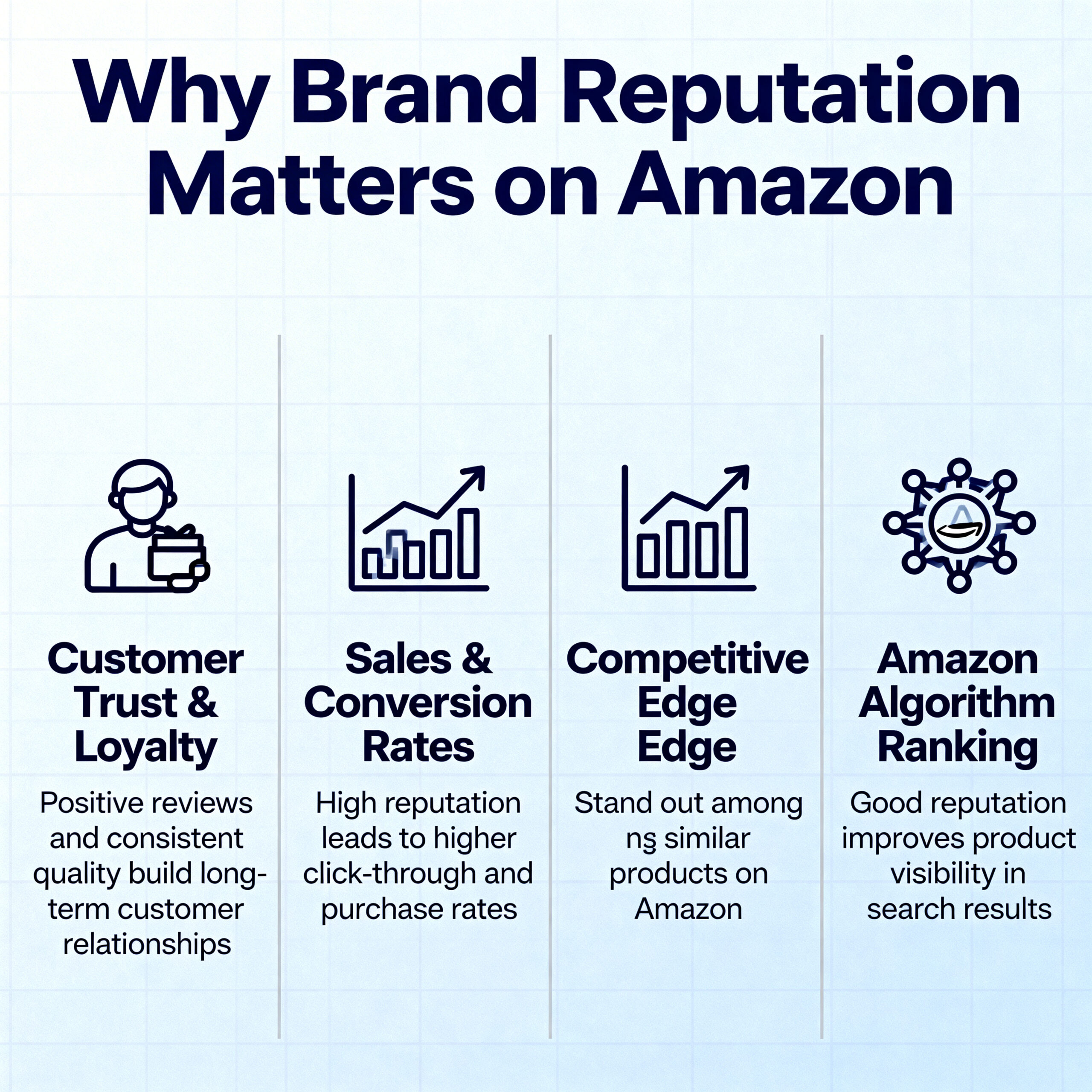
Why Brand Reputation Matters on Amazon
Amazon is a trust-driven marketplace. Customers often make purchasing decisions based on:
- Star ratings
- Customer reviews
- Seller feedback
- Product quality
- Brand presence
If your brand reputation is positive, customers feel confident buying from you. If it’s negative, even the best marketing strategies may fail.
How Policy Violations Affect Brand Reputation
Engaging in unethical practices—such as fake reviews, counterfeit products, or misleading claims—can severely damage your brand.
1. Loss of Customer Trust
Once customers discover dishonesty, it becomes difficult to regain their confidence.
2. Negative Reviews and Public Feedback
Poor practices often lead to negative reviews, which remain visible to future buyers.
3. Social Media Exposure
Unhappy customers may share experiences on social media, amplifying the damage.
4. Account Suspensions
If your account gets suspended, customers may assume your brand is unreliable.
Impact of Fake Reviews on Brand Image
While fake positive reviews may temporarily boost ratings, they can backfire.
If Amazon removes suspicious reviews:
- Your rating may suddenly drop
- Customers may question authenticity
- Competitors may report your brand
Trust once lost is hard to rebuild.
Counterfeit Issues and Reputation Damage
If counterfeit products are linked to your listing, customers may:
- Blame your brand for poor quality
- Leave negative feedback
- Avoid future purchases
Even if you are not directly responsible, your brand name is affected.
Customer Experience and Brand Perception
Brand reputation isn’t only about avoiding violations—it’s also about delivering a great customer experience.
Factors that shape perception include:
- Fast and accurate shipping
- Responsive customer service
- Clear product descriptions
- High product quality
- Professional packaging
Every customer interaction contributes to your brand image.
Long-Term Financial Impact
A damaged brand reputation can lead to:
- Decreased conversion rates
- Lower repeat purchase rates
- Reduced word-of-mouth referrals
- Increased advertising costs
- Difficulty launching new products
On the other hand, a strong reputation leads to organic growth and loyal customers.
How to Protect Your Brand Reputation
1. Follow Amazon’s Policies
Compliance builds stability and protects your account.
2. Focus on Product Quality
High-quality products naturally generate positive reviews.
3. Monitor Reviews and Feedback
Address negative feedback professionally and promptly.
4. Use Amazon Brand Registry
Protect your listings from hijackers and counterfeit sellers.
5. Avoid Black Hat Tactics
Shortcuts may bring temporary gains but long-term damage.
The Power of Ethical Growth
Brands that grow ethically tend to:
- Build loyal customer communities
- Maintain consistent ratings
- Experience sustainable sales growth
- Gain marketplace credibility
In the competitive world of Amazon, integrity becomes a competitive advantage.
Final Thoughts
The impact on brand reputation can determine whether your Amazon business thrives or struggles. Every decision—from product sourcing to customer communication—affects how customers perceive your brand.
While quick profits may seem attractive, long-term trust is far more valuable. Protect your reputation, prioritize transparency, and focus on delivering genuine value. Because in the end, a strong brand reputation is not just an asset—it’s the foundation of lasting success.
Ethical Alternatives to Black Hat Tactics
Selling on Amazon is highly competitive, and the pressure to rank faster, gain reviews, and increase sales can tempt some sellers to use black hat tactics. However, shortcuts such as fake reviews, keyword manipulation, and rebate schemes often lead to account suspension, financial loss, and long-term brand damage.
The good news is that there are ethical and effective alternatives that help you grow sustainably—without risking your account. In this blog, we’ll explore practical, policy-compliant strategies that can replace black hat tactics and build long-term success.
Why Choose Ethical Strategies?
Ethical selling on Amazon offers:
- Long-term account stability
- Strong brand reputation
- Consistent organic growth
- Customer trust and loyalty
- Reduced risk of suspension
While results may take time, they are sustainable and scalable.
1. Build a High-Quality Product
No marketing strategy can compensate for a poor product.
Focus on:
- Market research before launching
- Improving product design based on customer pain points
- Using durable and quality materials
- Adding value with better packaging or bundles
When your product genuinely solves problems, positive reviews come naturally.
2. Optimize Listings the Right Way
Instead of keyword stuffing or using competitor brand names, optimize your listing properly:
- Conduct legitimate keyword research
- Use relevant keywords naturally in titles and bullet points
- Write clear, benefit-driven descriptions
- Add high-quality images and infographics
- Include A+ Content (if Brand Registered)
A well-optimized listing improves conversions without violating policies.
3. Use Amazon PPC Advertising
Rather than manipulating rankings artificially, invest in Amazon Pay-Per-Click (PPC) campaigns.
Benefits include:
- Increased visibility
- Controlled budget spending
- Data-driven optimization
- Legitimate sales velocity
Sponsored ads are Amazon-approved tools designed to help sellers grow.
4. Request Reviews Compliantly
Instead of buying fake reviews, use Amazon-approved methods:
- Use the “Request a Review” button
- Send neutral follow-up messages (within policy limits)
- Provide excellent customer service
- Include product inserts that comply with guidelines
Focus on earning reviews—not manipulating them.
5. Improve Customer Experience
Customer satisfaction directly impacts reviews, ratings, and repeat purchases.
You can improve experience by:
- Shipping on time
- Providing accurate product descriptions
- Responding quickly to customer inquiries
- Resolving complaints professionally
Happy customers become repeat buyers and brand advocates.
6. Build a Brand Outside Amazon
Black hat sellers focus only on quick Amazon rankings. Ethical sellers build real brands.
Strategies include:
- Creating a website
- Building an email list
- Using social media marketing
- Collaborating with influencers (without incentivizing reviews)
- Running external traffic campaigns
Diversifying traffic reduces dependency on algorithm tricks.
7. Enroll in Amazon Brand Registry
Brand Registry helps you:
- Protect listings from hijackers
- Report counterfeit sellers
- Access advanced marketing tools
- Control your product detail pages
This is a powerful and ethical way to secure your brand presence.
8. Monitor Performance Metrics
Instead of gaming the system, maintain strong seller metrics:
- Low Order Defect Rate
- High customer satisfaction
- Low return rate
- Accurate inventory management
Healthy metrics improve account stability and Buy Box eligibility.
9. Focus on Long-Term Strategy
Ethical growth requires patience. Develop:
- A 6–12 month growth plan
- Clear profit margins
- Reinvestment strategies
- Data-based decision making
Quick wins fade quickly. Long-term strategies build lasting businesses.
Benefits of Avoiding Black Hat Tactics
Choosing ethical alternatives helps you:
- Avoid account suspension
- Protect your funds
- Build customer trust
- Strengthen brand authority
- Scale confidently
Also amazon continuously improves its detection systems. Sustainable strategies always outperform risky shortcuts.
Final Thoughts
Black hat tactics may promise fast results, but they often lead to serious penalties and damaged reputations. Ethical alternatives, on the other hand, build real value, loyal customers, and long-term success.
If you want to succeed on Amazon, focus on quality, compliance, and customer satisfaction. In this competitive marketplace, integrity is not just a moral choice—it’s a smart business strategy. Also Grow smart, safe, and sustainable.
How to Recover from Policy Violations
Policy violations on Amazon can be stressful and overwhelming for sellers. Whether it’s a listing suppression, ASIN suspension, or full account deactivation, the impact on sales and cash flow can be significant. However, recovery is possible—if handled correctly.
In this blog, we’ll walk through how to recover from Amazon policy violations step by step and rebuild your account safely and sustainably.
Understanding the Type of Violation
Before taking action, identify the exact issue. Amazon violations generally fall into these categories:
- Product policy violations
- Intellectual property complaints
- Review manipulation issues
- Performance metric failures
- Restricted product violations
- Inauthentic or counterfeit claims
Carefully before review, the notification in your Performance Notifications nor Account Health dashboard. Such type of understanding the root cause is the first step toward recovery.
Step 1: Stay Calm and Avoid Panic
Many sellers make mistakes by reacting emotionally. Do not:
- Submit multiple rushed appeals
- Blame Amazon or customers
- Provide incomplete information
- Create a new seller account
Multiple poor appeals can reduce your chances of reinstatement. Take time to prepare a strong response.
Step 2: Identify the Root Cause
Amazon wants to know why the violation happened—not just that you’re sorry.
Ask yourself:
- What triggered the complaint?
- Was it a supplier issue?
- Was there misleading content in the listing?
- Were reviews handled improperly?
- Did performance metrics drop below thresholds?
Be honest. Amazon values clear root cause analysis over generic apologies.
Step 3: Create a Strong Plan of Action (POA)
For serious violations, Amazon requires a Plan of Action (POA).
A strong POA includes three key sections:
1. Root Cause
Explain clearly what caused the issue.
2. Corrective Actions Taken
Describe what you have already done to fix the problem (e.g., removed inventory, updated listing content, changed suppliers).
3. Preventive Measures
Explain how you will prevent this issue from happening again (e.g., quality control processes, staff training, compliance checks).
Keep your appeal:
- Professional
- Clear and concise
- Fact-based
- Structured
Either avoid emotional language nor long explanations.
Step 4: Provide Supporting Documentation
Depending on the violation, Amazon may require:
- Supplier invoices
- Authorization letters
- Product authenticity proof
- Compliance certificates
- Test reports
Ensure documents are:
- Clear and readable
- Dated within 365 days (if required)
- Matching your seller account details
Incomplete documentation can delay recovery.
Step 5: Correct All Affected Listings
If the violation involves listing issues:
- Remove misleading claims
- Fix keyword stuffing
- Update product images
- Remove prohibited content
- Delete policy-violating variations
Make sure your entire catalog complies—not just the flagged ASIN.
Step 6: Monitor Account Health
After submitting your appeal:
- Check the Account Health dashboard regularly
- Respond quickly to additional requests
- Avoid repeating the same mistakes
Recovery may take days or weeks depending on the complexity of the issue.
Common Mistakes to Avoid
Many sellers delay reinstatement by:
- Submitting generic copy-paste appeals
- Denying responsibility
- Blaming customers or competitors
- Ignoring Amazon’s specific instructions
- Continuing risky practices
Professional and responsible communication improves your chances.
When to Seek Professional Help
If your account remains suspended after multiple appeals, you may consider:
- Consulting an Amazon compliance expert
- Hiring a professional appeal service
- Seeking legal advice for IP-related cases
However, always ensure any service provider follows ethical and compliant practices.
Rebuilding After Reinstatement
If your account is reinstated:
- Audit your entire operation
- Strengthen quality control
- Improve customer service
- Track performance metrics closely
- Avoid shortcuts or black hat tactics
Recovery is not just about reinstatement—it’s about long-term stability.
Final Thoughts
Policy violations on Amazon can feel like a major setback, but they can also be an opportunity to improve your business processes. The key to recovery is understanding the issue, taking responsibility, and implementing lasting corrective measures.
Amazon values sellers who demonstrate accountability and compliance. With a well-prepared Plan of Action and a commitment to ethical practices, you can recover from policy violations and build a stronger, more resilient Amazon business. Such mistakes may happen—but any how your respond defines your success.
Long-Term Strategy for Sustainable Growth
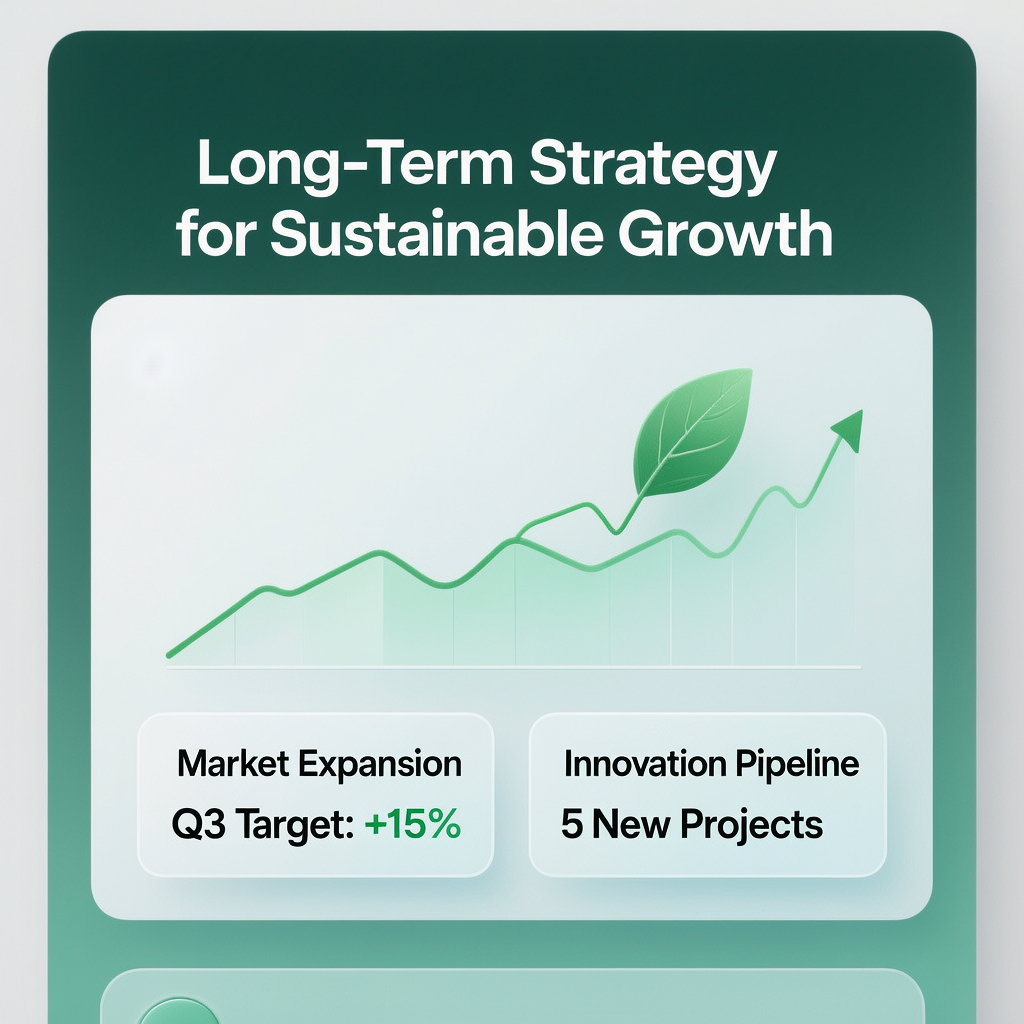
Building a successful Amazon business is not about quick wins or overnight rankings. While short-term tactics may generate temporary spikes in sales, sustainable growth requires a clear long-term strategy, strong systems, and consistent execution. We’ll explore how Amazon sellers can develop a long-term strategy for sustainable growth that protects their account, builds brand value, and creates predictable revenue.
Why Long-Term Strategy Matters
Amazon is constantly evolving. Policies change, competition increases, and algorithms update regularly. Sellers who rely on shortcuts often struggle to survive these changes.
A long-term strategy helps you:
- Maintain account stability
- Build customer trust
- Increase repeat purchases
- Strengthen brand reputation
- Scale confidently
Sustainable growth focuses on stability, not speed.
1. Start with Strong Product Research
Long-term success begins before launch.
Focus on:
- Identifying real customer pain points
- Analyzing competition and demand
- Evaluating profit margins carefully
- Avoiding oversaturated niches
- Ensuring compliance with Amazon policies
Probably, by launching the right product reduces future risks and improves sustainability.
2. Prioritize Product Quality
High-quality products naturally lead to:
- Better reviews
- Lower return rates
- Stronger brand loyalty
- Reduced negative feedback
Just by investing in quality control, reliable suppliers, and consistent manufacturing standards. Sustainable growth depends on customer satisfaction.
3. Build a Strong Brand Identity
Instead of selling generic products, focus on brand building.
Key steps include:
- Creating professional packaging
- Designing a unique logo and brand story
- Enrolling in Amazon Brand Registry
- Using A+ Content to enhance listings
- Maintaining consistent branding across all products
A recognizable brand increases trust and repeat business.
4. Optimize Listings the Right Way
Proper listing optimization improves visibility and conversions without violating policies.
Best practices include:
- Using relevant, researched keywords
- Writing clear and benefit-focused bullet points
- Adding high-quality product images
- Including informative product descriptions
- Updating listings based on customer feedback
Avoid keyword stuffing or misleading claims.
5. Invest in Data-Driven Advertising
Amazon PPC is a powerful tool for scaling sustainably.
For long-term success:
- Start with automatic campaigns to gather data
- Move to manual campaigns for optimization
- Monitor ACoS and profitability
- Adjust bids strategically
- Reinvest profits into growth
Paid traffic supports organic ranking when managed properly.
6. Focus on Customer Experience
Customer satisfaction is the foundation of sustainable growth.
Improve experience by:
- Shipping on time
- Maintaining accurate inventory levels
- Responding quickly to messages
- Resolving issues professionally
- Monitoring feedback regularly
Happy customers become repeat buyers and brand advocates.
7. Maintain Strong Account Health
Your account is your most valuable asset.
Regularly monitor:
- Order Defect Rate
- Late Shipment Rate
- Cancellation Rate
- Policy compliance
If you avoid black hat tactics or risky strategies that could lead to suspension. Stability is key for long-term scaling.
8. Diversify Traffic Sources
Depending solely on Amazon traffic can be risky.
Consider:
- Building a brand website
- Using social media marketing
- Running external ads
- Building an email list
- Partnering with influencers
Diversified traffic strengthens brand presence and reduces platform dependency.
9. Reinvest Profits Strategically
Sustainable businesses reinvest in:
- New product development
- Improved inventory management
- Better marketing strategies
- Automation tools
- Team expansion
Avoid withdrawing all profits early. Growth requires reinvestment.
10. Think in Years, Not Months
Sustainable growth is built over time.
Create:
- A 12-month product roadmap
- Quarterly revenue goals
- Clear expansion plans
- Risk management strategies
Patience and consistency outperform quick, risky shortcuts.
Common Mistakes to Avoid
To ensure long-term growth, avoid:
- Review manipulation
- Overexpansion without capital
- Ignoring customer complaints
- Poor inventory planning
- Focusing only on short-term profits
Short-term thinking often leads to long-term setbacks.
Final Thoughts
A long-term strategy for sustainable growth on Amazon is built on quality, compliance, branding, and customer satisfaction. While quick wins may seem attractive, they rarely create lasting success.
By focusing on ethical practices, data-driven decisions, and consistent improvement, you can build a resilient Amazon business that thrives in a competitive marketplace.
Sustainable growth is not about being the fastest—it’s about being the most consistent.
Conclusion
Amazon Black Hat tactics may promise quick rankings, rapid reviews, and fast profits—but the risks far outweigh the rewards. From listing suppression and account suspension to withheld funds and permanent bans, the penalties can severely damage both your revenue and your brand reputation.
In today’s highly monitored marketplace, Amazon’s advanced detection systems make it increasingly difficult to manipulate the platform without consequences. What might seem like a shortcut can quickly turn into a long-term setback.
The smarter approach is clear: focus on ethical growth strategies. Invest in product quality, optimize listings properly, use compliant review methods, leverage Amazon PPC, and prioritize customer satisfaction. These white hat strategies may take more time, but they build trust, stability, and sustainable success.
At the end of the day, your Amazon account is a valuable asset. Protect it by choosing transparency over manipulation and long-term strategy over short-term gains. Sustainable growth isn’t just safer—it’s the foundation of a strong and lasting Amazon business.