
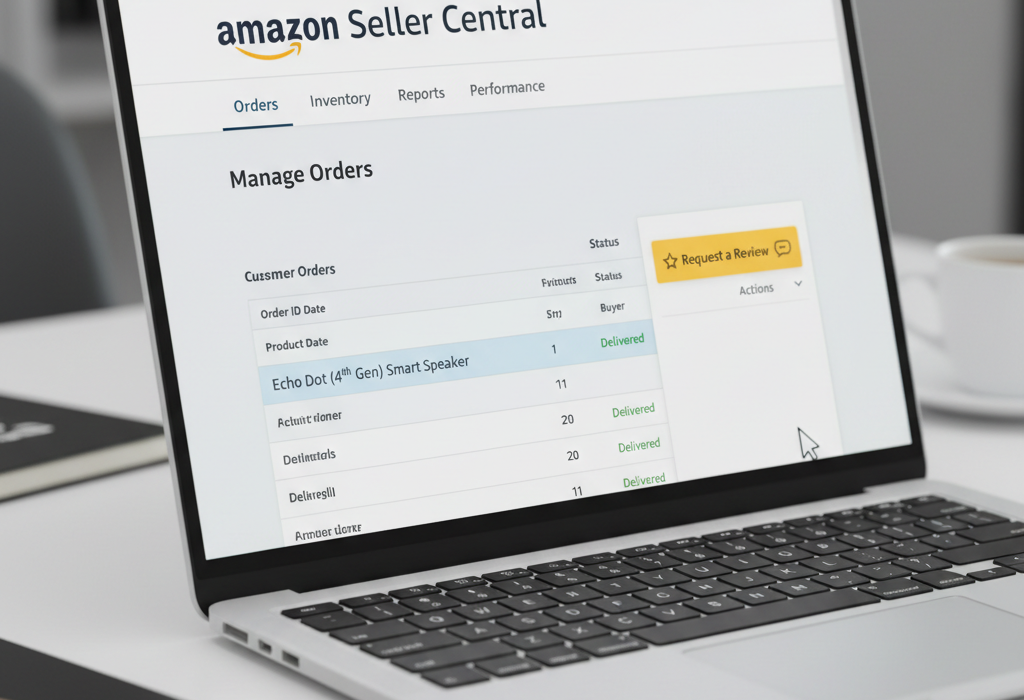
How To Ask For Amazon Reviews: A Complete Guide
Introduction
Amazon reviews shape buying decisions. One strong review can increase trust within seconds. Yet many sellers struggle to ask for feedback correctly. Some fear policy violations. Others simply do not know when or how to ask. So, how can you increase Amazon reviews without risking your seller account on Amazon?
This guide explains safe, proven methods that drive consistent results. If you sell on Amazon and want higher conversion rates, this strategy matters.
Why Amazon Reviews Drive Sales Growth
In the competitive world of eCommerce, trust determines success. On platforms like Amazon, buyers cannot physically see or test products before purchasing. Therefore, they rely heavily on reviews. These reviews act as digital word-of-mouth recommendations, influencing buying decisions within seconds.
But why exactly do Amazon reviews drive sales growth? Let’s explore the key reasons.
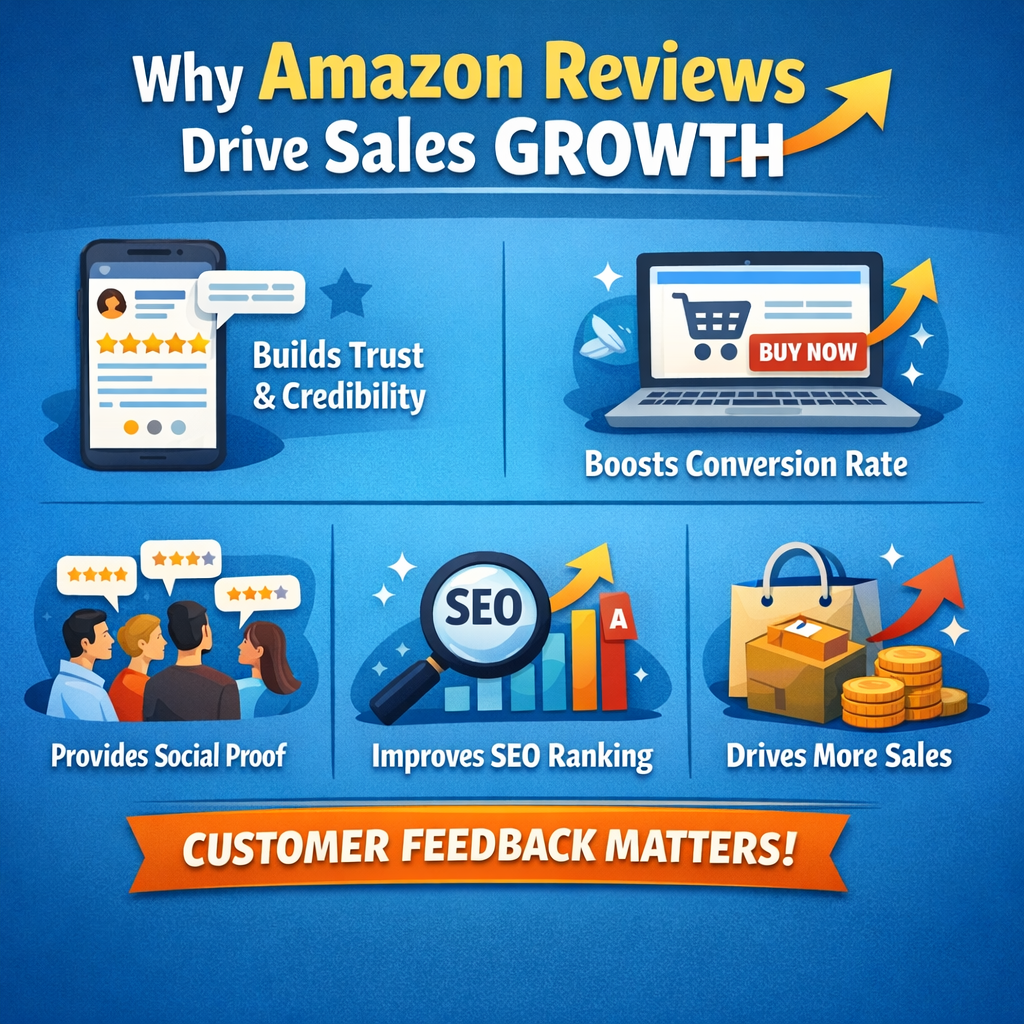
1. Reviews Build Instant Trust
Trust is the foundation of online sales. When shoppers see positive feedback from real customers, they feel confident about their purchase. A product with 200 reviews naturally appears more reliable than one with only two. Even if both products are similar, buyers often choose the one with more verified feedback. Social proof reduces doubt. And when doubt decreases, conversions increase.
2. Higher Reviews Improve Conversion Rates
Conversion rate refers to the percentage of visitors who complete a purchase. Products with strong ratings typically convert better than those with fewer or lower ratings.
For example:
- A 4.5-star product feels safe.
- A 3-star product raises concerns.
- A product with no reviews creates uncertainty.
Customers want reassurance. Reviews provide that reassurance quickly and clearly.
3. Reviews Influence Amazon’s Ranking Algorithm
Amazon’s internal ranking system prioritizes products that generate engagement and sales. Reviews signal product relevance and customer satisfaction. When a listing receives consistent reviews:
- It gains credibility.
- It improves click-through rates.
- It increases sales velocity.
These factors work together to improve search visibility. Better visibility leads to more traffic, and more traffic leads to higher revenue.
4. Reviews Reduce Return Rates
Detailed reviews help customers understand the product before buying.
When buyers know:
- The actual size
- The material quality
- Real-life performance
- Pros and cons
They make informed decisions. Informed buyers are less likely to return items. Lower returns protect profit margins and strengthen long-term growth.
5. Reviews Provide Valuable Product Insights
Customer feedback reveals strengths and weaknesses. Smart sellers analyze recurring patterns in reviews to improve products. For example:
- If multiple buyers mention packaging damage, packaging needs improvement.
- If users praise durability, that becomes a marketing advantage.
Reviews serve as free market research. Businesses that listen carefully gain a competitive edge.
6. Reviews Strengthen Brand Authority
Over time, consistent positive reviews build brand reputation. Buyers start recognizing the seller as trustworthy.
This authority creates repeat customers. Repeat customers reduce acquisition costs and increase lifetime value. A brand with strong reviews does not compete only on price. It competes on credibility.
7. Reviews Increase Advertising Performance
When running ads on Amazon Advertising, listings with strong ratings often perform better. Because customers click ads but check reviews before purchasing. A well-rated product converts ad traffic more efficiently. Better conversion lowers advertising cost per sale and improves return on ad spend.
8. Reviews Create Competitive Advantage
In crowded markets, small differences matter. Two similar products may compete at the same price. The one with stronger reviews usually wins.
Reviews act as a silent salesperson. They speak for the product 24/7. Competitors can copy your images or descriptions. However, they cannot copy genuine customer experiences.
Common Misconception: More Reviews Mean Only More Sales
While reviews increase sales, they also improve business quality. Negative reviews highlight areas for growth.
Responding professionally to criticism shows transparency. Transparency builds deeper trust. Growth comes not only from praise but also from improvement.
Long-Term Sales Growth Strategy
To maximize the impact of reviews:
- Deliver excellent product quality.
- Provide clear and accurate listings.
- Use Amazon’s compliant “Request a Review” feature.
- Offer responsive customer support.
- Monitor review trends regularly.
Consistency matters more than shortcuts.
Amazon reviews drive sales growth because they build trust, improve visibility, increase conversion rates, and strengthen brand authority. They reduce buyer hesitation and provide valuable insights for continuous improvement.
After years of observing eCommerce trends, one principle remains constant: customers trust customers more than brands. Businesses that prioritize customer satisfaction naturally generate stronger reviews and sustainable growth. In today’s digital marketplace, reviews are not optional. They are essential.
Amazon Review Policy Essentials
Selling on Amazon offers huge growth opportunities. However, success on the platform depends on strict compliance with its policies. One of the most sensitive areas is the review system. Amazon reviews influence rankings, conversions, and brand trust. Because of this impact, Amazon closely monitors how sellers request and manage reviews.
Understanding Amazon review policy essentials is not optional. It is critical for protecting your account and building long-term success.
Why Amazon Strictly Regulates Reviews
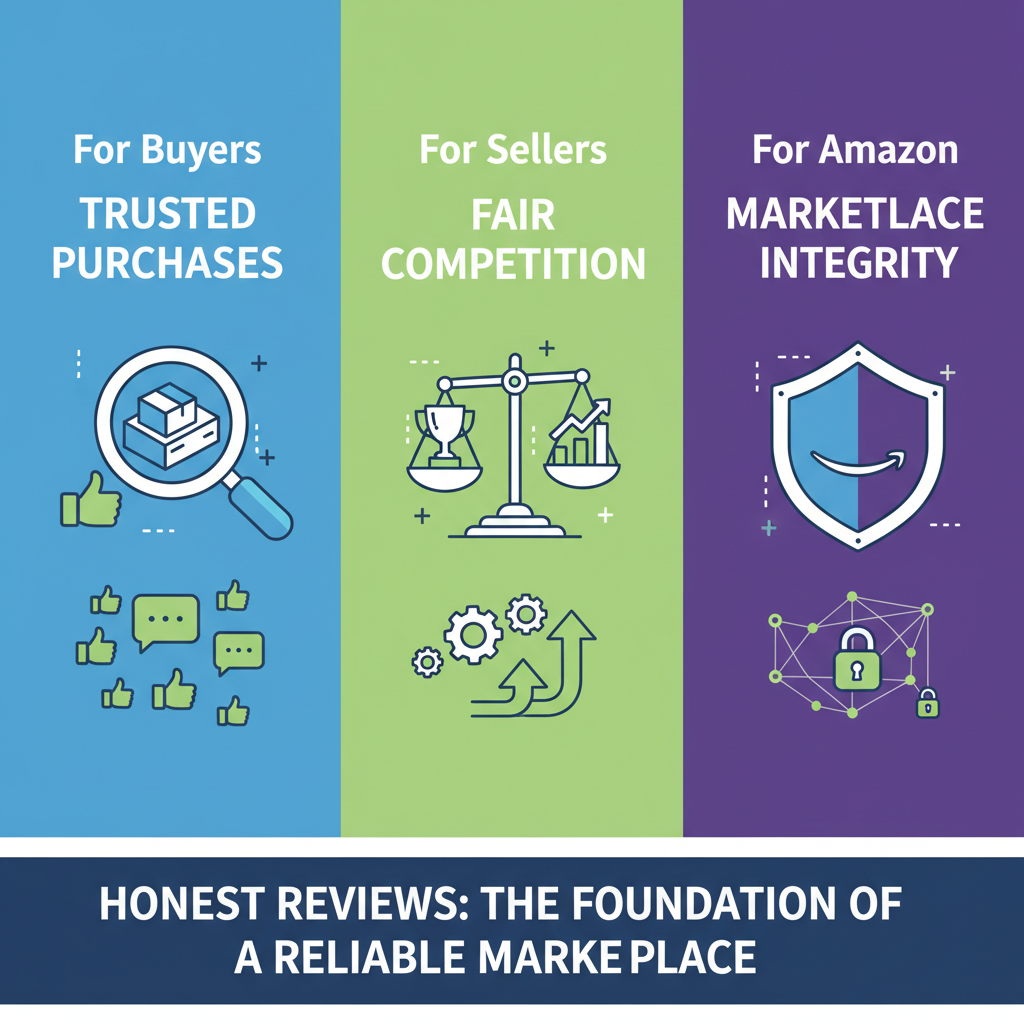
Amazon’s business model depends on customer trust. Buyers rely on reviews to make informed decisions. If reviews are manipulated, that trust disappears.
Therefore, Amazon enforces strict rules to prevent:
- Fake reviews
- Incentivized feedback
- Review manipulation
- Biased requests
Violations can lead to listing suppression, account suspension, or permanent bans.
What Sellers Are Allowed To Do
Amazon does allow sellers to request feedback. However, the approach must remain neutral and compliant.
1. Ask for Honest Reviews
Sellers can request an honest review from customers after purchase. The wording must stay neutral. You cannot ask specifically for positive feedback.
Example of compliant wording:
“Please share your honest experience with the product.”
Neutral language is essential.
2. Use the “Request a Review” Button
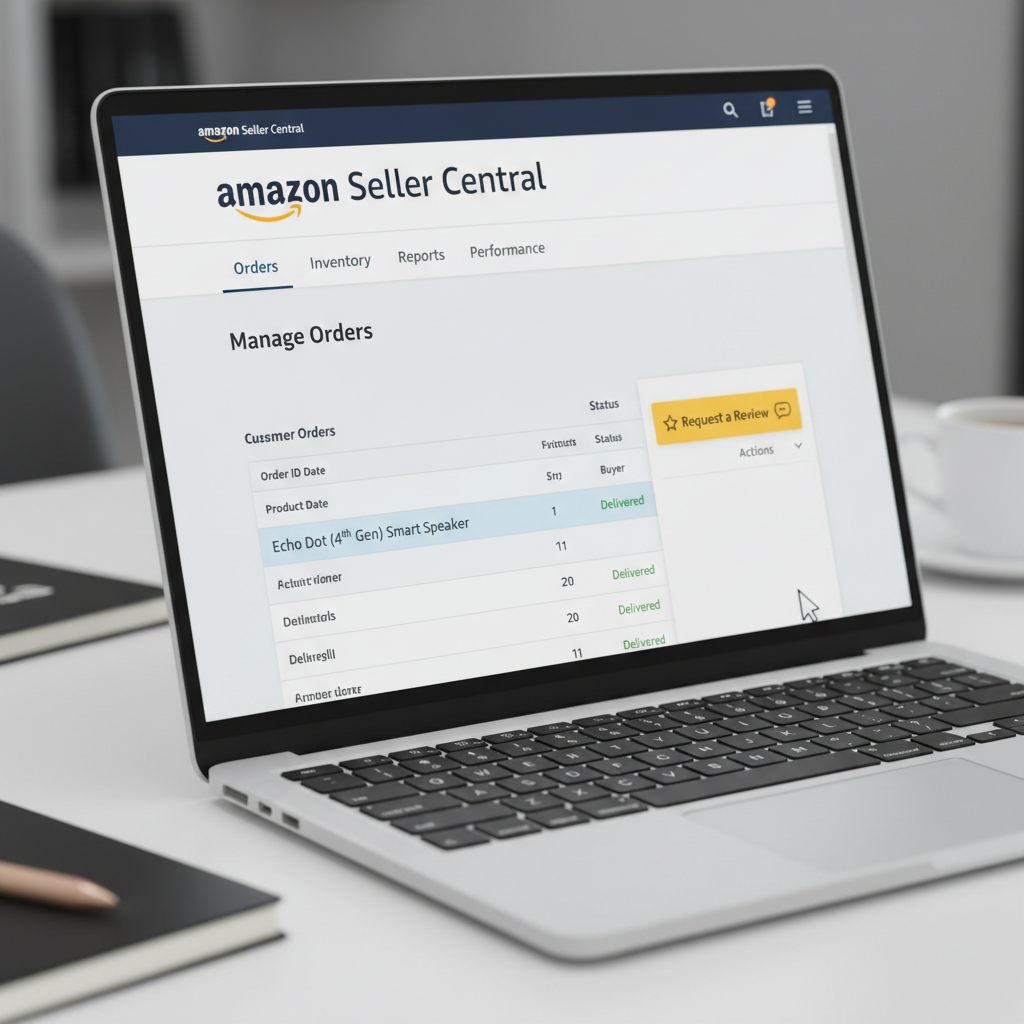
Inside Amazon Seller Central, sellers can use the built-in “Request a Review” feature. This automated tool sends a standardized message to customers.
This method is recommended because:
- Amazon controls the message format
- It ensures compliance
- It reduces risk
Many experienced sellers rely on this feature to avoid policy mistakes.
3. Include Neutral Packaging Inserts
You may include product inserts that politely ask for feedback. However, the message must not encourage only positive reviews.
Allowed example:
“Thank you for your purchase. We appreciate your honest feedback on Amazon.”
Prohibited example:
“Leave a 5-star review and receive a gift.”
Incentives of any kind are strictly forbidden.
What Sellers Must Never Do
Understanding what is prohibited is even more important.
1. No Incentivized Reviews
Offering refunds, discounts, gift cards, or free products in exchange for reviews is a serious violation.
Even indirect incentives can trigger penalties.
2. No Review Filtering
You cannot ask satisfied customers to leave reviews while directing unhappy customers to contact support privately. This practice is considered review manipulation.
Amazon requires equal opportunity for all buyers to leave feedback.
3. No Fake or Family Reviews
Reviews from friends, family members, employees, or fake accounts are prohibited. Amazon uses advanced systems to detect suspicious patterns.
Accounts involved in fake reviews face immediate suspension.
4. No Manipulative Language
Avoid emotional pressure, urgency tactics, or requests for specific star ratings. Statements like “Please leave a 5-star review” violate policy.
Keep communication simple and professional.
Consequences of Policy Violations
Amazon takes enforcement seriously. Possible penalties include:
- Review removal
- Listing suppression
- Selling privileges suspension
- Permanent account closure
In severe cases, funds may be withheld during investigation. Protecting your account should always be the priority.
Best Practices for Staying Compliant
To reduce risk and maintain steady growth:
- Use the official review request feature.
- Monitor customer messages carefully.
- Train your support team on policy rules.
- Review Amazon policy updates regularly.
- Focus on product quality instead of shortcuts.
Compliance creates long-term stability.
The Long-Term View
Review growth should come from genuine customer satisfaction. Strong products, accurate listings, and responsive service naturally generate positive feedback.
Short-term tactics may produce quick results. However, they often lead to account suspension. Sustainable success requires discipline, transparency, and adherence to Amazon’s policies.
Amazon review policy essentials revolve around fairness, neutrality, and transparency. Sellers may request honest feedback, but they must avoid incentives, manipulation, or bias.
After years of observing marketplace trends, one fact remains clear: sellers who prioritize compliance build stronger brands and experience steady growth. Those who attempt shortcuts risk losing everything. Stay compliant. Protect your account. Build trust through genuine customer experience.
Proven Amazon Review Request Methods
Customer reviews are one of the strongest drivers of success on Amazon. They influence buying decisions, improve search visibility, and increase conversion rates. However, requesting reviews requires strategy and compliance. Sellers must follow Amazon’s policies while still encouraging customers to share feedback.
This guide explains proven Amazon review request methods that work consistently and safely.
Why a Structured Review Request System Matters
Many sellers rely on hope. They wait for reviews to appear naturally. While organic reviews happen, a structured system increases consistency.
A proper review request strategy helps you:
- Build social proof faster
- Improve product ranking
- Increase trust
- Strengthen brand credibility
The key is to combine compliance with customer experience.
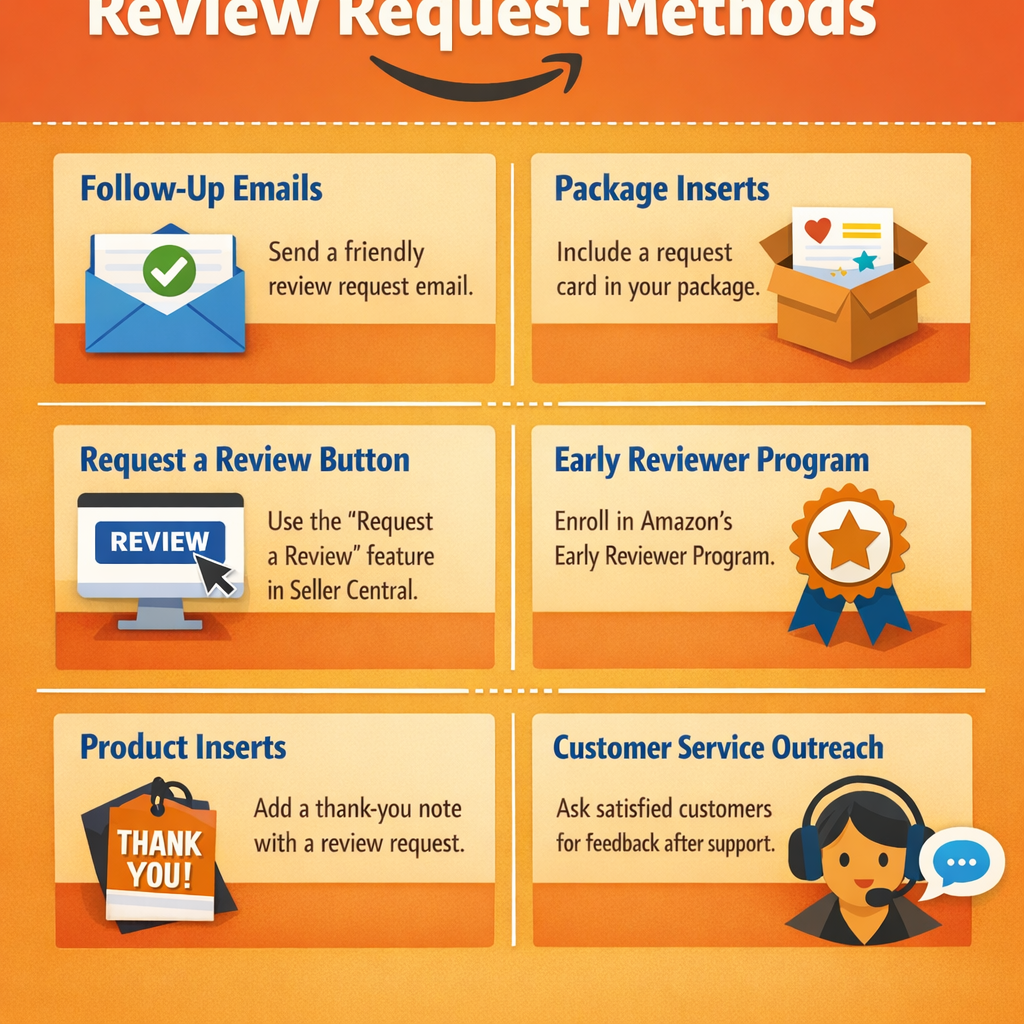
1. Use Amazon’s “Request a Review” Button
Inside Amazon Seller Central, sellers can access the “Request a Review” feature. This tool sends an automated message to customers.
Why It Works
- Amazon controls the wording
- The message remains neutral
- It follows policy guidelines
- It reduces compliance risk
Because Amazon standardizes the message, sellers avoid accidental violations. Many experienced sellers use this method as their primary review request system.
2. Send a Compliant Follow-Up Message
Amazon allows limited communication with buyers. You can send a short follow-up message after delivery.
Best Practices
- Keep the message short
- Use neutral language
- Avoid emotional wording
- Do not request positive reviews
Example:
“Hello, we hope your order arrived safely. We would appreciate your honest feedback about your experience.” Simple and professional communication builds trust.
3. Optimize Product Inserts Carefully
Packaging inserts can remind customers to leave feedback. However, they must remain compliant.
Allowed
- Thank customers for their purchase
- Invite honest feedback
Not Allowed
- Offering discounts for reviews
- Asking specifically for five-star ratings
- Directing customers outside Amazon
Neutral language is essential. The goal is to invite, not pressure.
4. Deliver Exceptional Customer Experience
The most powerful review method starts before the request. While customers leave reviews when:
- The product matches expectations
- Shipping is fast
- Instructions are clear
- Support responds quickly
If the experience is smooth, review requests feel natural. Without strong service, no request strategy will work long-term.
5. Time Your Request Properly
Timing affects response rates. Send review requests:
- After confirmed delivery
- After customers have used the product
- Within 5–10 days for most categories
For products that require setup or long-term use, allow more time. Asking too early reduces response rates.
6. Monitor Feedback Trends
Review management does not end after sending requests. Analyze feedback patterns regularly. Look for:
- Repeated complaints
- Product quality issues
- Packaging problems
- Common praise points
Then improve your product or listing accordingly. This approach increases future positive reviews organically.
7. Automate Responsibly
Some third-party tools integrate with Amazon to automate review requests. If you use automation, ensure it complies with Amazon’s policies.
The tool must:
- Use neutral language
- Avoid filtering negative buyers
- Follow communication limits
Compliance must always come first.
Common Mistakes to Avoid
Even experienced sellers make errors. Avoid these risks:
- Offering incentives for reviews
- Asking only satisfied buyers
- Sending multiple messages
- Using aggressive wording
These practices can lead to account suspension.
Long-Term Review Growth Strategy
Sustainable growth requires discipline.
- Use the “Request a Review” button consistently.
- Improve product quality continuously.
- Respond professionally to negative feedback.
- Monitor customer satisfaction metrics.
Shortcuts may create temporary spikes. However, consistent systems create lasting growth
Proven Amazon review request methods combine compliance, timing, and customer satisfaction. The safest and most effective approach begins with Amazon’s built-in tools and strong service standards.
After years of marketplace experience, one truth remains consistent: genuine customer satisfaction produces the strongest reviews. Focus on quality, maintain compliance, and build a review system that supports long-term growth. Strong reviews are not the result of pressure. They are the result of performance.
Timing Strategy for Maximum Reviews
Customer reviews influence trust, visibility, and sales on Amazon. While many sellers focus on how to ask for reviews, fewer pay attention to when to ask. Timing plays a major role in response rates and review quality.
A well-planned timing strategy can significantly increase review volume without violating policies. Let’s explore how to request reviews at the right moment for maximum impact.

Why Timing Matters in Review Requests
Customers are more likely to leave feedback when:
- They have received the product
- They have used it
- Their experience is still fresh
If you ask too early, they may not have tried the product yet. If you ask too late, they may forget about it. The right timing creates a natural opportunity for feedback.
Step 1: Wait for Confirmed Delivery
Never send a review request before delivery confirmation. Customers cannot review something they have not received. Inside Amazon Seller Central, you can track delivery status. Use this data to schedule requests accurately. Sending a request before delivery may create frustration and reduce trust.
Step 2: Allow Product Usage Time
Different products require different usage periods.
For Simple Products
Items like phone cases or kitchen tools may need only 3–5 days after delivery.
For Complex Products
Electronics, fitness equipment, or skincare products require longer testing time. Waiting 7–14 days improves review quality. When customers fully experience the product, they write more detailed and helpful reviews.
Step 3: Use the 5–10 Day Window Rule
For most categories, the ideal window is between 5 and 10 days after delivery.
This timeframe works because:
- The experience remains fresh
- The product has been tested
- Customers are still engaged
Many successful sellers follow this simple rule to maintain steady review growth.
Step 4: Avoid Over communication
Sending multiple messages reduces response rates. It may also violate communication guidelines. Instead:
- Send one compliant request
- Keep the message short
- Use neutral language
The built-in “Request a Review” button in Seller Central ensures compliance and proper timing.
Step 5: Consider Seasonal and Emotional Timing
Customer behavior changes during holidays and sales events. During peak seasons:
- Buyers receive multiple packages
- Attention spans decrease
- Response rates may drop
In such cases, allow extra days before requesting feedback. A slight delay improves visibility in crowded inboxes.
Step 6: Monitor Data and Adjust
Every product category behaves differently. Monitor your review response rate regularly.
Track:
- Delivery dates
- Request dates
- Review submission patterns
If response rates decline, adjust timing slightly. Small changes often produce measurable improvements.
Common Timing Mistakes
Avoid these frequent errors:
- Requesting reviews immediately after shipment
- Asking before customers use the product
- Sending reminders repeatedly
- Ignoring product category differences
These mistakes reduce credibility and engagement.
Long-Term Review Timing Strategy
Consistency is more important than speed.
Build a system that:
- Triggers review requests after confirmed delivery
- Waits for proper usage time
- Sends only one compliant message
- Tracks performance monthly
A disciplined approach produces stable, predictable results
Timing strategy for maximum reviews requires patience, structure, and attention to customer behavior. The ideal window usually falls between 5 and 10 days after delivery, depending on product complexity. Experienced sellers understand that review growth depends not only on quality products but also on well-timed communication. When timing aligns with customer experience, review rates increase naturally. In the long run, precise timing strengthens trust, improves engagement, and supports sustainable sales growth.
Common Amazon Review Mistakes
Customer reviews influence trust, visibility, and sales on Amazon. While many sellers focus on how to ask for reviews, fewer pay attention to when to ask. Timing plays a major role in response rates and review quality.
A well-planned timing strategy can significantly increase review volume without violating policies. Let’s explore how to request reviews at the right moment for maximum impact.
Why Timing Matters in Review Requests
Customers are more likely to leave feedback when:
- They have received the product
- They have used it
- Their experience is still fresh
If you ask too early, they may not have tried the product yet. If you ask too late, they may forget about it. The right timing creates a natural opportunity for feedback.
Step 1: Wait for Confirmed Delivery
Never send a review request before delivery confirmation. Customers cannot review something they have not received. Inside Amazon Seller Central, you can track delivery status. Use this data to schedule requests accurately. Sending a request before delivery may create frustration and reduce trust.
Step 2: Allow Product Usage Time
Different products require different usage periods.
For Simple Products
Items like phone cases or kitchen tools may need only 3–5 days after delivery.
For Complex Products
Electronics, fitness equipment, or skincare products require longer testing time. Waiting 7–14 days improves review quality. When customers fully experience the product, they write more detailed and helpful reviews.
Step 3: Use the 5–10 Day Window Rule
For most categories, the ideal window is between 5 and 10 days after delivery.
This timeframe works because:
- The experience remains fresh
- The product has been tested
- Customers are still engaged
Many successful sellers follow this simple rule to maintain steady review growth.
Step 4: Avoid Overcommunication
Sending multiple messages reduces response rates. It may also violate communication guidelines.
Instead:
- Send one compliant request
- Keep the message short
- Use neutral language
The built-in “Request a Review” button in Seller Central ensures compliance and proper timing.
Step 5: Consider Seasonal and Emotional Timing
Customer behavior changes during holidays and sales events. During peak seasons:
- Buyers receive multiple packages
- Attention spans decrease
- Response rates may drop
In such cases, allow extra days before requesting feedback. A slight delay improves visibility in crowded inboxes.
Step 6: Monitor Data and Adjust
Every product category behaves differently. Monitor your review response rate regularly.
Track:
- Delivery dates
- Request dates
- Review submission patterns
If response rates decline, adjust timing slightly. Small changes often produce measurable improvements.
Common Timing Mistakes
Avoid these frequent errors:
- Requesting reviews immediately after shipment
- Asking before customers use the product
- Sending reminders repeatedly
- Ignoring product category differences
These mistakes reduce credibility and engagement.
Long-Term Review Timing Strategy
Consistency is more important than speed.
Build a system that:
- Triggers review requests after confirmed delivery
- Waits for proper usage time
- Sends only one compliant message
- Tracks performance monthly
A disciplined approach produces stable, predictable results.
Timing strategy for maximum reviews requires patience, structure, and attention to customer behavior. The ideal window usually falls between 5 and 10 days after delivery, depending on product complexity. Experienced sellers understand that review growth depends not only on quality products but also on well-timed communication. When timing aligns with customer experience, review rates increase naturally.
In the long run, precise timing strengthens trust, improves engagement, and supports sustainable sales growth.
Long-Term Amazon Review Growth System
Success on Amazon does not come from short bursts of sales. It comes from consistent trust. Reviews play a central role in that trust. However, many sellers chase quick results instead of building a long-term review growth system.
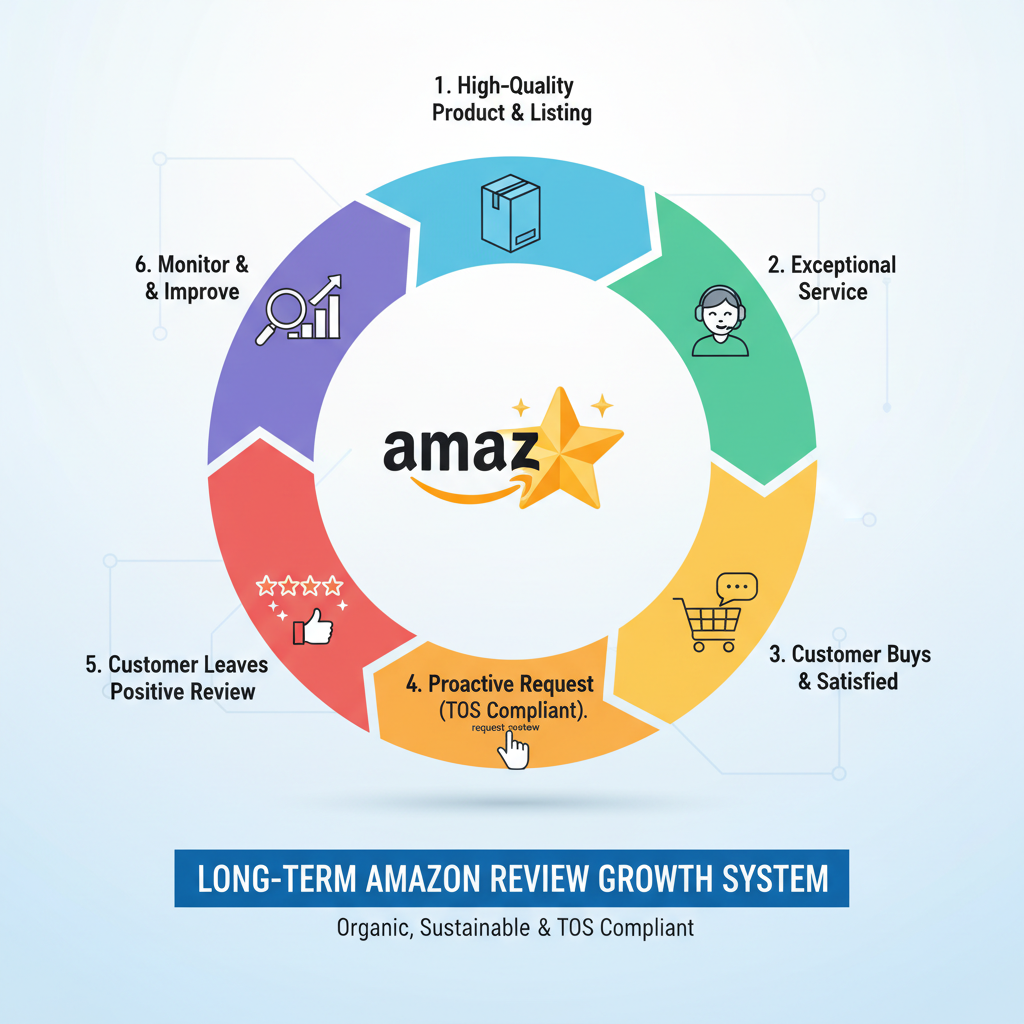
A sustainable Amazon review strategy focuses on quality, compliance, and customer experience. When done correctly, it creates steady review velocity without risking account health. Let’s break down the key elements of a long-term Amazon review growth system.
Why Shortcuts Fail
Some sellers look for fast ways to increase reviews. They may consider incentives, aggressive messaging, or risky tactics. These approaches often lead to penalties or suspension.
Amazon’s policies are strict for a reason. The platform protects buyer trust above everything else. A long-term system avoids shortcuts and focuses on genuine customer satisfaction.
Step 1: Start With Product Quality
No review strategy works without a strong product.
Focus on:
- Durable materials
- Accurate sizing or specifications
- Clear instructions
- Reliable packaging
If your product solves a real problem, reviews will follow naturally. Poor products generate negative feedback, which damages long-term growth.
Step 2: Optimize Listing Clarity
Your product listing sets expectations. Misleading descriptions lead to returns and low ratings.
Ensure your listing includes:
- Clear images
- Honest product benefits
- Accurate dimensions
- Transparent features
When expectations match reality, customers leave better reviews.
Step 3: Use Amazon’s Built-In Review Request Tool
Inside Amazon Seller Central, the “Request a Review” button offers a compliant way to ask for feedback.
Make it part of your daily routine. Consistency builds review momentum over time. Automated internal systems reduce human error and protect compliance.
Step 4: Deliver Strong Customer Support
Customer support influences reviews more than most sellers realize.
Respond quickly to:
- Shipping issues
- Product questions
- Replacement requests
Fast resolution prevents negative reviews. In many cases, satisfied customers update their feedback after a positive support experience.
Step 5: Monitor Review Patterns Monthly
A long-term system includes analysis.
Track:
- Average rating trends
- Common complaints
- Repeated praise
- Product return reasons
Use this data to improve product design, packaging, or instructions. Continuous improvement strengthens future reviews.
Step 6: Build Brand Trust Over Time
As your review count grows, brand credibility increases. Customers feel safer purchasing from sellers with a consistent track record.
Trust creates:
- Higher conversion rates
- Better ad performance
- Repeat customers
- Lower acquisition costs
A review growth system strengthens brand value year after year.
Step 7: Avoid Risky Automation Tools
Some third-party tools promise rapid review increases. However, not all comply with Amazon’s communication policies.
If you use automation, ensure it:
- Uses neutral language
- Follows Amazon guidelines
- Avoids filtering buyers
Compliance must remain the priority.
The Compounding Effect of Reviews
Reviews compound over time. Each new positive review improves visibility and trust. Higher visibility generates more sales. More sales generate more reviews.
This cycle creates steady, organic growth. However, it requires patience and discipline.
Long-Term Strategy Summary
A sustainable Amazon review growth system includes:
- High product quality
- Accurate listings
- Consistent use of compliant review requests
- Excellent customer support
- Ongoing product improvement
No shortcuts. No risky tactics. Only structured growth.
Conclusion
Asking for Amazon reviews is not about shortcuts or pressure tactics. It is about building trust, delivering genuine value, and following the right process consistently. When done correctly, review requests strengthen your brand, improve product credibility, and increase long-term sales performance.
By understanding and following the policies set by Amazon, choosing the right timing, using compliant messaging, and focusing on customer satisfaction first, sellers can create a steady and ethical flow of authentic reviews. Personalization, automation within guidelines, and a customer-first mindset make a powerful difference.
Remember, reviews are earned—not forced. Every positive customer experience is an opportunity for honest feedback. When you prioritize quality, transparency, and long-term relationships, reviews naturally follow, helping your brand grow sustainably in the competitive Amazon marketplace.