
PART 2: How Reviews are essential for brand building
Reviews and Search Engine Visibility (SEO Benefits)
In today’s digital marketplace, reviews are more than just social proof—they are powerful SEO assets. Whether you run an ecommerce store, a local service business, or a global brand, customer reviews directly influence how search engines rank and display your content. Let’s explore how reviews boost search engine visibility and why they are essential for long-term organic growth.
1. Fresh User-Generated Content Improves Rankings
Search engines like Google prioritize fresh and relevant content. These Reviews continuously add new, unique text to your product or service pages. Every customer review:
- Adds natural language variations
- Includes real-life use cases
- Introduces long-tail keywords
- Keeps pages updated
This steady flow of fresh content signals to search engines that your page is active and relevant, increasing its chances of ranking higher in search results.
2. Long-Tail Keywords Come Naturally
Customers describe products and services in their own words. These descriptions often include specific phrases you may not have intentionally targeted. For example:
- “Best budget wireless earbuds for gym workouts”
- “Affordable wedding photographer in Hyderabad”
- “Comfortable office chair for back pain”
Such natural phrases help you rank for long-tail search queries that have lower competition but high purchase intent.
3. Increased Click-Through Rate (CTR) with Star Ratings
When structured properly, reviews can appear as rich snippets in search results. Those star ratings under your website link significantly increase visibility. Structured data using schema markup allows search engines to display:
- Star ratings
- Number of reviews
- Product pricing
These visual elements make your listing stand out, increasing click-through rates compared to competitors without ratings.
4. Improved Dwell Time and Reduced Bounce Rate
Visitors often scroll directly to reviews before making a decision. When customers spend more time reading feedback:
- Dwell time increases
- Bounce rate decreases
- Engagement signals improve
Search engines interpret these behaviors as indicators of valuable content, which can positively impact rankings.
5. Local SEO Boost Through Reviews
For local businesses, reviews are even more critical. On platforms like Google Business Profile (formerly Google My Business), reviews directly affect:
- Local pack rankings
- Map visibility
- Customer trust
The quantity, quality, and recency of reviews all influence how prominently your business appears in local search results.
6. Recency Signals Authority
Search engines prefer businesses which are active and trustworthy. Recent reviews signal:
- Ongoing customer engagement
- Current product/service relevance
- Business reliability
A steady stream of recent reviews is better than a large batch of old reviews. Recency adds credibility both to users and algorithms.
7. Reviews Strengthen Brand Signals
Search engines evaluate brand reputation as part of ranking signals. When your brand is mentioned positively across multiple platforms—such as:
- Amazon
- Flipkart
- Trustpilot
It reinforces your brand authority and trustworthiness. Consistent positive sentiment across the web strengthens your overall SEO footprint.
8. Higher Conversion Rates Support SEO Performance
SEO is not just about traffic—it’s about performance. Pages with strong reviews convert better. Higher conversions mean:
- Better user engagement
- Stronger behavioral metrics
- Increased return visitors
Even though these signals contribute to sustained search visibility over time.
Best Practices to Maximize SEO from Reviews
To fully leverage review-based SEO benefits:
- Encourage customers to leave detailed feedback
- Respond to both positive and negative reviews
- Use structured data markup
- Showcase reviews prominently on key pages
- Focus on review recency
- Avoid fake or incentivized reviews
Authenticity is essential. Search engines are increasingly sophisticated in detecting manipulation.
When reviews are no longer optional—they are a critical component of modern SEO strategy. They generate fresh content, improve click-through rates, enhance engagement metrics, and strengthen local visibility.
Some businesses that treat reviews as part of their SEO foundation gain a competitive edge in search rankings. By encouraging authentic customer feedback and integrating it strategically, you transform reviews from simple testimonials into powerful search engine growth drivers. In the digital world, your customers don’t just influence buying decisions—they influence your search visibility too.
How Reviews Improve Local SEO Rankings
Customer reviews are one of the strongest signals in local search optimization. While search engines evaluate three primary factors for local rankings: relevance, distance, and prominence. Reviews directly impact prominence.
When a business consistently receives positive and recent reviews, search engines view it as trustworthy and active. This increases the chances of appearing in the local map pack and higher in local search results. On Google, review signals such as:
- Review quantity
- Review quality (ratings)
- Review recency
- Keyword mentions within reviews
all influence local visibility. Businesses with steady review growth often outperform competitors with outdated or fewer reviews—even if both offer similar services.
User-Generated Content and Keyword Relevance
Reviews are powerful forms of user-generated content (UGC). Unlike branded marketing copy, customer reviews use natural, conversational language. This creates organic keyword diversity on your website. For example, customers may mention:
- Specific product features
- Use cases
- Locations
- Pain points
- Comparisons with competitors
These naturally written phrases often include long-tail keywords that your business may not have intentionally targeted. Search engines value this authenticity because it reflects real user intent. As reviews accumulate, your pages become richer in context, increasing keyword relevance and improving your chances of ranking for multiple search queries.
Star Ratings in Search Results and Click-Through Rates
Star ratings displayed in search results significantly impact click-through rates (CTR). When structured data markup is properly implemented, search engines can show:
- Star ratings
- Number of reviews
- Pricing details
These visual enhancements—often called rich snippets—make your listing stand out among competitors. A page with 4.7 stars and 250 reviews instantly builds trust compared to a plain text result. Higher CTR signals to search engines that users find your listing relevant. Over time, strong engagement can positively influence search performance.
Google Business Profile Reviews and Discoverability
For local businesses, Google Business Profile plays a critical role in discoverability. Most of the reviews on this platform directly affect:
- Map rankings
- “Near me” searches
- Local pack placement
- Voice search results
Frequent, high-quality reviews increase your chances of appearing in Google Maps results and local queries. Additionally, when customers include keywords like service type or location in their feedback, it strengthens local search relevance. Responding to reviews further boosts visibility. Active engagement signals that your business is responsive and customer-focused—qualities search engines reward.
Final Thoughts
Reviews are more than testimonials—they are SEO assets. They enhance keyword relevance, improve local rankings, increase click-through rates, and strengthen overall discoverability. Businesses that consistently collect and manage authentic reviews gain a measurable advantage in search engine visibility and long-term organic growth.
The Role of Reviews in Conversion Optimization
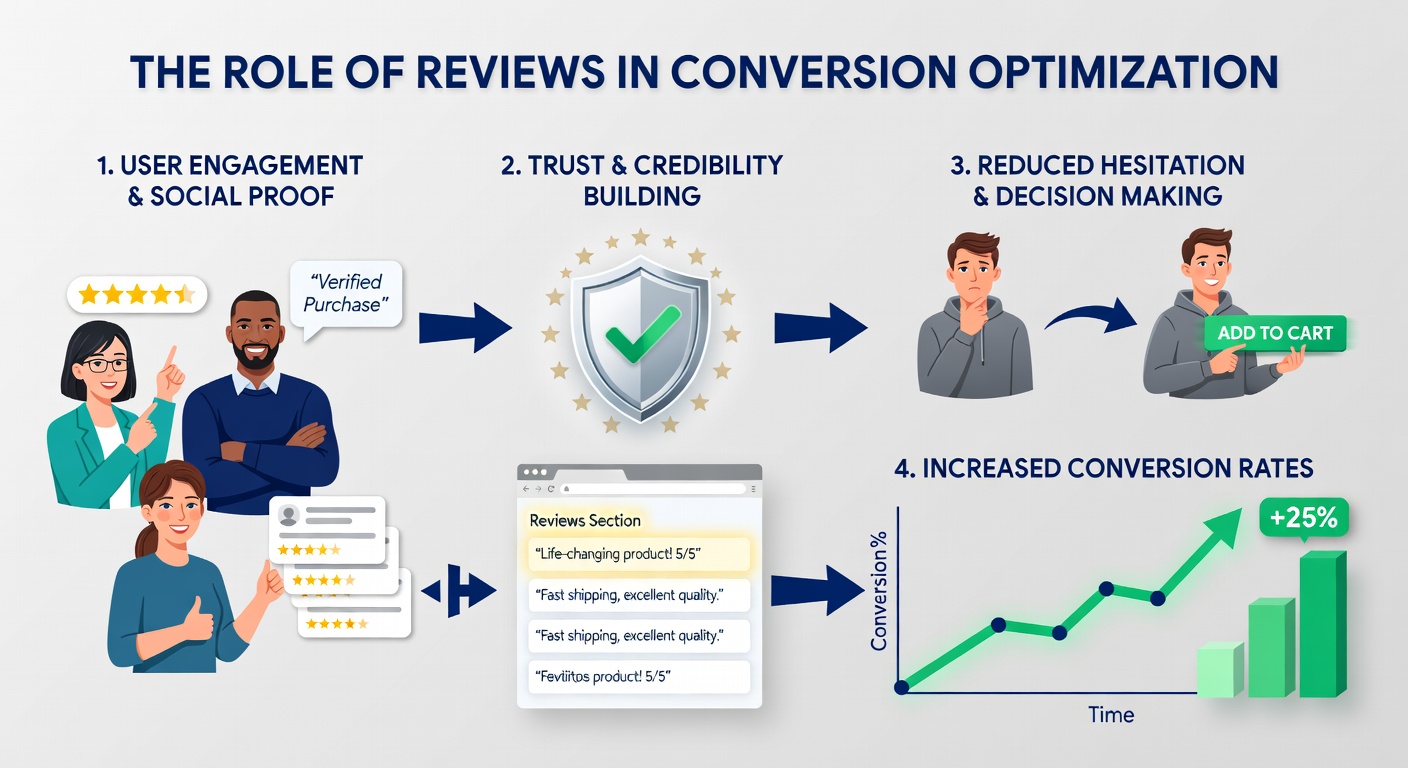
In digital marketing, driving traffic is only half the battle. The real success lies in converting visitors into customers. Customer reviews play a critical role in conversion optimization by building trust, reducing hesitation, and influencing purchase decisions at the final stage of the buyer journey.
1. Reviews Build Immediate Trust
When visitors land on a product or service page, they often look for proof before committing. Reviews act as social validation. Seeing real experiences from real customers reassures potential buyers that they are making a safe decision.
Mostly, Platforms like Amazon have proven how powerful review systems can be. Products with strong ratings and detailed feedback consistently outperform those with little or no social proof. Trust reduces friction—and less friction means higher conversions.
2. Reviews Reduce Purchase Anxiety
Every buyer has doubts:
- Will this product meet my expectations?
- Is it worth the price?
- What if it doesn’t work as promised?
Reviews answer these concerns naturally. When customers describe real use cases, benefits, and even minor drawbacks, they create transparency. Transparency lowers risk perception, which is a key factor in conversion rate optimization.
3. Reviews Influence Decision-Making Psychology
Human behavior is strongly influenced by social proof. When people see others choosing and recommending a product, they feel more confident doing the same.
Star ratings, customer photos, testimonials, and detailed feedback all trigger psychological reassurance. This effect becomes even stronger when reviews are recent and consistent. Search engines like Google also display ratings in search results, reinforcing trust before users even visit the page.
4. Reviews Improve On-Page Engagement
Visitors often scroll directly to the review section. This increases:
- Time spent on page
- Scroll depth
- Interaction with content
Higher engagement signals that users find the page valuable. Engaged users are more likely to complete desired actions such as purchasing, signing up, or requesting a quote.
5. Balanced Reviews Increase Authenticity
Surprisingly, a perfect 5.0 rating does not always convert better. A mix of mostly positive reviews with a few constructive criticisms appears more authentic. When businesses respond professionally to negative feedback, it demonstrates accountability. This responsiveness often strengthens buyer confidence rather than harming it.
6. Reviews Support High-Intent Buyers
Visitors who read reviews are often closer to making a decision. They are not browsing casually—they are evaluating. Detailed reviews:
- Clarify product specifications
- Highlight benefits
- Confirm performance
- Compare alternatives
This helps high-intent visitors move from consideration to action more quickly.
7. Reviews Increase Conversion Across Channels
Reviews impact more than just website sales. They influence:
- Marketplace conversions
- App downloads
- Local service bookings
- Subscription sign-ups
On platforms like Trustpilot, strong ratings can dramatically increase conversion rates because third-party validation adds credibility beyond self-promotion.
Best Practices for Using Reviews in Conversion Optimization
To maximize their impact:
- Display reviews prominently near call-to-action buttons
- Highlight top-rated feedback
- Use structured snippets and star ratings
- Encourage detailed, experience-based reviews
- Respond to negative feedback professionally
- Keep reviews recent and updated
Authenticity should always be prioritized over volume.
Reviews are one of the most powerful tools in conversion optimization. They reduce doubt, build credibility, increase engagement, and guide decision-making. In a competitive online environment, customers trust other customers more than brand messaging. Businesses that actively collect, showcase, and manage reviews create a stronger path from visitor to buyer. Traffic attracts attention—but trust drives conversions.
Increasing Conversion Rates with Social Proof
Social proof is one of the most powerful drivers of online conversions. When potential customers see that others have purchased, used, and recommended a product, it reduces uncertainty and builds immediate trust.
Reviews, testimonials, and ratings act as validation signals. On major marketplaces like Amazon, products with higher ratings and more reviews consistently generate higher sales volumes. This happens because buyers rely heavily on peer opinions before making decisions.
Social proof works because it taps into basic human psychology—people feel more confident making choices that others have already approved. When reviews highlight real-life benefits, practical results, and satisfaction, they create reassurance that directly increases conversion rates.
Placement of Reviews on Product Pages
Where you place reviews significantly impacts their effectiveness. Strategic placement can dramatically improve conversions. Best-performing placements include:
- Directly below the product title (star rating summary)
- Near the pricing section
- Close to the “Add to Cart” or “Buy Now” button
- Dedicated review sections with filters and sorting
Highlighting top reviews or featuring short testimonials near call-to-action buttons helps eliminate last-minute hesitation. Search engines like Google also reward structured review data, which can display star ratings in search results. This increases click-through rates before visitors even reach the page. The goal is simple: reduce friction at every decision point.
Case Studies and Data-Driven Insights
Multiple industry studies show a direct link between reviews and conversion performance:
- Products with 5–10 reviews often convert significantly better than those with none.
- Conversion rates typically increase as review count grows.
- Recent reviews have a stronger impact than older ones.
For example, businesses using third-party review platforms such as Trust pilot often report measurable improvements in customer acquisition and sales performance after actively collecting and showcasing feedback. Data consistently supports this pattern: more authentic reviews lead to higher trust, and higher trust leads to higher conversions.
The Influence of Ratings on Price Justification
Ratings play a critical role in price perception. Customers are more willing to pay premium prices for products with strong reviews and high ratings. A 4.7-star product at a higher price often outsells a cheaper alternative with lower ratings. Why? Because ratings reduce perceived risk. Buyers associate higher ratings with:
- Better quality
- Greater reliability
- Stronger customer satisfaction
- Lower chances of regret
In essence, reviews help justify pricing by reinforcing value. When customers feel confident in the outcome, price becomes less of a barrier.
Final Thoughts
Reviews are not just feedback—they are conversion assets. Social proof builds trust, strategic placement removes friction, data confirms performance impact, and strong ratings justify pricing.
Businesses that actively manage and optimize their review strategy gain a measurable advantage in turning visitors into paying customers. In the digital marketplace, credibility is currency—and reviews are one of its strongest forms.
Negative Reviews: For Hidden Opportunities and Brand Growth
Most businesses fear negative reviews. They see them as threats to reputation, sales, and credibility. But in reality, negative reviews—when handled strategically—can become powerful tools for brand growth.
In today’s transparent digital world, customers don’t expect perfection. They expect honesty, accountability, and improvement. A well-managed negative review can actually strengthen trust more than a page full of flawless five-star ratings.
1. Negative Reviews Build Authenticity
A perfect 5.0 rating often raises suspicion. Consumers know that no product or service is flawless. A mix of positive feedback with a few critical comments appears more genuine and believable.
On platforms like Amazon, shoppers frequently read 2-star and 3-star reviews to understand potential drawbacks before making a purchase. Balanced feedback increases more transparency, which builds long-term trust. Authenticity converts better than artificial perfection.
2. They Reveal Operational Gaps
Negative reviews are direct, unfiltered customer feedback. They highlight:
- Delivery delays
- Quality issues
- Poor customer support
- Misleading product descriptions
- User experience problems
Instead of viewing criticism as an attack, smart businesses treat it as free consulting. Identifying recurring complaints allows brands to fix root causes and improve systems. Continuous improvement strengthens brand loyalty and competitive advantage.
3. Professional Responses Strengthen Reputation
How a company responds to criticism matters more than the criticism itself. A calm, respectful, and solution-focused reply shows professionalism. Search engines like Google often display business responses publicly. Potential customers evaluate not only the complaint but also how the business handles it.
A thoughtful response demonstrates:
- Accountability
- Customer care
- Willingness to resolve issues
- Brand maturity
In many cases, this increases trust more than a positive review would.
4. Negative Reviews Increase Engagement Signals
Engagement plays a role in visibility and credibility. When businesses respond to reviews, it creates interaction and signals active management.
On platforms such as Google Business Profile, consistent responses can improve local reputation signals. Customers notice active communication, and that strengthens overall brand perception.
5. They Help Set Realistic Expectations
Sometimes negative reviews filter out the wrong audience. For example:
- A budget product criticized for lacking premium features
- A spicy dish labeled “too hot” by someone sensitive to spice
- A compact apartment described as “small”
These reviews clarify expectations. When future buyers understand exactly what they’re getting, satisfaction increases and refund rates decrease. Negative feedback, in this sense, attracts better-fit customers.
6. They Create Opportunities to Win Back Customers
A quick apology and resolution can turn a dissatisfied customer into a loyal advocate. When customers feel heard and valued, they often update their reviews or share positive follow-up experiences. Handled correctly, a complaint becomes a relationship-building opportunity.
7. They Strengthen Brand Credibility
Brands that openly address criticism appear confident. Brands that delete or ignore feedback appear insecure. Where as Transparency builds a long-term credibility. In competitive markets, credibility is more valuable than temporary perfection.
How to Turn Negative Reviews into Growth
To leverage negative reviews effectively:
- Respond quickly and professionally
- Avoid defensive language
- Offer solutions publicly
- Take complex discussions offline when needed
- Track patterns in complaints
- Implement operational improvements
Every negative review carries insight. The difference lies in how the brand chooses to respond.
Negative reviews are not obstacles—they are opportunities. They expose weaknesses, create transparency, and allow businesses to demonstrate accountability. In a world where consumers value authenticity over perfection, how you handle criticism defines your brand more than the criticism itself. Handled wisely, negative reviews don’t damage growth—they accelerate it.
Why Negative Feedback Is Not Always Bad?
Negative feedback may feel uncomfortable, but it is not always harmful. In fact, it can enhance credibility and trust. Though Customers are aware that no business is perfect. A profile filled with only flawless 5-star reviews often appears unrealistic.
On platforms like Amazon, shoppers frequently read lower-rated reviews to understand potential drawbacks before making a purchase. Balanced feedback provides transparency and helps customers make informed decisions.
Negative reviews also highlight areas for improvement. They reveal gaps in product quality, service delivery, communication, or expectations. When businesses treat criticism as insight rather than attack, they gain valuable data that can drive growth and innovation.
Responding Professionally to Criticism
The response to a negative review often matters more than the review itself. A calm, respectful, and solution-oriented reply demonstrates professionalism. Search engines such as Google publicly display business responses, especially on local listings. Potential customers evaluate how a brand handles challenges.
An effective response should:
- Acknowledge the issue
- Apologize when appropriate
- Offer a clear solution
- Avoid defensive language
- Invite further communication offline if necessary
Professional responses show accountability and customer care, which strengthens brand reputation.
Turning Dissatisfied Customers into Loyal Advocates
A dissatisfied customer is not necessarily a lost customer. When businesses respond quickly and resolve issues effectively, they often create stronger loyalty than if no issue had occurred at all.
Many customers update their reviews after a satisfactory resolution. This visible transformation—from complaint to appreciation—can positively influence potential buyers.
On platforms like Google Business Profile, updated reviews and positive follow-ups can significantly enhance local reputation. Addressing concerns with empathy turns negative experiences into trust-building moments.
Public Responses as Brand Positioning Tools
Public replies to reviews are not just customer service—they are brand messaging opportunities. Every response communicates your company’s values, tone, and commitment. When businesses:
- Show empathy
- Take responsibility
- Provide solutions
- Maintain professionalism
they position themselves as transparent and customer-focused.
Each response becomes part of your public brand image. Future customers read these interactions to evaluate reliability, responsiveness, and culture.
Final Thoughts
Negative feedback is not a threat—it is an opportunity. It builds authenticity, reveals areas for improvement, and allows brands to demonstrate accountability.
Handled professionally, criticism strengthens trust. Managed strategically, it turns dissatisfied customers into loyal advocates. And when used wisely, public responses become powerful brand positioning tools that elevate long-term credibility and growth.
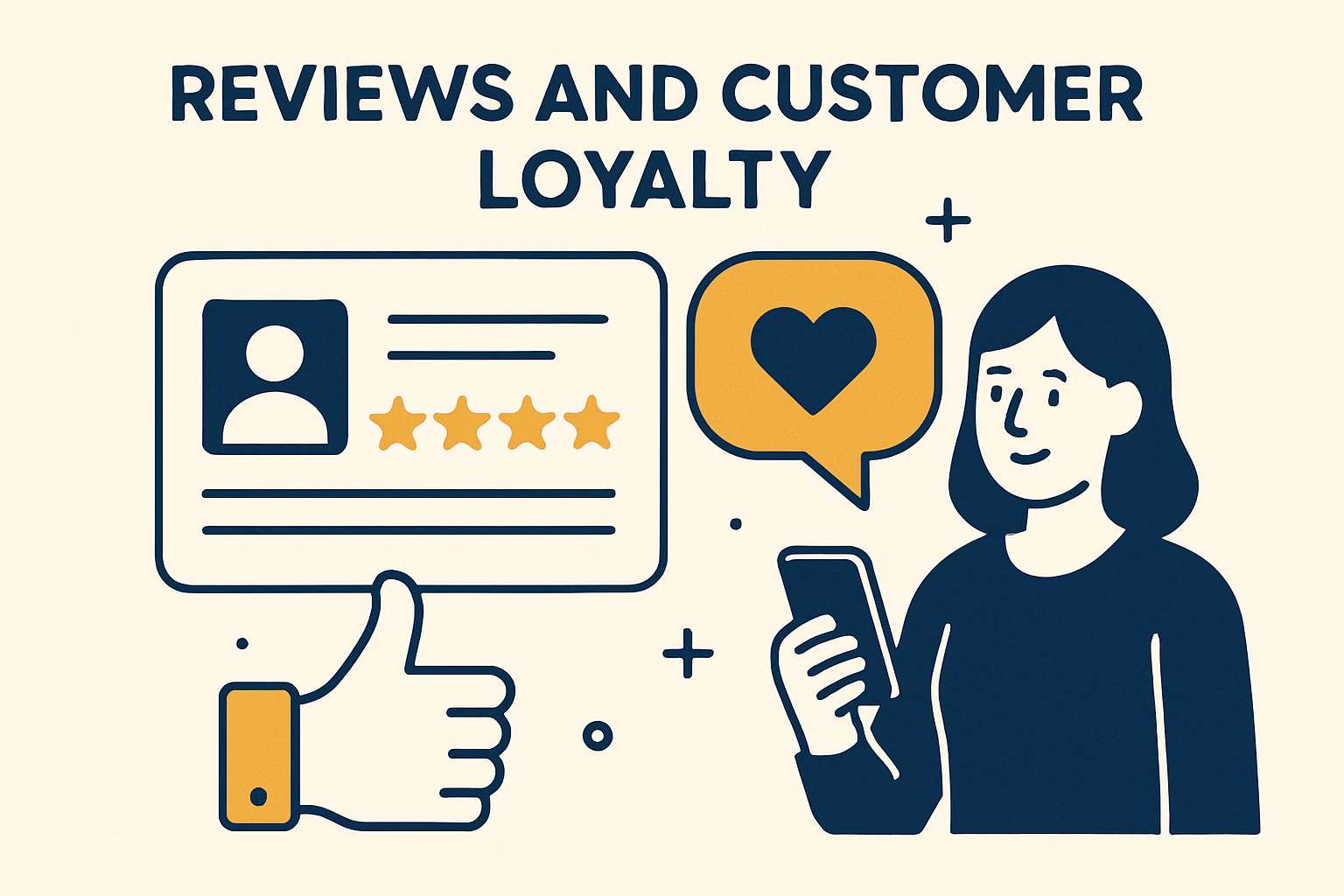
Reviews and Customer Loyalty
Customer loyalty is built on trust, consistency, and positive experiences. In today’s digital marketplace, reviews play a powerful role in strengthening that loyalty. They are not just tools for attracting new buyers—they are essential for retaining existing customers and building long-term relationships.
1. Reviews Reinforce Customer Trust
When customers see consistent positive feedback about a brand, it validates their decision to purchase. This reassurance strengthens emotional confidence in the brand.
Platforms like Amazon have shown that buyers often return to products and sellers with strong review histories. Trust reduces the likelihood of switching to competitors.
Loyalty begins with confidence—and reviews reinforce that confidence.
2. Engagement Builds Emotional Connection
When businesses respond to reviews—both positive and negative—they show customers that their opinions matter. This interaction creates a sense of recognition and respect.
Search platforms such as Google display business responses publicly, giving brands the opportunity to show appreciation and accountability. A simple “Thank you for your feedback” or a thoughtful response to a concern can strengthen emotional loyalty and encourage repeat purchases.
3. Reviews Create Community Around the Brand
Customer reviews create a shared experience. Buyers read stories, compare experiences, and feel connected to others who made similar choices.
On platforms like Trustpilot, communities form around brand reputation. Customers become advocates when they feel part of something trusted and valued. A strong review ecosystem turns customers into participants—not just buyers.
4. Transparency Strengthens Long-Term Relationships
No brand is perfect. A mix of positive and constructive feedback makes a brand appear honest and transparent. When companies openly address criticism, it builds credibility.
Transparency reduces skepticism and increases long-term retention. Customers are more likely to remain loyal to brands that admit mistakes and improve continuously.
5. Reviews Encourage Repeat Purchases
Satisfied customers who leave positive reviews are more likely to purchase again. Writing a review increases psychological commitment to the brand.
Additionally, new customers influenced by strong reviews often become repeat buyers themselves. The cycle of trust continues, reinforcing loyalty over time.
6. Loyalty Drives Word-of-Mouth Marketing
Loyal customers become brand advocates. They share experiences, recommend products, and defend the brand in public discussions.
Positive reviews act as digital word-of-mouth. When customers publicly endorse a business, it strengthens both acquisition and retention strategies.
Best Practices to Use Reviews for Loyalty Growth
To maximize loyalty through reviews:
- Encourage honest, detailed feedback
- Respond quickly and professionally
- Show appreciation for positive reviews
- Resolve complaints publicly and respectfully
- Highlight customer stories and testimonials
- Continuously improve based on feedback
Customer loyalty is not built through marketing alone—it is built through listening and responding.
Reviews are more than reputation tools—they are relationship builders. They reinforce trust, encourage engagement, create community, and promote transparency. Businesses that actively manage and value customer feedback build stronger emotional connections. And in competitive markets, emotional connection is the foundation of lasting customer loyalty.
Making Customers Feel: Heard and Valued
Customers want more than just a transaction—they want acknowledgment. When a business actively collects and responds to reviews, it signals that customer opinions matter.
On platforms like Google Business Profile, customers can publicly share their experiences. When businesses respond thoughtfully, it shows appreciation and attentiveness.
Feeling heard increases emotional connection. When customers believe their voice influences improvements, they develop stronger loyalty and are more likely to continue supporting the brand.
Engaging Reviewers Through Replies
Replies transform reviews from static feedback into active conversations. A simple thank-you message for positive feedback reinforces satisfaction, while a solution-oriented response to criticism builds trust. Marketplaces such as Amazon allow sellers to respond to customer concerns. Professional engagement demonstrates accountability and customer focus.
Effective engagement should:
- Personalize the response
- Address specific concerns
- Offer help or clarification
- Maintain a respectful tone
When businesses consistently engage, they create a customer-first brand image.
Building Community And Feedback
Reviews can foster a sense of shared experience among customers. People often read feedback not only to evaluate products but also to connect with others who have similar needs or challenges.
Review platforms like Trust pilot create ecosystems where customers contribute to a collective brand story. When businesses highlight testimonials, share customer stories, or showcase user experiences, they turn feedback into community-building tools. A strong community encourages advocacy, referrals, and long-term engagement.
Encouraging: Repeat Purchases Through Trust
Trust is the foundation of repeat business. Positive reviews reassure customers that they made the right choice. Over time, this reinforcement reduces hesitation in future purchases.
Search engines such as Google often display ratings directly in search results, strengthening brand credibility even before customers visit the website. When customers consistently see high ratings, professional responses, and transparent feedback management, they feel confident returning. Trust lowers decision-making friction, making repeat purchases more likely.
Final Thoughts
Brand Reviews are not just about attracting new buyers—they are powerful loyalty tools. By making customers feel valued, engaging thoughtfully, fostering community, and reinforcing trust, businesses can transform simple feedback into long-term customer relationships. When customers feel heard and respected, they don’t just buy again—they become advocates.
Reviews as Market Research Gold
Customer reviews are often viewed as reputation tools or conversion drivers. But beyond marketing benefits, reviews are one of the most valuable sources of real-time market research available to businesses.
Unlike traditional surveys or focus groups, reviews are voluntary, authentic, and experience-driven. They reflect what customers truly think—without filters. When analyzed strategically, reviews become actionable data that guide product development, service improvements, and business growth.

1. Unfiltered Customer Insights
Reviews reveal what customers genuinely value, dislike, or expect. They highlight:
- Product strengths
- Feature gaps
- Service bottlenecks
- Pricing concerns
- Competitive comparisons
On platforms like Amazon, customers often provide detailed feedback about usability, packaging, durability, and performance. These insights offer direct guidance on what to improve or maintain.
This kind of organic feedback is often more honest than structured survey responses.
2. Identifying Patterns and Trends
One negative review may be an isolated issue. But repeated complaints about the same problem indicate a systemic gap. By tracking recurring themes in reviews, businesses can:
- Detect product defects early
- Improve customer support processes
- Optimize shipping and logistics
- Refine product descriptions
Search engines like Google also display review summaries that often highlight most frequently mentioned themes. This reinforces the importance of monitoring patterns. Consistent analysis turns scattered feedback into strategic intelligence.
3. Understanding Customer Language
Reviews provide insight into how customers describe your product or service. This language is extremely valuable for:
- SEO optimization
- Ad copywriting
- Landing page messaging
- Product positioning
Customers naturally use long-tail keywords and benefit-focused descriptions. Incorporating their language into marketing materials improves relatability and relevance. In essence, reviews tell you how your market thinks—and how it speaks.
4. Competitor Benchmarking
Review platforms such as Trustpilot allow customers to compare brands directly. Reading competitor reviews reveals:
- What customers appreciate about alternatives
- What frustrations drive switching behavior
- Pricing sensitivity patterns
- Service expectations
This competitive intelligence helps businesses differentiate more effectively and position themselves strategically.
5. Testing New Ideas and Improvements
When businesses introduce product updates or service changes, reviews provide immediate feedback. Positive reactions confirm improvements. Negative feedback highlights areas needing refinement.
Reviews serve as a continuous feedback loop—faster and more cost-effective than formal research studies.
6. Improving Customer Experience
Every complaint represents an opportunity to enhance the customer journey. Reviews often uncover friction points such as:
- Confusing checkout processes
- Slow response times
- Packaging issues
- Feature misunderstandings
Addressing these concerns not only improves satisfaction but also reduces refunds, returns, and churn.
Turning Reviews into Strategic Assets
To maximize the research value of reviews:
- Categorize feedback by theme
- Monitor recurring complaints
- Track sentiment trends
- Compare competitor feedback
- Share insights with product and operations teams
- Act quickly on recurring issues
Reviews should not sit idle—they should inform decisions.
Mostly, Customer reviews are more than testimonials—they are market research gold. They provide honest insights, reveal patterns, expose weaknesses, and highlight strengths.
Businesses that actively analyze and act on review data gain a powerful competitive advantage. In a fast-moving market, the brands that listen closely are the ones that grow sustainably. Your customers are already telling you how to improve. The real question is—are you listening?
Identifying Product Strengths and Weaknesses
Customer reviews provide direct insight into what is working—and what is not. Positive reviews highlight the features, benefits, and experiences customers truly value. Negative reviews expose friction points, defects, or unmet expectations.
On platforms like Amazon, customers often describe specific details such as durability, ease of use, packaging quality, or delivery experience. When similar praises or complaints appear repeatedly, they reveal clear product strengths and weaknesses.
By categorizing feedback into themes, businesses can:
- Double down on high-performing features
- Fix recurring quality issues
- Improve product descriptions to match expectations
- Reduce returns and complaints
Reviews act as ongoing performance evaluations straight from the market.
Spotting Trends in Customer Expectations
Customer expectations evolve over time. Reviews help businesses detect these changes early.
For example, customers may begin prioritizing:
- Faster delivery
- Sustainable packaging
- Better mobile usability
- Enhanced customer support
- Transparent pricing
Search engines like Google often display review summaries that highlight frequently mentioned phrases, making trend patterns even more visible. Tracking feedback over months or years allows businesses to anticipate shifts in demand instead of reacting too late. Early trend recognition creates competitive advantage.
Using Feedback to Improve Offerings
Reviews are essentially free consulting. Instead of investing heavily in surveys or focus groups, businesses can analyze real-world feedback to refine their offerings.
Actionable improvements may include:
- Adjusting product features
- Enhancing packaging
- Clarifying instructions
- Improving after-sales support
- Simplifying user experience
Review platforms such as Trust pilot provide structured feedback that can be monitored and analyzed consistently. When customers see that their suggestions lead to visible improvements, brand trust increases. Improvement based on feedback builds credibility and loyalty.
Leveraging Insights for Innovation
Beyond fixing problems, reviews can inspire innovation. Customers often suggest enhancements, new features, or alternative use cases that businesses may not have considered. By studying feedback carefully, companies can:
- Develop upgraded product versions
- Launch complementary services
- Enter new market segments
- Differentiate from competitors
Innovation driven by real customer insight is more likely to succeed because it aligns directly with market demand.
Final Thoughts
Even though Reviews are not just opinions—they are strategic insights. They help to identify strengths, reveal weaknesses, detect evolving expectations, and spark innovation. Businesses that actively analyze and apply customer feedback transform reviews into a powerful market intelligence system. Listening carefully today can shape smarter products and stronger growth tomorrow.
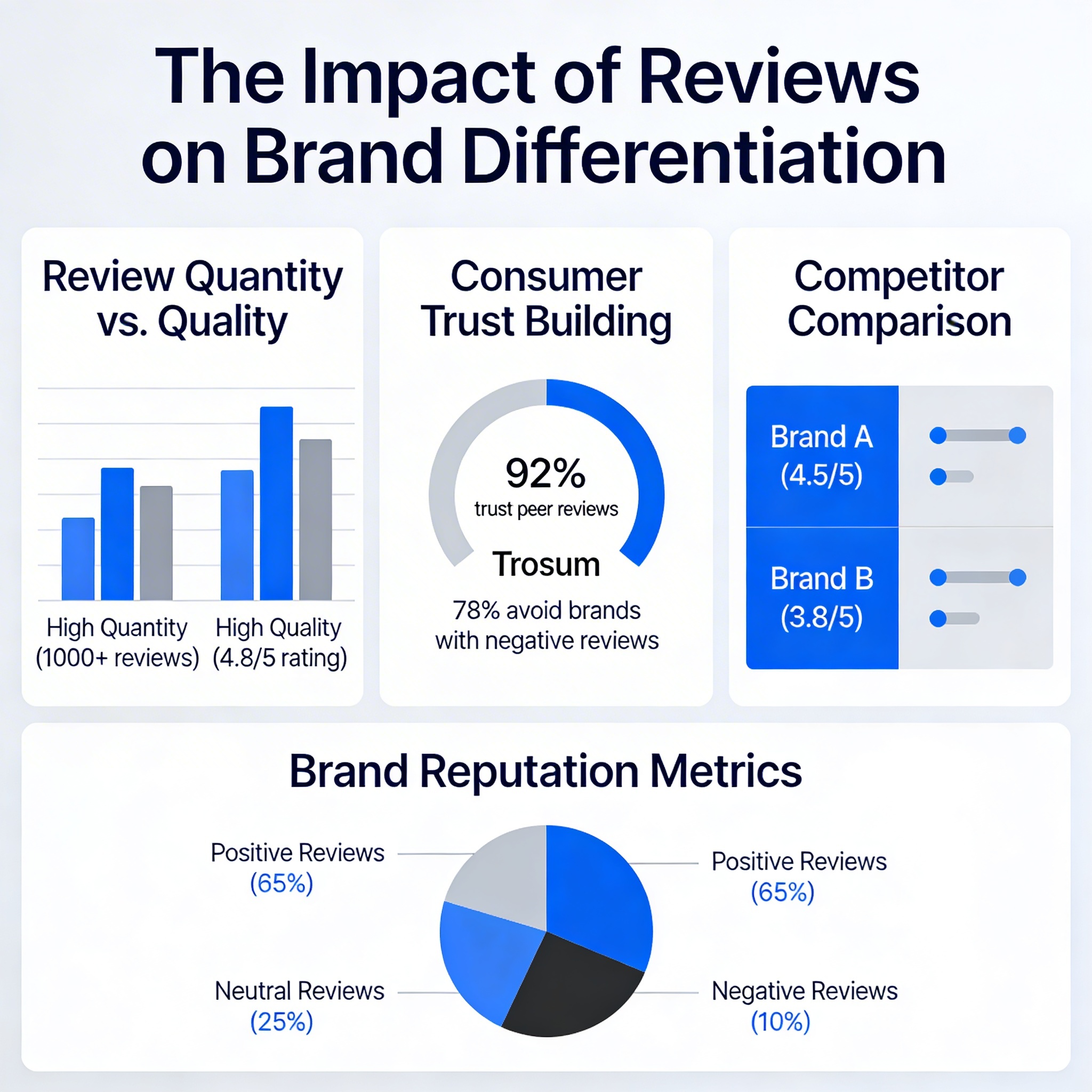
The Impact of Reviews on Brand Differentiation
In today’s competitive marketplace, products and services often appear similar in price, features, and quality. What truly separates one brand from another is not just what the company says about itself — but what customers say about it. Online reviews have become a powerful force in shaping brand differentiation.
1. Reviews Highlight Unique Strengths
Every brand claims to offer “quality,” “value,” and “great service.” However, customer reviews provide specific details that make those claims believable. When customers consistently mention fast delivery, exceptional customer support, or long-lasting product quality, these strengths become a brand’s unique identity.
For example, brands like Amazon stand out not only because of product variety but also due to reviews that emphasize reliability and quick shipping. These repeated customer experiences create a distinctive market position.
2. Authenticity Builds Competitive Advantage
Modern days consumers trust peer opinions more than advertisements. Reviews add authenticity that marketing campaigns cannot replicate. A brand with hundreds of genuine, detailed reviews appears transparent and trustworthy.
Companies such as Zomato thrive because customer feedback directly influences brand perception. Restaurants with strong, positive reviews naturally differentiate themselves from competitors without spending heavily on promotions.
3. Emotional Connection Through Real Experiences
Reviews often include personal stories. These stories create emotional engagement and relatability. When potential buyers read about someone’s positive experience, they imagine similar satisfaction for themselves. While, This emotional resonance helps brands move beyond functional benefits and build loyalty. A differentiated brand is not just chosen — it is preferred.
4. Transparency as a Differentiator
Most Interestingly, even negative reviews can strengthen differentiation. A brand that responds professionally and resolves issues publicly demonstrates accountability. Consumers see transparency as a sign of confidence and integrity.
Brands that actively engage with feedback show they value customers, while silent competitors may appear indifferent. This proactive communication becomes a competitive edge.
5. Social Proof Drives Market Positioning
When a product consistently maintains high ratings, it signals quality. High-rated brands naturally position themselves as premium or reliable options. Over time, strong review performance becomes part of the brand identity itself.
For instance, companies like Apple often benefit from loyal customer reviews that reinforce perceptions of innovation and quality, strengthening their differentiated image in the tech industry.
Reviews are more than feedback — they are strategic assets. They highlight strengths, build authenticity, create emotional connections, and demonstrate transparency. In crowded markets where products look similar, reviews become the deciding factor that sets one brand apart from another. In the digital era, brand differentiation is no longer controlled solely by marketing messages. It is shaped by customer voices — and those voices are more influential than ever.
Standing Out in Competitive Markets
In highly competitive markets, products and services often look similar in terms of features, pricing, and promises. What truly sets a brand apart is how customers perceive it — and reviews play a critical role in shaping that perception.
When consumers compare options online, they don’t just evaluate specifications. They read ratings, scan feedback, and look for consistent patterns in customer experiences. A brand with a strong volume of positive, detailed reviews naturally attracts more attention than one with little or no feedback.
For example, on platforms like Amazon, two products may appear identical in description, but the one with better ratings and authentic customer comments will almost always win the customer’s trust. Reviews become the deciding factor in crowded marketplaces. In short, reviews transform visibility into credibility — and credibility into competitive advantage.
How Reviews Highlight Unique Selling Points
Marketing messages often focus on broad claims such as “high quality” or “best in class.” Reviews, however, reveal the specific strengths that truly matter to customers. Customers naturally highlight what impressed them the most — whether it is durability, ease of use, customer service, fast delivery, or value for money. When multiple reviews mention the same benefit, that feature becomes the brand’s authentic unique selling point (USP).
For instance, on Zomato, restaurants stand out not because of their menu descriptions but because customers repeatedly praise certain dishes, ambiance, or service quality. These consistent mentions shape public perception and reinforce differentiation. In this way, reviews act as organic branding tools. They communicate what truly makes a product or service special — from the customer’s perspective.
Creating a Reputation-Based Competitive Advantage
Over time, consistent positive reviews build a strong reputation. Reputation becomes a long-term asset that competitors cannot easily replicate. Unlike promotional campaigns, which require continuous spending, reputation grows through sustained customer satisfaction. A brand known for reliability and responsiveness develops trust equity. Even when new competitors enter the market, customers are more likely to choose the brand with a proven track record.
Consider companies like Apple. Beyond innovation and design, customer loyalty and positive feedback reinforce the brand’s premium positioning. This reputation-based advantage creates resilience against competition.
Ultimately, reviews are not just short-term influence tools — they are long-term strategic assets. When managed effectively, they turn customer satisfaction into sustainable market differentiation.
Social Media and Reviews: Amplifying Brand Voice
In today’s digital world, social media and online reviews work together to shape how a brand is seen and heard. While reviews build trust through customer experiences, social media amplifies those experiences to a wider audience. Together, they strengthen and expand a brand’s voice in powerful ways.

1. Extending the Reach of Customer Feedback
A positive review on a website is impactful — but when shared on social media, its influence multiplies. Brands often repost testimonials, ratings, and user-generated content across platforms like Instagram and Facebook to increase visibility.
When followers see real customers praising a product or service, it adds authenticity. The brand’s message no longer comes only from marketing campaigns but from satisfied customers. This shared visibility strengthens credibility and encourages engagement.
2. Turning Reviews into Conversations
Social media transforms static reviews into interactive discussions. Customers can comment, ask questions, and share their own experiences. This creates a dynamic environment where the brand voice becomes more human and approachable.
For example, on platforms like X, brands often respond publicly to both praise and complaints. These responses show transparency and accountability, reinforcing a positive brand image. Either by engaging openly, brands demonstrate that they value feedback — which strengthens trust and loyalty.
3. Building Community Around Experiences
When customers share reviews on social media, they contribute to a community built around shared experiences. User-generated content, tagged posts, and story mentions all act as social proof.
When Businesses listed on platforms such as Google benefit only when reviews are linked to social visibility. High ratings combined with active social engagement create a strong, unified brand presence across digital channels. This community-driven environment amplifies the brand voice beyond traditional advertising.
4. Managing Reputation in Real Time
Social media also accelerates the spread of negative reviews. A single complaint can gain traction quickly. However, this speed also offers opportunity. Quick, professional responses can turn criticism into positive public relations.
Brands that handle concerns transparently show confidence and customer commitment. In many cases, the way a company responds matters more than the complaint itself.
5. Strengthening Brand Personality
Reviews shared on social media reflect not only product quality but also brand personality. Friendly responses, gratitude toward customers, and thoughtful problem-solving help shape a brand’s tone. When consistent across platforms, this tone becomes recognizable and memorable. The brand voice grows stronger, clearer, and more authentic.
Social media and reviews are powerful when combined. Eventually Reviews provide credibility, while social media provides amplification. Together, they extend reach, encourage interaction, build community, and strengthen reputation. In the digital era, a brand’s voice is no longer controlled solely by advertising. It is amplified through customer experiences shared across social platforms — and that amplification can define long-term success.
Sharing Positive Testimonials Across Platforms
Positive testimonials are powerful trust signals — but their impact increases significantly when shared across multiple platforms. A great review on a website should not remain hidden there. Brands can amplify credibility by repurposing testimonials on social media, email campaigns, landing pages, and even advertisements.
For instance, businesses often showcase customer reviews from Google or Amazon on their official social media pages. Sharing real feedback on platforms like Instagram adds visual appeal and extends reach.
When potential customers repeatedly see consistent positive feedback across channels, it reinforces trust and strengthens brand positioning. Cross-platform visibility turns a single review into a broader credibility-building asset.
Influencer Reviews and Brand Credibility
Influencer reviews combine social proof with audience trust. When a respected content creator shares their genuine experience with a product or service, it can significantly boost brand credibility. Unlike traditional advertising, influencer reviews feel more personal and relatable. Audiences follow influencers because they trust their opinions. A positive review from a trusted voice can accelerate purchasing decisions and introduce the brand to new markets.
However, authenticity is key. In Modern days consumers quickly detect forced or overly promotional content. Brands that collaborate with influencers who align naturally with their values build stronger, more believable credibility.
Managing Viral Feedback
In the digital era, feedback can go viral within hours. A positive review can drive massive attention, while a negative one can damage reputation quickly.
Platforms like X and Facebook enable rapid sharing, making proactive reputation management essential. Brands must monitor mentions, respond quickly, and address concerns transparently.
When managed well, even viral criticism can turn into an opportunity. A professional and empathetic response often earns public appreciation, showing that the brand values accountability and customer satisfaction.
Integrating Reviews into Content Marketing
Reviews should not exist separately from marketing strategy. Instead, they should be integrated into content marketing efforts such as blogs, case studies, newsletters, and promotional materials.
Customer testimonials can enhance blog articles, product pages, and video content by adding authenticity. Highlighting real user experiences strengthens storytelling and makes marketing messages more persuasive. For example, featuring customer ratings alongside product descriptions builds confidence during the decision-making process. Over time, integrating reviews into content marketing creates a consistent, trust-driven brand narrative.
Sharing testimonials widely, leveraging influencer reviews, managing viral feedback responsibly, and integrating reviews into content marketing all contribute to stronger brand credibility. When strategically used, reviews become more than feedback — they become a central pillar of brand growth and digital reputation management.