

Part 3: How Reviews are essential for Brand Building
Strategies to Generate More Authentic Reviews
Authentic reviews are powerful. They build trust, improve brand credibility, and influence buying decisions. But genuine feedback doesn’t happen by accident — it requires the right strategy. Here are proven ways to generate more authentic reviews for your brand:
1. Ask at the Right Time
Timing matters. Request reviews shortly after a successful purchase, delivery, or positive customer interaction. When the experience is fresh, customers are more likely to respond with detailed and honest feedback.

2. Make the Process Simple
Complicated review forms reduce participation. Provide a direct link, minimize required fields, and ensure the process works smoothly on mobile devices. The easier it is, the more authentic responses you’ll receive.
3. Personalize Your Request
Generic messages feel automated. Address customers by name and reference their purchase. A personalized approach increases the likelihood of thoughtful and genuine reviews.
4. Encourage Honest Feedback — Not Just Positive Reviews
Let customers know you value honest opinions. Authentic reviews include both pros and cons. This transparency builds credibility and makes positive reviews more believable.
5. Use Multiple Touch points
Request reviews through email, SMS, in-app notifications, or post-purchase pages. Brands on platforms like Amazon and Flipkart often use automated follow-ups to collect consistent feedback.
6. Respond to Existing Reviews
When customers see that you reply — whether the review is positive or negative — they feel heard. This encourages others to share their experiences too.
7. Showcase Customer Stories
Highlight detailed testimonials on your website and social media. Featuring real customers builds community and motivates others to contribute their voices.
8. Offer Ethical Incentives
You can encourage participation with small rewards like loyalty points or discount coupons — but never in exchange for only positive reviews. Keep incentives neutral to maintain authenticity.
9. Leverage Social Proof Platforms
Encourage reviews on trusted platforms such as Google and Trustpilot. Reviews on third-party sites often carry more credibility than testimonials on your own website.
10. Deliver an Experience Worth Reviewing
The most sustainable strategy is simple: exceed expectations. Exceptional service naturally inspires customers to share genuine praise.
Authentic reviews are not just marketing assets — they are proof of real customer experiences. Focus on transparency, simplicity, and trust, and your brand will earn reviews that truly reflect its value.
Timing: When to Ask for Reviews
The right timing significantly increases the chances of receiving a review. Ask for feedback soon after the customer has experienced the product or service—when satisfaction is still fresh. For physical products, this may be a few days after delivery; for services, immediately after completion. Well-timed requests feel natural rather than intrusive.
Crafting Effective Review Request Messages
A good review request message should be clear, polite, and concise. Personalize the message, express gratitude, and explain how their feedback helps others. Include a direct link to leave a review and avoid sounding demanding. A friendly tone encourages higher response rates.
Email, SMS, and Post-Purchase Automation
Automated follow-ups through email or SMS streamline the review collection process. Post-purchase automation ensures consistent communication without manual effort. Trigger messages based on delivery confirmation or service completion to maintain relevance and improve engagement.
Ethical Incentives Without Violating Policies
Incentives can encourage participation, but they must comply with platform guidelines. Offer neutral rewards for honest feedback rather than positive reviews. Transparency and fairness protect your brand’s credibility while motivating customers to share genuine experiences.
Managing Reviews Across Multiple Platforms
In today’s digital landscape, customers share their opinions everywhere—on Google, social media, e-commerce marketplaces, and industry-specific review sites. Managing reviews across multiple platforms is no longer optional; it’s essential for protecting your brand reputation and building customer trust. Businesses that actively monitor and respond to feedback create stronger relationships and gain a competitive advantage.

Why Multi-Platform Review Management Matters
Customers rarely rely on a single source before making a purchase decision. They may check ratings on Google, browse recommendations on Facebook, or read product-specific feedback on Amazon. If your brand appears inconsistent, inactive, or unresponsive on any of these platforms, it can harm credibility.
Consistent review management ensures:
- A unified brand voice
- Accurate information across channels
- Quick resolution of customer concerns
- Stronger trust and transparency
Centralizing Review Monitoring
Handling multiple platforms manually can become overwhelming. Businesses should use review management tools or dashboards that aggregate feedback from various sources in one place. This centralization allows teams to:
- Track new reviews in real time
- Identify recurring issues
- Monitor rating trends
- Respond promptly without switching between accounts
Having a structured system reduces missed reviews and ensures no customer feedback goes unanswered.
Maintaining a Consistent Brand Voice
Each platform has a slightly different audience and tone, but your brand personality should remain consistent. Whether responding on Google, Facebook, or Amazon, maintain:
- Professionalism
- Gratitude
- Empathy
- Solution-oriented communication
Consistency reinforces brand identity and shows customers that your company values feedback everywhere—not just on selected platforms.
Responding Strategically to Positive and Negative Reviews
Positive Reviews:
Thank customers sincerely and personalize your response when possible. Highlight specific details they mentioned and invite them back. This strengthens loyalty and encourages repeat purchases.
Negative Reviews:
Address concerns calmly and respectfully. Apologize if necessary, clarify misunderstandings, and offer to resolve the issue offline if required. Never argue publicly. A thoughtful response to criticism often impresses future customers more than the review itself.
Prioritizing High-Impact Platforms
While it’s important to monitor all relevant platforms, prioritize those most influential in your industry. For local businesses, Google reviews may carry the most weight. For retail brands, Amazon might be critical. Service-based businesses may focus more on social media platforms like Facebook. Identify where your audience spends time and allocate resources accordingly.
Encouraging Reviews Across Channels
Instead of directing customers to only one platform, provide multiple options. Include review links in:
- Post-purchase emails
- SMS follow-ups
- Website thank-you pages
- Social media posts
Diversifying review sources strengthens your online presence and reduces dependency on a single platform.
Leveraging Insights for Improvement
Reviews are more than public testimonials—they are valuable data. Analyze feedback patterns to uncover:
- Product quality concerns
- Customer service gaps
- Feature requests
- Emerging trends
Using these insights to improve operations demonstrates that your brand listens and evolves based on customer needs.
Handling Reviews: Fake or Spam
Multi-platform management also involves identifying suspicious reviews. Report fake or policy-violating content through the platform’s official process. At the same time, maintain transparency—avoid deleting legitimate criticism simply because it’s negative. Trust is built through authenticity, not perfection.
Managing reviews across multiple platforms requires organization, consistency, and responsiveness. When handled strategically, reviews become a powerful asset rather than a challenge. By centralizing monitoring, maintaining a unified brand voice, and using feedback to improve, businesses can strengthen their reputation and build long-term customer trust in an increasingly connected digital world.
E-commerce Marketplaces
E-commerce marketplaces are powerful review ecosystems where purchase decisions are heavily influenced by ratings and customer feedback. Platforms like Amazon and Flipkart allow verified buyers to leave detailed product reviews. Since these platforms are transaction-driven, reviews often focus on product quality, delivery experience, and value for money. Actively monitoring and responding to feedback on marketplaces helps improve seller ratings, increase conversions, and build trust with future buyers.
Review Aggregator Sites
Review aggregator sites collect and display business feedback in one centralized location. Websites such as Trustpilot and Yelp play a major role in shaping brand perception. These platforms often rank well in search results, meaning potential customers may encounter them before visiting your official website. Regularly tracking reviews, responding professionally, and resolving complaints publicly can significantly enhance brand credibility.
Local Business Directories
Local business directories are essential for small and location-based businesses. Platforms like Google (via Google Business Profile) and Justdial influence local search visibility and foot traffic. Reviews on these directories affect local SEO rankings and customer decisions. Prompt responses to both positive and negative feedback demonstrate active customer engagement and improve local brand reputation.
Creating a Centralized Review Management System
Managing reviews across multiple platforms can become complex without a structured system. A centralized review management system consolidates feedback from e-commerce sites, aggregators, and directories into one dashboard. This approach enables businesses to monitor ratings, respond efficiently, analyze trends, and identify recurring issues. By streamlining review management, companies can maintain consistency, protect brand reputation, and use customer feedback as a tool for continuous improvement.
Legal and Ethical Considerations
Managing customer reviews is not only about reputation—it also involves legal responsibility and ethical integrity. Businesses must ensure that their review practices comply with platform policies, consumer protection laws, and transparency standards. Ignoring these considerations can lead to penalties, account suspension, or long-term damage to brand trust.

Compliance with Platform Policies
Every platform has strict guidelines regarding reviews. For example, Amazon prohibits fake reviews, incentivized positive feedback, and review manipulation. Similarly, Google enforces policies against spam, misleading content, and conflicts of interest.
Violating these policies can result in:
- Removal of reviews
- Account suspension
- Permanent bans
- Legal consequences
Businesses must regularly review platform guidelines to ensure compliance.
Avoiding Fake or Manipulated Reviews
Creating fake reviews or paying for positive ratings is both unethical and illegal in many regions. Regulatory authorities like the Federal Trade Commission (FTC) have taken action against deceptive review practices. Even beyond legal risks, fake reviews erode customer trust and can severely damage a brand’s credibility if exposed. Authenticity should always be the foundation of review management.
Transparency in Incentives
If businesses offer incentives—such as discounts or loyalty points—they must clearly state that the reward is for honest feedback, not positive reviews. Hidden incentives or selective filtering of negative reviews can be considered deceptive practices. Clear disclosure builds transparency and protects your brand from legal scrutiny.
Respecting Customer Privacy
When responding to reviews, businesses must avoid sharing personal or sensitive customer information publicly. If a review involves order details or service issues, move the conversation to a private channel. Protecting customer data is both a legal requirement and a key aspect of ethical customer service.
Defamation and False Claims
Occasionally, businesses may encounter reviews that contain false or defamatory statements. Instead of responding emotionally, follow the platform’s reporting procedures and provide factual clarification in a professional tone. Taking legal action should be a last resort and handled carefully to avoid reputational backlash.
Ethical Response Practices
Even when reviews are negative or unfair, maintaining professionalism is essential. Avoid:
- Public arguments
- Defensive or aggressive language
- Attempting to silence critics
Responding respectfully shows maturity and reinforces customer trust.
Legal and ethical considerations form the backbone of sustainable review management. By following platform rules, avoiding manipulation, ensuring transparency, and respecting customer privacy, businesses protect both their reputation and their long-term growth. Ethical practices not only prevent legal issues—they strengthen credibility in an increasingly review-driven marketplace.
Avoiding: Fake Reviews and Black Hat Tactics
Fake reviews and manipulative tactics may offer short-term gains, but they cause long-term damage. Posting fabricated testimonials, paying for positive ratings, or coordinating review exchanges violates ethical standards and often breaks platform rules. Search engines and marketplaces use advanced detection systems to identify suspicious activity. When exposed, businesses risk penalties, public backlash, and permanent loss of customer trust. Authentic feedback is always more powerful and sustainable than artificial reputation building.
Transparency in Incentivized Reviews
Offering incentives for reviews is acceptable only when handled transparently. Customers should be encouraged to leave honest feedback—not specifically positive feedback. Clear disclosure that a reward is given for participation, regardless of rating, helps maintain credibility. Hidden incentives or selectively publishing only favorable reviews can mislead consumers and harm brand reputation. Transparency strengthens trust and demonstrates ethical responsibility.
Compliance with Platform Policies
Each platform has its own review guidelines. For example, Amazon strictly prohibits review manipulation and biased incentives, while Google enforces policies against spam, conflicts of interest, and misleading content. Regularly reviewing and adhering to these rules prevents account suspension, review removal, or other penalties. Compliance ensures your review strategy remains safe and sustainable.
Protecting Brand Integrity
Brand integrity is built on honesty, consistency, and accountability. Ethical review practices reflect a company’s true values and commitment to customers. Responding professionally to criticism, encouraging genuine feedback, and maintaining transparency all contribute to a trustworthy image. Protecting brand integrity means prioritizing long-term credibility over short-term reputation gains—because trust, once lost, is difficult to rebuild.
Metrics to Track for Review-Based Brand Growth
Customer reviews are no longer just feedback—they are powerful business assets. In today’s digital marketplace, reviews influence buying decisions, build trust, and shape brand perception. But to truly benefit from them, brands must go beyond collecting reviews and start tracking the right metrics.
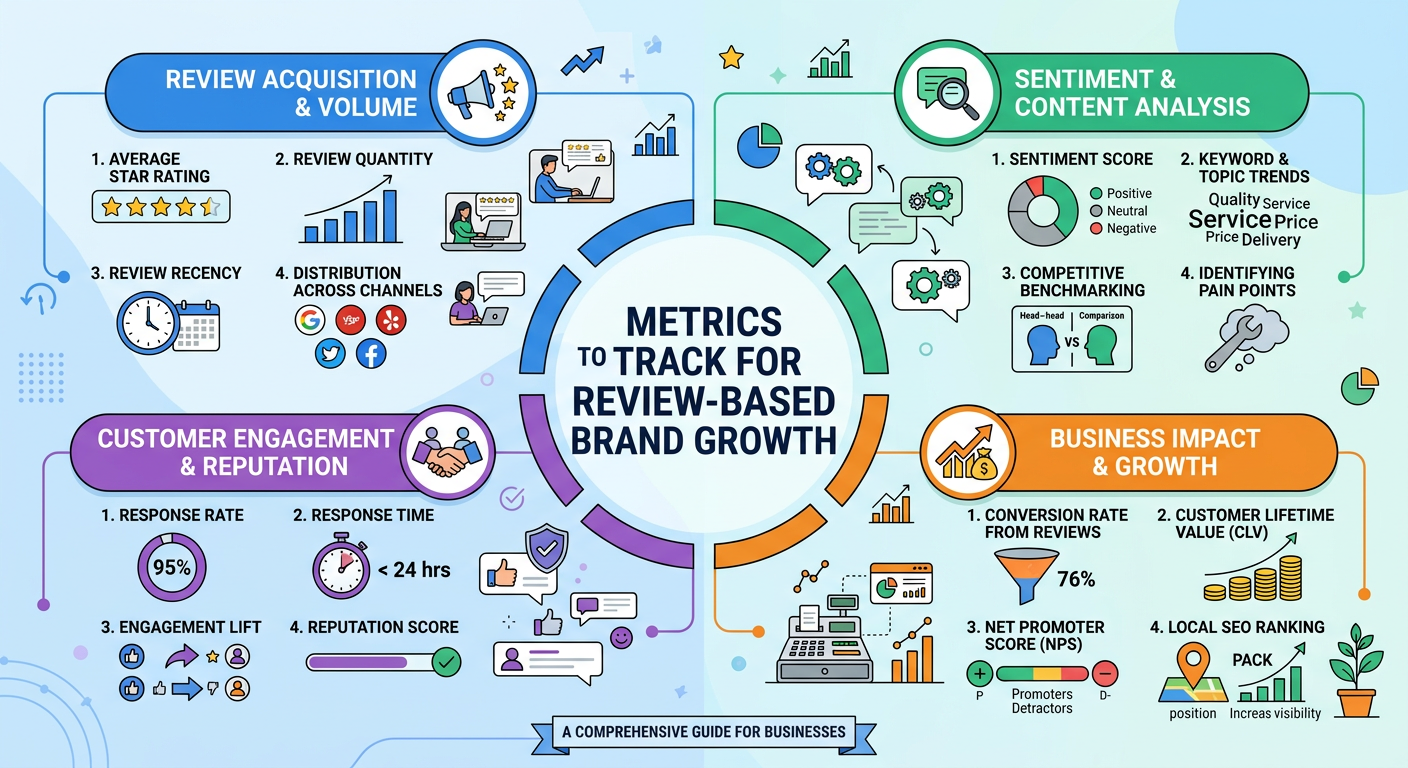
Here are the key metrics you should monitor to drive review-based brand growth.
1. Review Volume
What it measures:
The total number of reviews your brand receives across platforms.
Why it matters:
Higher review volume increases credibility and improves visibility on search engines and marketplaces. A steady stream of new reviews signals that your brand is active and trusted.
What to track:
- Monthly review growth rate
- Reviews per product/service
- Platform-wise distribution (Google, Amazon, website, etc.)
2. Average Star Rating
What it measures:
Your overall rating score (e.g., 4.3/5).
Why it matters:
Even a small change in rating can significantly impact conversions. Studies consistently show that products rated 4.0+ perform much better than lower-rated ones.
What to track:
- Overall average rating
- Rating trends over time
- Rating per product or branch location
3. Review Recency
What it measures:
How recent your latest reviews are.
Why it matters:
Consumers trust fresh feedback. Outdated reviews reduce credibility and may signal stagnation.
What to track:
- Time since last review
- Reviews received in last 30, 60, 90 days
- Percentage of recent reviews vs. older ones
4. Sentiment Analysis
What it measures:
The emotional tone of reviews (positive, neutral, negative).
Why it matters:
Star ratings don’t tell the full story. Sentiment analysis reveals how customers truly feel about your brand.
What to track:
- Percentage of positive vs. negative reviews
- Frequently mentioned keywords
- Sentiment trends over time
5. Response Rate
What it measures:
The percentage of reviews your brand responds to.
Why it matters:
Responding to reviews shows accountability and builds trust. It also improves brand perception among potential customers.
What to track:
- Response rate (%)
- Response time
- Engagement tone consistency
6. Review Conversion Impact
What it measures:
How reviews influence actual sales.
Why it matters:
Reviews directly affect purchasing decisions. Understanding their impact helps optimize strategy.
What to track:
- Conversion rate difference between reviewed and non-reviewed products
- Revenue influenced by reviews
- Click-through rate on review-rich pages
7. Net Promoter Score (NPS)
What it measures:
Customer loyalty and likelihood to recommend your brand.
Why it matters:
NPS complements public reviews by measuring long-term satisfaction.
What to track:
- Promoters vs. detractors
- NPS trend over time
- Correlation between NPS and review ratings
8. Review Keyword Frequency
What it measures:
Common words customers use in reviews.
Why it matters:
Keywords highlight strengths and weaknesses. They also support SEO and content marketing.
What to track:
- Most frequent positive keywords
- Recurring complaints
- Product feature mentions
9. Platform – Performance Comparison
What it measures:
How your brand performs across different review platforms.
Why it matters:
Performance may vary across Google, Amazon, Yelp, or social media. Each platform attracts a different audience.
What to track:
- Rating differences per platform
- Engagement rate
- Platform-specific sentiment
10. Review-to-Complaint Ratio
What it measures:
The proportion of positive reviews compared to negative ones.
Why it matters:
A healthy ratio reflects strong brand satisfaction and helps mitigate occasional negative feedback.
What to track:
- % of 4–5 star reviews
- % of 1–2 star reviews
- Improvement after issue resolution
Turning Metrics Into Growth
Tracking metrics is only the first step. True brand growth happens when you:
- Act on negative feedback quickly
- Highlight positive testimonials in marketing
- Improve products based on recurring complaints
- Encourage satisfied customers to leave reviews
When used strategically, review metrics become a powerful feedback engine for innovation, trust-building, and revenue growth.
Final Thoughts
Reviews are not just reflections of your brand—they actively shape it. By consistently monitoring key review metrics, you can identify opportunities, reduce risks, and build a reputation-driven competitive advantage. Brands that treat reviews as strategic data—not just public comments—are the ones that grow faster and build lasting trust.
Volume of Reviews
What It Measures:
The total number of customer reviews your brand receives.
Why it matters:
High review volume builds social proof. Consumers trust brands with hundreds (or thousands) of reviews more than those with only a few—even if the rating is similar.
What to track:
- Monthly review growth rate
- Reviews per product/service
- Platform-wise review distribution
- Review acquisition rate after purchase
Growth insight:
Consistency matters more than spikes. A steady stream of fresh reviews signals brand reliability.
Review response rate
What it measures:
The percentage of customer reviews your brand replies to.
Why it matters:
Responding to reviews demonstrates accountability and customer care. Brands that actively engage with feedback are perceived as more trustworthy and customer-centric.
What to track:
- Percentage of reviews responded to
- Average response time
- Response quality and tone consistency
- Response rate for negative reviews specifically
Growth Insight:
Quick, empathetic responses can turn negative reviews into reputation-building opportunities.
Sentiment analysis
What It Measures:
The emotional tone and themes within customer reviews (positive, neutral, or negative).
Why It Matters:
Star ratings provide numbers—but sentiment reveals deeper insights. It uncovers patterns in customer satisfaction, pain points, and emotional triggers.
What to track:
- Percentage of positive vs. negative sentiment
- Frequently used keywords
- Repeated complaints or praise themes
- Sentiment shifts after product updates
Growth insight:
Use sentiment data to improve product features, refine messaging, and strengthen brand positioning.
Conversion Rate Impact
What it measures:
How customer reviews influence purchasing decisions and sales performance.
Why it matters:
Reviews directly affect buying behavior. Products with strong ratings and detailed reviews typically convert better than those without.
What to track:
- Conversion rate difference between reviewed and non-reviewed products
- Sales growth after rating improvements
- Click-through rates on review-rich pages
- Revenue influenced by user-generated content
Growth Insight:
Highlighting authentic positive reviews on landing pages and ads can significantly improve conversion performance.
Final takeaway
Tracking review metrics isn’t just about monitoring reputation—it’s about driving measurable growth. When brands analyze star ratings, review volume, engagement, sentiment, and conversion impact together, they transform customer feedback into a strategic growth engine. The brands that win are not the ones with perfect reviews—but the ones that actively measure, learn, and improve.
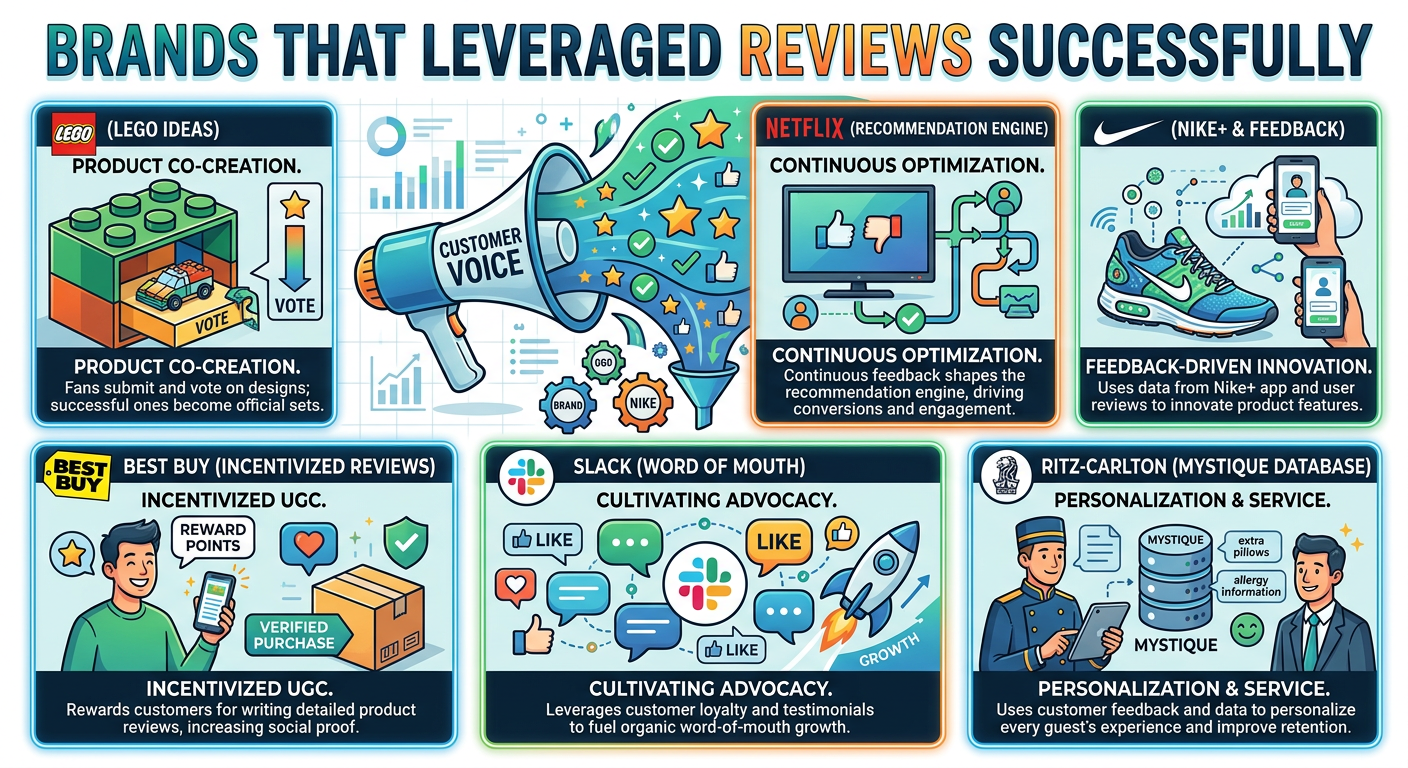
Case Examples: Brands that Leveraged Reviews Successfully
Customer reviews have evolved from simple feedback into powerful growth drivers. Some of the world’s most successful brands have strategically leveraged reviews to build trust, improve products, and increase conversions. Here are notable examples of companies that turned customer feedback into a competitive advantage.
1. Amazon
How they leveraged reviews:
Amazon made customer reviews central to its platform experience. Star ratings, verified purchase badges, review photos, and Q&A sections all contribute to informed buying decisions.
Impact:
- Increased transparency builds trust
- Higher conversion rates for highly rated products
- Strong SEO visibility through user-generated content
Key Lesson:
Make reviews highly visible and easy to filter so customers can quickly evaluate credibility.
2. Airbnb
How They Leveraged Reviews:
Airbnb created a two-way review system where both hosts and guests review each other. This mutual accountability improved trust within the community.
Impact:
- Safer and more reliable user experience
- Stronger community trust
- Higher booking confidence
Key Lesson:
Transparency builds confidence. Reviews should protect both sides of a transaction.
3. Zomato
How they Leveraged Reviews:
Zomato integrates user ratings, detailed reviews, and photos into restaurant listings. Many diners rely heavily on these reviews before choosing where to eat.
Impact:
- Drives restaurant traffic
- Influences food trends
- Helps businesses improve service quality
Key Lesson:
Reviews can shape consumer decisions at scale and influence entire local markets.
4. Nike
How They Leveraged Reviews:
Nike uses customer reviews on product pages to highlight fit, comfort, and durability. Detailed filtering options allow users to see feedback from people with similar preferences.
Impact:
- Reduced return rates
- Improved product development
- Increased buyer confidence
Key Lesson:
Use review insights to refine product design and reduce friction in purchasing decisions.
5. Tesla
How they Leveraged Reviews:
Tesla relies heavily on customer advocacy and word-of-mouth rather than traditional advertising. Positive owner experiences shared online significantly influence new buyers.
Impact:
- Strong brand loyalty
- High referral-driven growth
- Community-driven reputation
Key Lesson:
Satisfied customers can become your most powerful marketing channel.
6. Tripadvisor
How They Leveraged Reviews:
Trip advisor built its entire platform around traveler reviews. Hotels and attractions compete based on rating, review count, and traveler feedback.
Impact:
- Reputation-based ranking system
- Increased trust in travel planning
- Business improvements driven by public feedback
Key Lesson:
When reviews are central to your ecosystem, they become a primary growth engine.
Final Thoughts
Successful brands don’t just collect reviews—they integrate them into product strategy, marketing, customer service, and brand positioning. Reviews:
- Build credibility
- Influence purchase decisions
- Improve product quality
- Strengthen customer loyalty
The key takeaway? Treat reviews as strategic assets, not passive comments. Brands that actively listen, respond, and adapt based on feedback are the ones that achieve sustainable growth.
Small Businesses That Built Reputation Quickly
Small businesses often don’t have massive marketing budgets—but they can grow rapidly by leveraging customer reviews strategically.
1. The Halal Guys
Starting as a food cart in New York City, The Halal Guys built a strong reputation through positive word-of-mouth and online reviews. Consistent quality and customer engagement turned them into an international franchise.
Growth Strategy:
- Encouraged satisfied customers to leave reviews
- Maintained consistent product quality
- Used high ratings as proof when expanding
Key Insight:
Local trust can become global credibility when supported by strong online reviews.
2. Gymshark (Early Stage Growth)
Before becoming a global fitness brand, Gymshark relied heavily on community feedback and reviews to refine products and build loyalty.
Growth Strategy:
- Listened to customer feedback for product improvement
- Used testimonials in marketing
- Built strong community engagement
Key Insight:
Customer-driven product refinement accelerates brand trust.
E-commerce Brands That Scaled Through Social Proof
Online brands thrive on trust signals. Reviews reduce buyer hesitation and increase conversion rates.
1. Warby Parker
Warby Parker used customer reviews and testimonials to reduce skepticism around buying glasses online.
Growth Strategy:
- Highlighted authentic customer experiences
- Showcased real customer photos
- Made reviews prominent on product pages
Impact:
Higher conversion rates and lower return anxiety.
2. Nykaa
Nykaa integrated customer reviews and ratings directly into product listings, helping shoppers make confident beauty purchases.
Growth Strategy:
- Encouraged verified buyer reviews
- Featured top-rated products
- Used review insights to expand product lines
Impact:
Increased trust in online beauty shopping and stronger repeat purchases.
Service-Based Businesses and Local Reputation Growth
Service businesses rely heavily on local credibility. Reviews directly impact bookings and inquiries.
1. Urban Company
Urban Company built trust by making service provider ratings highly visible.
Growth Strategy:
- Transparent service provider ratings
- Customer review-driven ranking system
- Prompt resolution of negative feedback
Impact:
Higher booking confidence and improved service standards.
2. Pract o
Pract o (commonly known as Practo) leveraged patient reviews to help users choose doctors confidently.
Growth Strategy:
- Verified patient reviews
- Detailed doctor profiles with ratings
- Transparent feedback display
Impact:
Stronger patient trust and increased appointment bookings.
Final Takeaway
Across industries, one pattern is clear:
- Small businesses use reviews to establish credibility fast.
- E-commerce brands use reviews to boost conversions and reduce friction.
- Service businesses rely on reviews to build local trust and drive repeat bookings.
Reviews are no longer optional—they are foundational to brand growth. Businesses that actively encourage, manage, and leverage customer feedback build trust faster and scale more sustainably.
The Future of Reviews in Brand Building
Customer reviews have already reshaped how brands earn trust—but their role is only becoming more powerful. In the future, reviews will not just influence buying decisions; they will shape brand identity, product innovation, and competitive positioning.
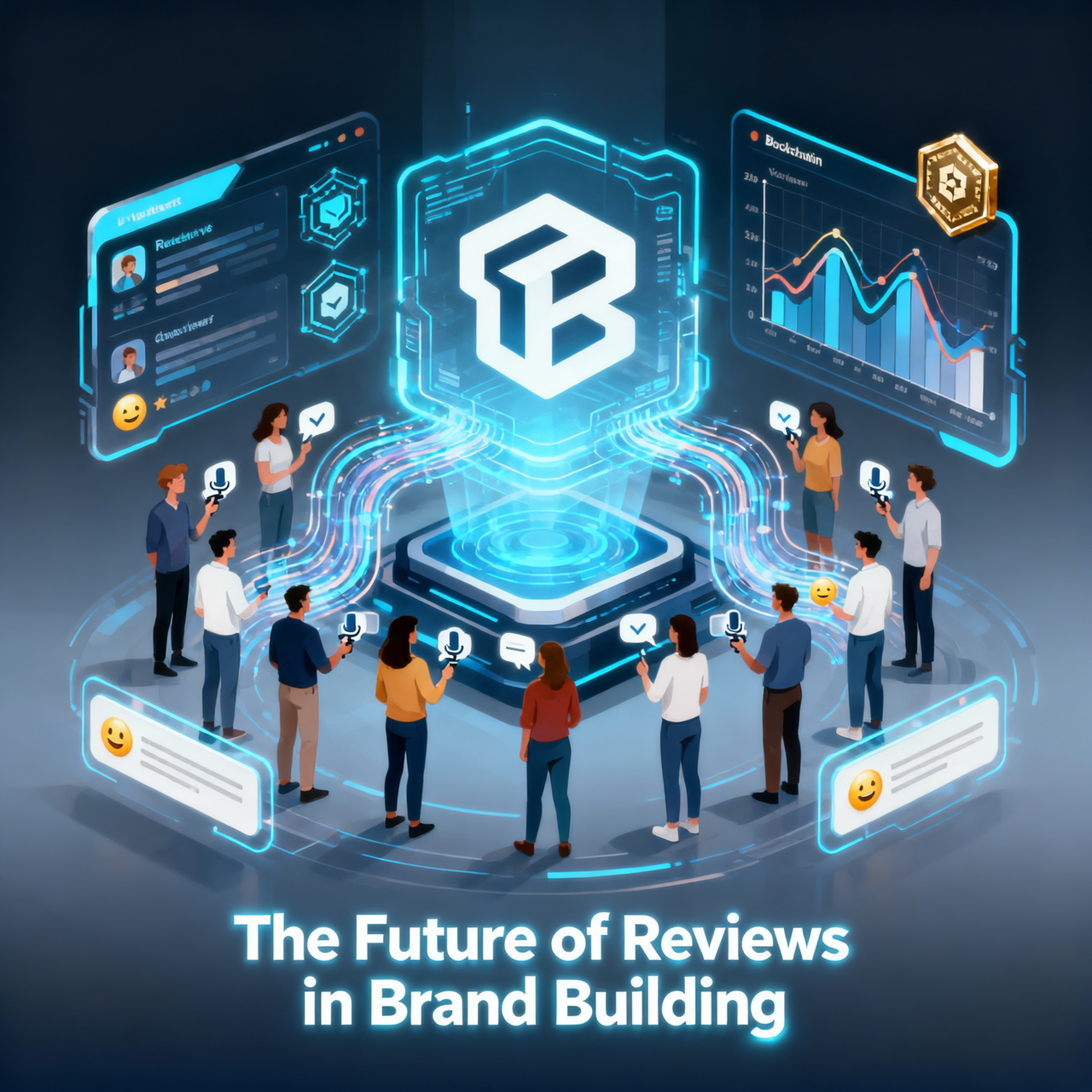
Here’s how reviews are evolving and what it means for brand building.
1. AI-Powered Review Insights
Artificial Intelligence will transform how businesses analyze feedback. Instead of manually reading hundreds of comments, brands will rely on AI-driven sentiment analysis, keyword clustering, and predictive insights.
What This Means:
- Faster identification of product issues
- Real-time reputation monitoring
- Predictive alerts before reputation crises
Reviews will become strategic intelligence tools rather than passive feedback.
2. Video and Visual Reviews Will Dominate
Text reviews are powerful—but video reviews are more persuasive. Platforms like YouTube and Instagram have already normalized visual testimonials.
Future Trends:
- Short-form video reviews
- Before-and-after demonstrations
- Influencer-backed customer testimonials
Visual authenticity builds deeper trust than written words alone.
3. Verified and Authentic Reviews Will Gain Priority
As fake reviews increase, platforms will strengthen verification systems. Trust will depend on authenticity signals such as:
- Verified purchase badges
- Identity confirmation
- AI detection of suspicious patterns
Brands that maintain ethical review practices will earn long-term credibility.
4. Integration of Reviews Into Branding Strategy
In the future, reviews won’t sit only on product pages—they will become core branding assets.
Expect to See:
- Review highlights in advertising campaigns
- Testimonials integrated into landing pages
- Customer quotes featured in social media storytelling
User-generated feedback will shape brand voice.
5. Hyper-Personalized Review Display
Advanced algorithms will show reviews most relevant to individual users.
For example:
- Reviews from people with similar preferences
- Location-specific testimonials
- Context-based review filtering
This personalization increases conversion rates and customer satisfaction.
6. Reviews as Product Development Roadmaps
Brands will increasingly use reviews as innovation blueprints. Recurring complaints or feature requests will directly guide product updates.
Future Impact:
- Faster iteration cycles
- Customer-driven innovation
- Reduced product-market mismatch
Customer voices will influence business decisions more than ever before.
7. Community-Driven Brand Advocacy
Satisfied customers will evolve into brand advocates. Platforms like Amazon and Airbnb have already demonstrated how review ecosystems build trust-based communities.
In the future:
- Loyalty programs may reward detailed reviews
- Communities will co-create brand reputation
- Advocacy will outperform traditional advertising
Trust will replace aggressive promotion.
Final Thoughts
The future of reviews in brand building is clear: they will move from optional feedback tools to strategic growth engines.
Brands that succeed will:
- Embrace transparency
- Actively respond to feedback
- Leverage AI for deeper insights
- Integrate customer voices into branding
In a world where consumers trust people more than advertisements, reviews will define not just what customers buy—but what brands become.
AI-Driven Review Analysis
Artificial Intelligence is transforming how brands interpret customer feedback. Instead of manually reading thousands of comments, businesses can now use AI tools to detect patterns, measure sentiment, and predict potential issues before they escalate.
Key Developments:
- Automated sentiment analysis (positive, neutral, negative)
- Keyword clustering to identify recurring themes
- Predictive alerts for sudden rating drops
- Competitive benchmarking using review data
Why It Matters:
AI-driven insights allow brands to respond faster, improve products more efficiently, and make data-backed decisions. Reviews are no longer just opinions—they are structured business intelligence.
Video and Interactive Reviews
Consumers increasingly prefer visual content over text. Video reviews offer authenticity, demonstrations, and emotional connection that written reviews often cannot match.
Platforms like YouTube and Instagram have accelerated the popularity of short-form video testimonials and product demos.
Emerging Trends:
- Short product demo videos
- Before-and-after transformation clips
- Live review sessions
- Interactive Q&A with customers
Why It Matters:
Video reviews reduce purchase hesitation by showing real-world usage, making them highly persuasive and conversion-driven.
Voice Search and Review Integration
With the rise of voice assistants like Amazon Alexa and Google Assistant, customers are increasingly searching for recommendations using voice queries.
For example:
- “What’s the best-rated restaurant near me?”
- “Which laptop has the highest customer rating?”
Future Impact:
- Brands with higher ratings will gain more visibility in voice results
- Structured review data will influence voice-based recommendations
- Local businesses with strong review profiles will dominate voice search queries
Why It Matters:
Optimizing reviews for local SEO and structured data will become essential for visibility in voice-driven searches.
The Growing Importance of Authenticity
As online reviews increase, so does skepticism. Consumers are becoming more aware of fake or manipulated reviews, making authenticity a key competitive advantage.
What Will Define Trust:
- Verified purchase badges
- Transparent responses to negative feedback
- Detailed, balanced reviews (not just perfect 5-star ratings)
- Clear ethical review collection practices
Why It Matters:
Modern consumers trust transparency over perfection. Brands that acknowledge mistakes and respond sincerely build stronger long-term loyalty.
Final Takeaway
The future of reviews lies at the intersection of technology and trust. AI will analyze feedback, video will amplify authenticity, voice search will reshape discovery, and transparency will determine credibility.
Brands that adapt early will not just manage reviews—they will build stronger, smarter, and more trusted reputations.
Common Mistakes Brands Make with Reviews
Customer reviews can accelerate brand growth—but only if managed correctly. Many businesses unintentionally damage their reputation by mishandling feedback. Understanding these common mistakes can help brands protect trust and maximize the value of reviews.
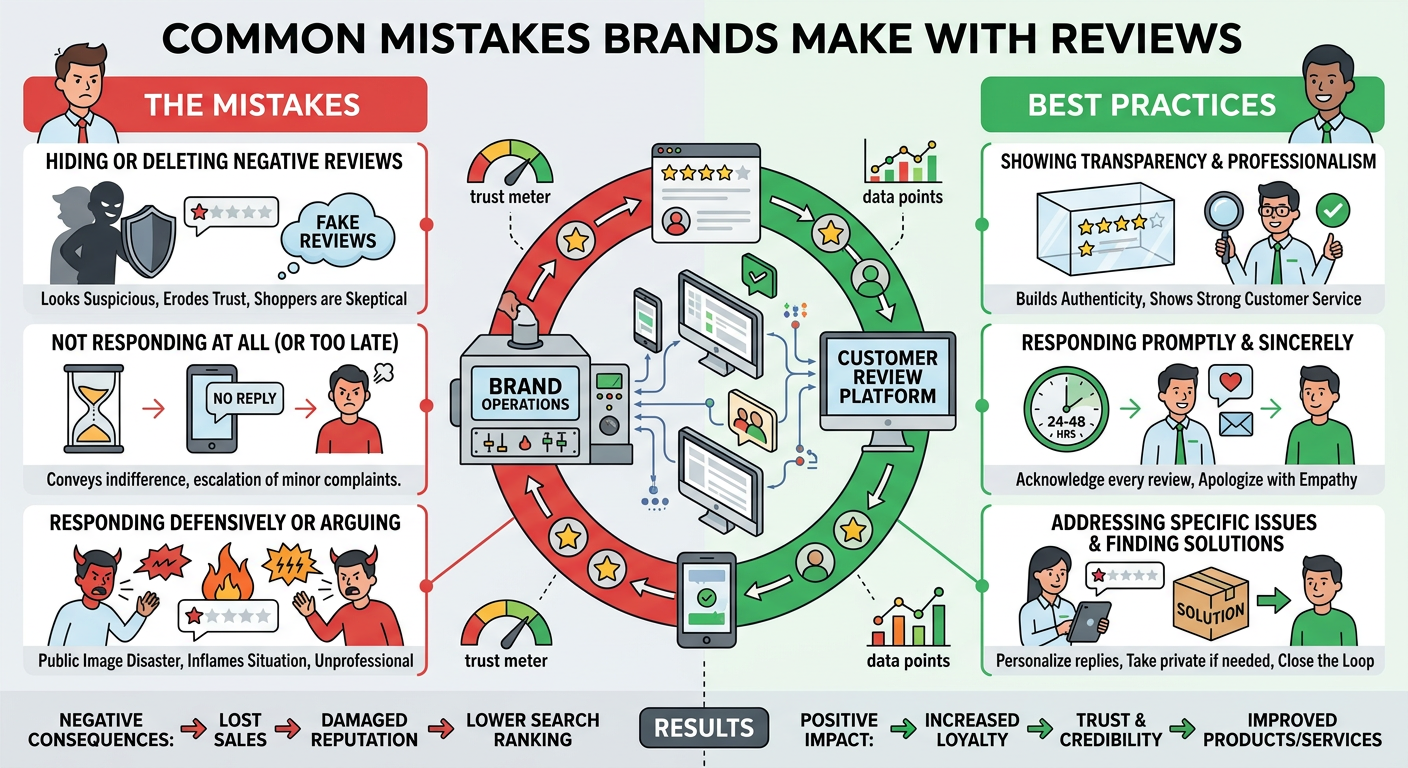
1. Ignoring Negative Reviews
One of the biggest mistakes brands make is avoiding or deleting negative feedback.
Why It’s Harmful:
- Makes the brand appear unresponsive
- Damages trust among potential customers
- Misses opportunities for improvement
Better Approach:
Respond promptly, acknowledge the issue, and offer a resolution. A well-handled negative review often builds more trust than a perfect rating.
2. Not Responding to Reviews at All
Whether positive or negative, silence sends the wrong message.
Why It’s Harmful:
- Customers feel unheard
- Reduces perceived customer care
- Weakens brand loyalty
Better Approach:
Thank customers for positive reviews and engage meaningfully with constructive criticism.
3. Focusing Only on Star Ratings
Many brands obsess over average ratings but ignore the actual content of reviews.
Why It’s Harmful:
- Misses insights about product flaws
- Overlooks recurring customer expectations
- Limits strategic improvement
Better Approach:
Analyze keywords, sentiment, and recurring themes—not just the number of stars.
4. Using Fake or Manipulated Reviews
Buying fake reviews or encouraging dishonest feedback may seem like a shortcut—but it is risky and unethical.
Why It’s Harmful:
- Platforms can penalize or ban accounts
- Customers lose trust if manipulation is detected
- Long-term reputation damage
Better Approach:
Encourage authentic feedback from real customers through ethical follow-ups.
5. Delayed Responses to Complaints
Slow responses allow dissatisfaction to grow and potentially spread across platforms.
Why It’s Harmful:
- Escalates customer frustration
- Increases likelihood of viral negative attention
- Signals poor customer service
Better Approach:
Set internal response-time standards (e.g., within 24–48 hours).
6. Not Encouraging Reviews Proactively
Some brands rely only on spontaneous feedback.
Why It’s Harmful:
- Limits review volume
- Allows unhappy customers to dominate feedback
- Misses opportunities for social proof
Better Approach:
Send post-purchase emails, SMS reminders, or in-app prompts to request reviews politely.
7. Being Defensive in Responses
Arguing with customers publicly can severely damage brand perception.
Why It’s Harmful:
- Appears unprofessional
- Discourages future buyers
- Escalates conflicts
Better Approach:
Respond with empathy, even if the criticism feels unfair. Offer solutions rather than arguments.
8. Not Using Reviews for Product Improvement
Reviews contain valuable customer insights, yet many brands fail to act on them.
Why It’s Harmful:
- Repeated issues remain unresolved
- Customer satisfaction stagnates
- Innovation slows down
Better Approach:
Use recurring feedback as a roadmap for product upgrades and service enhancements.
9. Ignoring Platform Differences
Customer expectations vary across platforms (Google, e-commerce marketplaces, social media).
Why It’s Harmful:
- Missed optimization opportunities
- Inconsistent brand messaging
- Poor local visibility
Better Approach:
Customize engagement strategies based on platform behavior and audience type.
Final Thoughts
Reviews can either strengthen or weaken a brand—it depends on how they are managed. The most successful brands:
- Embrace transparency
- Engage consistently
- Act on feedback
- Encourage authentic participation
Avoiding these common mistakes ensures that reviews become a powerful growth asset rather than a reputational risk.
Ignoring Customer Feedback
Ignoring customer feedback is one of the biggest mistakes a brand can make. Reviews are not just comments — they are direct insights into customer experiences, expectations, and pain points. When businesses fail to monitor and analyze feedback, they miss opportunities to improve products, services, and overall customer satisfaction.
Customers also notice when brands don’t respond. Silence can be interpreted as indifference, which damages trust and loyalty. Even a simple acknowledgment shows that the business values its customers’ opinions.
Deleting Negative Reviews
Deleting negative reviews may seem like a quick fix to protect a brand’s image, but it often backfires. Today’s consumers value transparency. When only positive reviews are visible, it can make the brand appear suspicious or inauthentic.
Constructively handling criticism builds credibility. A professional response to a negative review demonstrates accountability and commitment to improvement. In many cases, how a company responds matters more than the complaint itself.
Responding Emotionally
Negative reviews can feel personal, especially for small business owners. However, emotional or defensive responses can escalate situations and harm the brand’s reputation.
A calm, professional, and solution-focused reply reflects maturity and customer-centric thinking. It’s important to acknowledge the concern, apologize if necessary, and offer a path toward resolution. Remember, responses are public and influence future customers as well.
Focusing Only on Ratings Instead of Insights
Many businesses obsess over star ratings while overlooking the valuable insights within the written feedback. Ratings provide a snapshot, but comments provide context.
Patterns in reviews can highlight recurring issues, product strengths, service gaps, or new opportunities. Instead of chasing higher ratings alone, brands should use reviews as strategic data to refine operations and enhance customer experience.
Conclusion:
In today’s digital-first world, reviews are no longer optional — they are foundational to brand building. They shape first impressions, influence purchasing decisions, and establish credibility long before a customer interacts directly with a business. Modern consumers trust peer experiences more than traditional advertising, making reviews one of the most powerful forms of social proof.
Beyond influencing sales, reviews provide brands with real-time feedback and valuable insights. They highlight strengths to amplify and weaknesses to improve. Businesses that actively listen, respond thoughtfully, and implement changes based on customer feedback demonstrate transparency and accountability — two qualities that build long-term trust.
Ultimately, reviews do more than reflect a brand’s reputation — they help create it. Companies that embrace reviews as a strategic asset, rather than just a rating metric, position themselves for sustainable growth, stronger customer relationships, and lasting brand loyalty.