
Why Your Amazon Reviews Are Disappearing Overnight
Massive Amazon Changes in 2026
In 2026, sellers and shoppers on Amazon reviews have been caught off guard by a sudden and alarming shift—product reviews are disappearing overnight. For many businesses, especially small and mid-sized sellers, reviews have long been the backbone of trust, conversion, and visibility. So when they start vanishing without warning, it raises serious concerns across the entire e-commerce ecosystem.
This isn’t just a minor technical glitch or a temporary bug. The change reflects a deeper transformation in how Amazon review is redefining authenticity, customer trust, and platform integrity. While the company has always battled fake reviews and manipulation, 2026 marks a turning point where stricter algorithms and policies are actively removing suspicious or non-compliant feedback at scale.
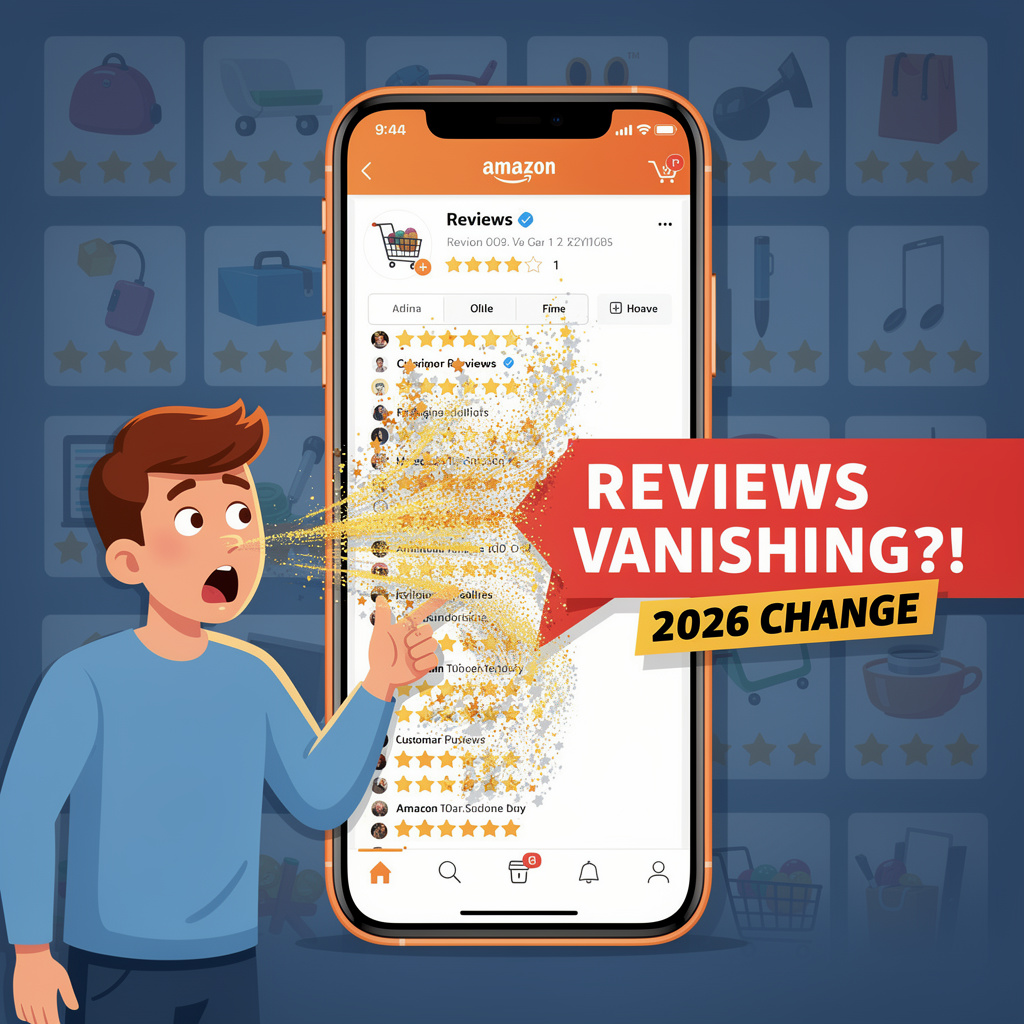
For sellers, this can mean a sudden drop in product ratings, decreased sales, and confusion about what went wrong. For customers, it can create uncertainty about which products are genuinely trustworthy. And for the marketplace as a whole, it signals a new era where quality and transparency are being prioritized—sometimes at the cost of visibility.
In this blog, we’ll explore why this massive change is happening, what it means for your business, and how you can adapt to stay ahead in an increasingly regulated digital marketplace.
The Sudden Shock: Sellers Notice Missing Amazon Reviews
The first signs of this massive shift on Amazon came without warning. Sellers woke up to find dozens—sometimes hundreds—of reviews missing from their product listings. Star ratings dropped overnight, best-selling products lost their credibility signals, and carefully built social proof seemed to vanish instantly.
For many, this wasn’t just a minor fluctuation. Reviews that had been live for months—or even years—were suddenly removed, leaving sellers confused and frustrated. Some assumed it was a glitch, while others feared account penalties or competitor sabotage. Seller forums and communities quickly filled with similar stories, confirming that this wasn’t an isolated issue but a widespread platform change.
Why This Update Is Creating Panic Across Amazon Sellers?
The panic among sellers is understandable. Reviews on Amazon are not just feedback—they directly influence product rankings, conversion rates, and overall sales performance. When reviews disappear, the ripple effects can be immediate and severe.
A drop in review count often leads to:
- Lower product rankings in search results
- Reduced customer trust and click-through rates
- Declining sales and revenue
- Increased ad spending to compensate for lost organic traction
For sellers who rely heavily on positive reviews to stand out in competitive categories, this sudden change feels like losing a key business asset overnight. The uncertainty around why reviews are being removed only adds to the anxiety, making it difficult for sellers to respond effectively.
Overview of What This Article Covers
In this article, we’ll break down everything you need to understand about this major update on Amazon. You’ll discover the real reasons behind disappearing reviews, including stricter enforcement against fake or incentivized feedback and evolving algorithm changes.
We’ll also explore how this shift impacts your business in the short and long term, along with practical strategies to protect your listings, rebuild trust, and maintain consistent sales performance. Whether you’re a new seller or an experienced brand, understanding these changes is essential to staying competitive in 2026 and beyond.
Understanding the 2026 Amazon Review Update
The 2026 review update by Amazon is not a random purge—it’s a strategic overhaul designed to rebuild trust in the platform. Over the years, Amazon has faced increasing challenges with fake reviews, incentivized feedback, and manipulation tactics that undermine genuine customer experiences. This latest update represents one of the most aggressive steps the company has taken to address these issues at scale.
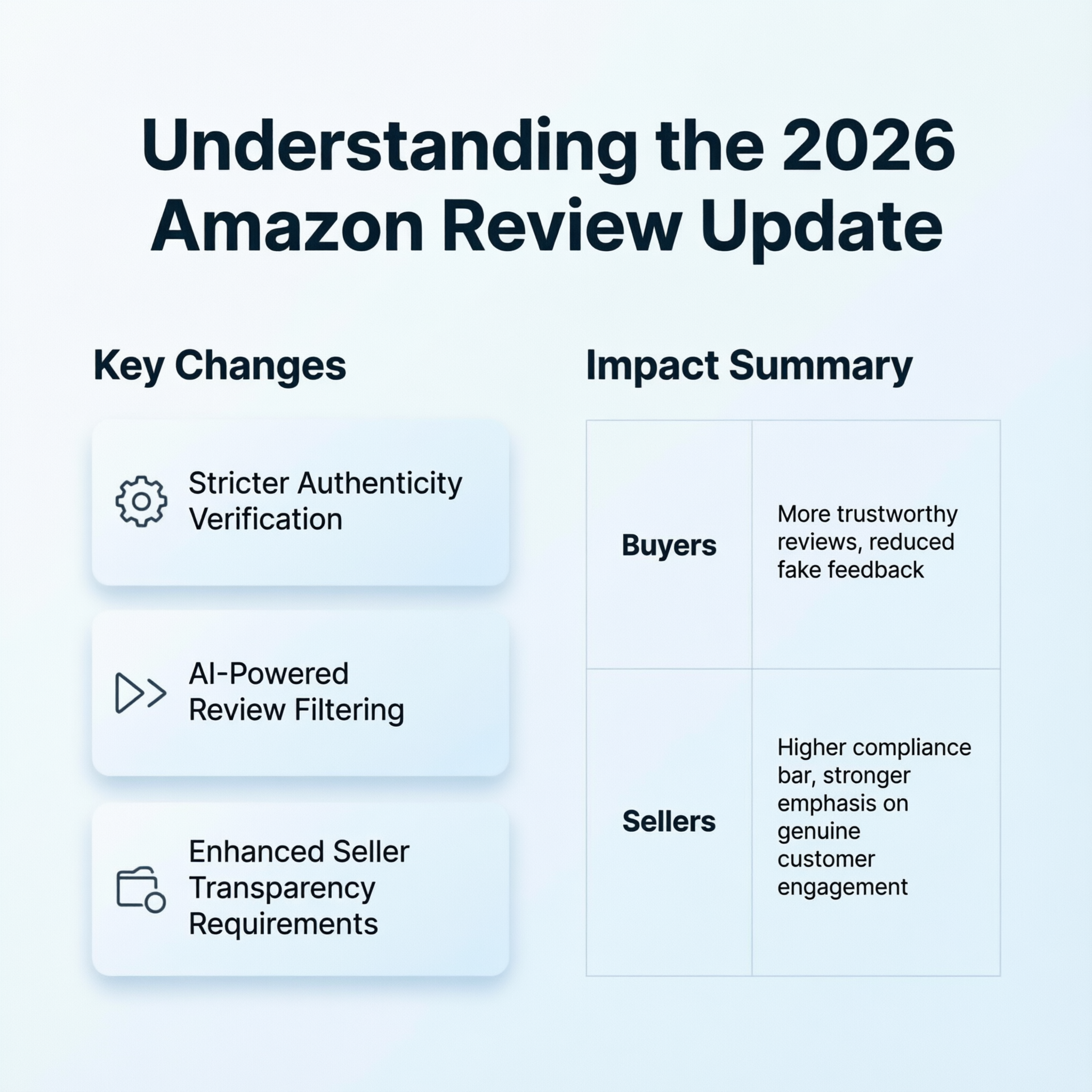
1. Advanced AI-Driven Review Filtering
Amazon has significantly upgraded its artificial intelligence systems to detect suspicious review patterns. These systems now analyze:
- Reviewer behavior across multiple products
- Frequency and timing of reviews
- Language patterns and duplication
- Connections between buyers and sellers
If a review appears even slightly inconsistent with natural buying behavior, it may be automatically removed—sometimes without prior notice.
2. Stricter Policy Enforcement
While Amazon has always had review guidelines, the 2026 update enforces them more strictly than ever before. Reviews that may have previously slipped through—such as:
- Incentivized reviews (even indirect rewards)
- Reviews from friends, family, or internal networks
- Bulk review generation tactics
are now being actively flagged and removed. Sellers who unknowingly violated policies in the past are now seeing those reviews disappear retroactively.
3. Retroactive Cleanup of Old Reviews
One of the most surprising aspects of this update is that it doesn’t just affect new reviews. Amazon is revisiting older reviews and reassessing their authenticity using updated algorithms. This explains why many sellers are losing reviews that were posted months or even years ago.
4. Focus on Buyer Trust Over Seller Metrics
The core goal of this update is clear: prioritize customer trust above all else. By ensuring that only authentic, unbiased reviews remain, Amazon aims to create a more transparent shopping experience—even if it disrupts seller performance in the short term.
What This Means in Simple Terms
This update signals a shift from quantity of reviews to quality of reviews. Sellers can no longer rely on volume-based strategies or shortcuts. Instead, success on Amazon will increasingly depend on:
- Genuine customer satisfaction
- Ethical review collection practices
- Long-term brand credibility
In short, the 2026 review update is reshaping the rules of the game—rewarding authenticity while eliminating manipulation.
What Exactly Changed in Amazon’s Review Policy
The biggest change in 2026 on Amazon revolves around how reviews are shared and displayed across product variations.
Previously, multiple variations of a product (like size, model, or version) could share the same pool of reviews under one listing. This allowed sellers to build strong “social proof” quickly—even for newer variations. However, under the 2026 update:
- Reviews are no longer shared across functionally different products
- Each variation (ASIN) now has its own separate review count and rating
- Only minor variations (like color or design) can still share reviews
This means if you were relying on a high-performing product’s reviews to boost another variation, those reviews may have disappeared overnight. In addition, Amazon has strengthened its automated systems:
- Reviews are evaluated using AI-driven integrity checks
- Suspicious or non-compliant reviews may be removed automatically
- In many cases, manual appeals are no longer available
👉 In simple terms: Reviews are now product-specific, stricter, and harder to manipulate.
Timeline of the Update Rollout

The rollout of this major update didn’t happen overnight—it followed a structured timeline:
📅 January 7, 2026 – Official Announcement
Amazon first announced the change in Seller Central, highlighting updates to review sharing across product variations.
📅 February 12, 2026 – Full Implementation
The new policy officially went live. From this date:
- Review sharing was restricted
- Many listings saw instant drops in review counts
📅 Post-February 2026 – Ongoing Adjustments
After rollout:
- Sellers began reporting sudden review losses
- Amazon continued refining its automated detection systems
- Some accounts experienced phased or delayed impact
👉 This phased rollout explains why some sellers saw changes immediately, while others noticed them weeks later.
Official vs Unofficial Explanations


✅ Official Explanation (From Amazon)
Amazon states that the update is designed to:
- Improve accuracy of product-specific feedback
- Help customers make better purchasing decisions
- Reduce misleading review aggregation
The goal is to ensure that every review reflects the exact product experience, not a related or upgraded version.
⚠️ Unofficial Explanation (What Sellers Believe)
Many sellers and experts see a deeper reason behind the change:
1. Crackdown on “Review Engineering”
Some sellers previously merged products or variations to transfer positive reviews. This update blocks that strategy completely.
2. Anti-Fake Review Pressure
With global scrutiny and regulations increasing, Amazon is under pressure to eliminate fake or misleading reviews and improve trust.
3. Algorithm Overreach
Some sellers believe the system is:
- Over-removing legitimate reviews
- Acting without transparency
- Offering little to no explanation for removals
The Reality
The truth likely lies in between. The 2026 update is both:
- A genuine effort to improve trust and accuracy
- And a strict enforcement mechanism that’s disrupting seller strategies
For sellers on Amazon, the takeaway is clear:
👉 The platform is moving toward authentic, product-specific credibility, even if it means short-term losses in visibility and reviews.
Why Amazon Is Removing Reviews
The sudden disappearance of reviews on Amazon in 2026 isn’t random—it’s driven by a combination of policy changes, legal pressure, and advanced technology upgrades. Here are the real reasons behind this massive cleanup:
1. Crackdown on Fake and Manipulated Reviews
One of the biggest reasons is Amazon’s zero-tolerance policy toward fake reviews. Governments and regulators worldwide have pushed platforms to take stronger action against misleading content.
- Amazon has committed to removing fake and deceptive reviews at scale
- Sellers or users involved in manipulation can face bans or penalties
- Even older reviews are being re-evaluated and removed if flagged
Regulatory pressure (like investigations by the UK’s CMA) forced Amazon to strengthen detection systems and enforce stricter rules.
👉 Simply put: If a review looks even slightly suspicious, it may not survive in 2026.
2. Elimination of “Review Hijacking” & Catalog Abuse
In the past, some sellers used a tactic called review hijacking—linking unrelated products to high-performing listings to inherit their reviews. Now, Amazon is actively stopping this by:
- Removing reviews that don’t match the exact product
- Breaking connections between unrelated or significantly different variations
- Cleaning up misleading review associations
This ensures that customers see accurate, product-specific feedback, not borrowed credibility.
3. Stricter Enforcement Against Incentivized Reviews
Amazon has long banned incentivized reviews (unless through official programs), but enforcement is now much stricter. Reviews may be removed if:
- Customers were offered discounts, gifts, or refunds in exchange
- Sellers indirectly encouraged only positive feedback
- Review requests violated Amazon’s communication guidelines
Amazon now ensures reviews are linked to genuine purchases and unbiased experiences.
4. Advanced AI and Machine Learning Detection
Amazon is using powerful AI systems to detect unnatural patterns in reviews. These systems analyze:
- Reviewer behavior across multiple products
- Unusual spikes in review activity
- Repetitive language or suspicious timing
With improved machine learning, Amazon can now identify and remove large volumes. Also questionable reviews automatically, often without manual review.
5. Legal and Regulatory Pressure
Global regulations are tightening around online reviews.
- Authorities now treat fake reviews as consumer fraud
- Companies can face heavy fines for misleading ratings
- Platforms like Amazon are expected to proactively monitor and clean reviews
This legal pressure has pushed Amazon to adopt aggressive enforcement policies to avoid liability.
6. Protecting Customer Trust and Platform Credibility
At its core, Amazon’s biggest priority is customer trust.
- Reviews influence billions in purchasing decisions
- Misleading reviews damage Amazon’s reputation
- Trustworthy feedback leads to better customer satisfaction and fewer returns
Amazon is willing to sacrifice seller convenience to ensure that reviews remain authentic and reliable.
Final Takeaway
Amazon isn’t randomly deleting reviews—it’s resetting the system. The platform is shifting from:
- Quantity of reviews → Quality of reviews
- Manipulated growth → Authentic customer feedback
For sellers, this means one thing: Only genuine, policy-compliant reviews will survive in the new Amazon ecosystem of 2026.
Crackdown on Fake and Incentivized Reviews
One of the biggest drivers behind review removals on Amazon is its intensified crackdown on fake and incentivized reviews. For years, some sellers tried to boost ratings by offering discounts, refunds, or free products in exchange for positive feedback.
In 2026, Amazon has taken a much stricter stance:
- Reviews linked to incentives or rewards are being removed instantly
- Accounts involved in manipulation may face suspension or bans
- Even indirect influence (like asking only happy customers to review) can trigger removal
This shift ensures that only genuine, unbiased opinions remain visible to customers.
AI-Based Review Filtering Systems
Amazon is now relying heavily on advanced AI and machine learning systems to monitor review activity at scale. These systems evaluate:
- Reviewer behavior across multiple purchases
- Sudden spikes in review submissions
- Repetitive wording or unnatural language patterns
- Connections between buyers and sellers
Unlike earlier systems, the 2026 update enables real-time filtering, meaning suspicious reviews can disappear almost instantly—often without human intervention.
👉 The result: faster, stricter, and more accurate detection of questionable reviews.
Increasing Trust and Customer Transparency
At its core, Amazon’s goal is to rebuild and strengthen customer trust. Reviews play a critical role in buying decisions. If customers feel reviews are manipulated or unreliable, it directly impacts the platform’s credibility. To address this, Amazon is focusing on:
- Showing only authentic, verified feedback
- Ensuring reviews match the exact product experience
- Reducing misleading or exaggerated ratings
This creates a more transparent shopping experience, where buyers can make decisions with confidence.
Compliance with global E-commerce Regulations
Another major reason for this update is growing global regulatory pressure on platforms like Amazon. Governments and consumer protection agencies are:
- Treating fake reviews as misleading advertising or fraud
- Enforcing stricter rules around online transparency
- Holding platforms accountable for monitoring and removing deceptive content
To stay compliant and avoid legal consequences, Amazon has implemented stricter review policies and proactive enforcement systems.
Final Insight
Together, these four factors explain why reviews are disappearing so rapidly in 2026.
👉 Amazon is not just cleaning up reviews—it’s redefining trust, fairness, and compliance in the global e-commerce landscape.
Types of Reviews Being Removed
As part of the 2026 update, Amazon is not removing reviews randomly—it is targeting specific types of reviews that violate its policies or appear suspicious. Understanding these categories is crucial for sellers who want to avoid sudden review losses.
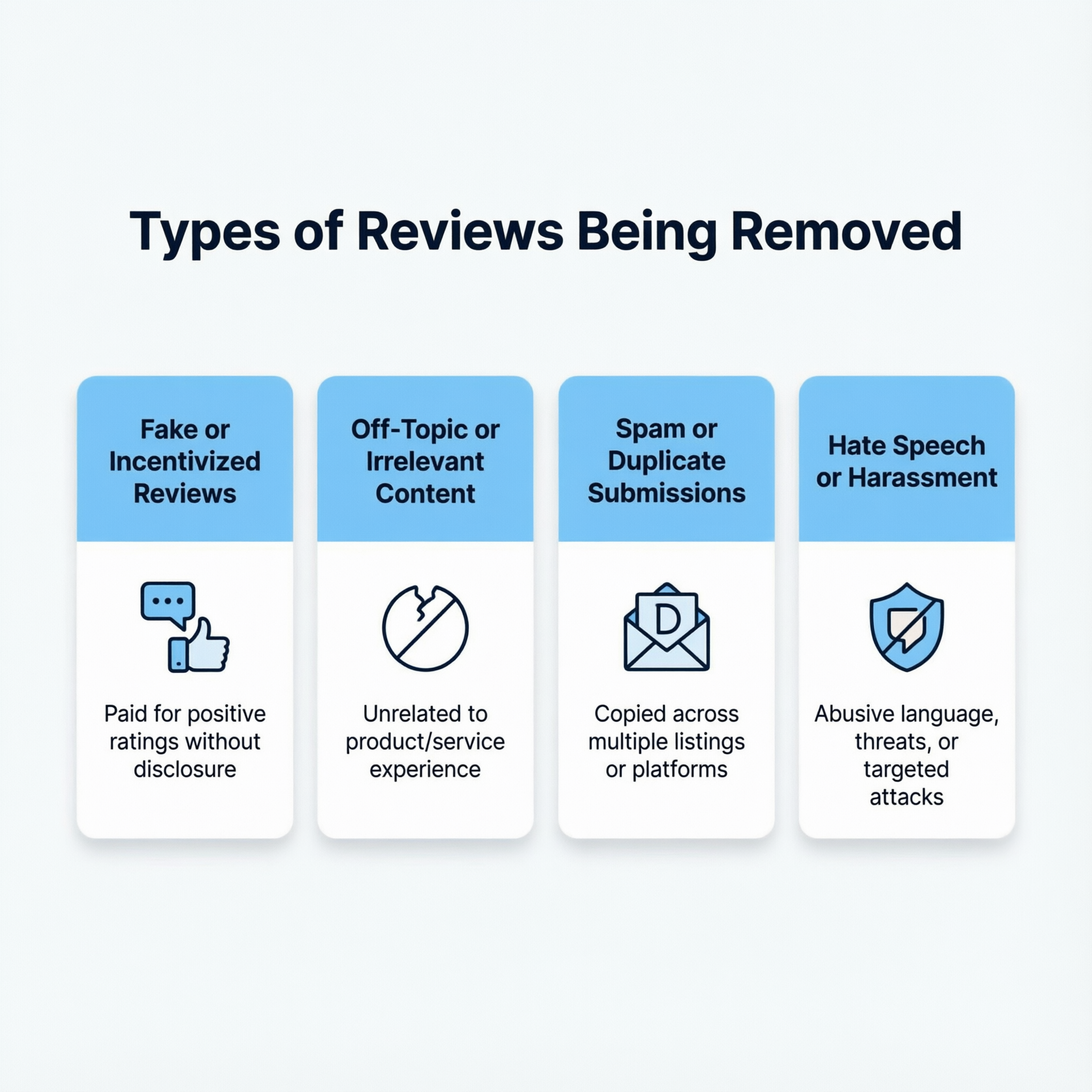
1. Fake or Manipulated Reviews
These are the primary targets of Amazon’s cleanup.
- Reviews written without actual product usage
- Paid reviews or those generated through third-party services
- Coordinated review campaigns designed to boost ratings
👉 Even well-written reviews can be removed if Amazon detects unnatural patterns behind them.
2. Incentivized Reviews (Direct or Indirect)
Amazon strictly prohibits reviews influenced by rewards. Reviews may be removed if:
- Customers received free products, discounts, or refunds in exchange
- Sellers offered incentives after purchase for positive feedback
- Messaging subtly encouraged only “happy customers” to leave reviews
Even if the review looks genuine, the intent behind it can lead to removal.
3. Reviews From Related or Connected Accounts
Amazon’s systems now track relationships between buyers and sellers. Removed reviews may include:
- Reviews from friends, family, or employees
- Accounts linked through shared IPs, devices, or behavior patterns
- Repeated reviews from the same network of users
👉 This prevents sellers from artificially inflating ratings through personal networks.
4. Duplicate or Repetitive Reviews
Reviews that appear copied or overly similar are flagged quickly.
- Same wording across multiple products
- Slightly modified versions of the same review
- Template-based or bulk-generated feedback
AI systems detect these patterns and remove them to maintain authenticity.
5. Irrelevant or Mismatched Product Reviews
With stricter variation rules, Amazon removes reviews that don’t match the exact product.
- Reviews referring to a different product version
- Feedback copied from unrelated listings
- Reviews that became irrelevant after product changes
👉 This ensures every review reflects the actual item being sold.
6. Suspicious Activity-Based Reviews
These are removed based on behavioral signals rather than content alone.
Examples include:
- Sudden spikes in reviews within a short time
- Reviews from accounts with unusual activity patterns
- High-frequency reviewers posting across unrelated categories
Even legitimate reviews can be removed if they are part of a suspicious pattern cluster.
7. Policy-Violating Content Reviews
Some reviews are removed simply because they break Amazon’s content rules.
- Offensive, abusive, or inappropriate language
- Promotional content or external links
- Personal information or irrelevant discussions
These reviews are removed to maintain a safe and professional platform environment.
Final Takeaway
The 2026 update shows that Amazon is focusing on review integrity over volume.
👉 If a review is:
- Not genuine
- Influenced or biased
- Behaviorally suspicious
…it is likely to be removed—regardless of how positive or helpful it may seem.
For sellers, the message is clear: Only authentic, compliant, and customer-driven reviews will survive in the new system.
Suspicious or Unverified Purchases
One of the most common reasons reviews are removed on Amazon is when they are linked to unverified or suspicious purchases. Amazon gives more weight to “Verified Purchase” reviews. If a review is:
- Not tied to a confirmed order
- Posted without a clear purchase history
- Linked to unusual buying behavior
…it may be flagged or removed.
👉 In 2026, Amazon’s systems are stricter than ever, often removing reviews that don’t meet authentic purchase validation standards.
Bulk Reviews From the Same IP or Location
Amazon now actively detects clusters of reviews coming from the same IP address or geographic location. This typically indicates:
- Coordinated review campaigns
- Use of review farms or bots
- Multiple accounts controlled by a single entity
Even if the reviews appear genuine, Amazon may remove them if they originate from:
- The same network
- Shared devices
- Identical behavioral patterns
👉 This prevents sellers from artificially boosting ratings using bulk or centralized review tactics.
Reviews With Manipulative Language Patterns
Advanced AI systems now analyze how reviews are written, not just who writes them.
Reviews may be removed if they contain:
- Repetitive or templated phrases
- Overly promotional or exaggerated claims
- Unnatural wording that doesn’t reflect real user experience
For example:
- “Best product ever!!! Must buy!!!” repeated across listings
- Similar sentence structures used in multiple reviews
👉 Amazon’s AI can detect these patterns instantly, removing reviews that appear scripted or manipulated.
Old Reviews With Low Relevance
Another surprising category is older reviews that are no longer relevant. Amazon may remove reviews if:
- The product has been significantly updated or changed
- The review refers to an outdated version or feature
- The listing has evolved into a different product over time
This ensures that customers only see feedback that reflects the current product experience, not something that no longer exists.
👉 In 2026, freshness and relevance are just as important as authenticity.
Final Insight
These categories show how deeply Amazon is analyzing reviews—not just for content, but for behavior, intent, and relevance.
👉 The takeaway: Reviews must be real, unique, purchase-backed, and current to survive in Amazon’s new ecosystem.
Impact on Sellers
The 2026 review update on Amazon is not just a policy shift—it’s a direct business impact event for sellers. Since reviews play a critical role in visibility and conversions, their sudden removal can disrupt almost every aspect of an Amazon business.
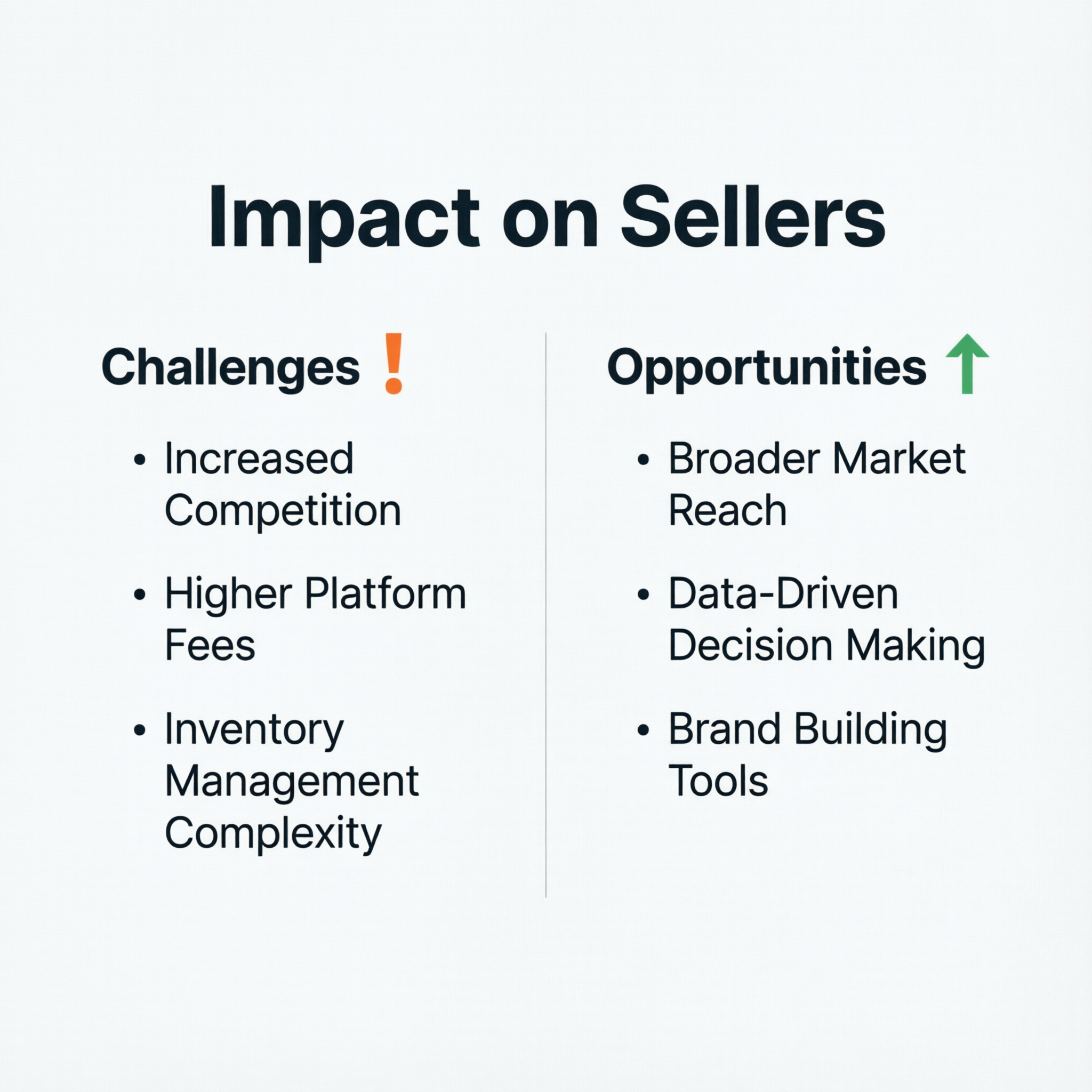
1. Sudden Drop in Product Ratings
When reviews disappear, the overall star rating often drops immediately.
- A product with 4.5⭐ may fall to 3.8⭐ overnight
- Fewer reviews reduce credibility and social proof
- New customers hesitate to trust the product
👉 Even a small drop in rating can significantly affect buying decisions.
2. Decline in Conversion Rates
Reviews are one of the biggest drivers of conversions on Amazon.
- Fewer reviews = lower trust
- Lower trust = fewer purchases
- Fewer purchases = declining sales
Products that once converted easily may now struggle to compete, especially in crowded categories.
3. Loss of Organic Ranking
Amazon’s algorithm heavily considers reviews for ranking.
- Products with fewer or lower-quality reviews drop in search results
- Competitors with stronger review profiles move ahead
- Visibility decreases, reducing organic traffic
👉 This creates a ripple effect where less visibility leads to even fewer sales.
4. Increased Advertising Costs
To compensate for lost organic traffic, sellers often turn to ads.
- Higher spending on Sponsored Products campaigns
- Lower ROI due to reduced conversion rates
- Increased competition for paid placements
👉 Sellers may need to spend more just to maintain the same sales level.
5. Reduced Customer Trust
Trust is everything in e-commerce.
- Buyers rely heavily on reviews before purchasing
- Missing or fewer reviews create doubt
- Products may appear less reliable compared to competitors
This directly impacts brand perception and long-term customer loyalty.
6. Difficulty Launching New Products
Many sellers previously relied on shared reviews or early momentum strategies. With the 2026 update:
- New products must build reviews from scratch
- No benefit from variation-based review sharing
- Slower growth and longer launch cycles
👉 This makes product launches more challenging and time-consuming.
7. Increased Risk of Account Scrutiny
Frequent review removals can signal risk to Amazon’s system.
- Accounts may face closer monitoring
- Past strategies may be re-evaluated
- Potential warnings or restrictions in severe cases
Even compliant sellers may feel pressure due to stricter enforcement.
Final Takeaway
The impact of this update on Amazon sellers is immediate and far-reaching.
👉 It shifts the game from:
- Review quantity → Review authenticity
- Short-term tactics → Long-term brand trust
Sellers who adapt quickly by focusing on genuine customer experience and ethical practices will survive—and eventually thrive—in this new environment.
Sudden Drop in Product Ratings
One of the most immediate impacts sellers are experiencing on Amazon is a sharp decline in product ratings. When reviews are removed:
- The total number of ratings decreases
- A few negative reviews carry more weight
- Overall star ratings drop quickly
👉 A product that once looked highly rated can suddenly appear average or even below standard, affecting customer perception instantly.
Loss of Social Proof and Conversion Rates
Reviews act as social proof, influencing whether a customer trusts a product enough to buy it. With fewer reviews:
- Customers feel less confident in their decision
- Click-through rates may drop
- Conversion rates decline significantly
👉 Even if your product is high quality, a lack of visible feedback can make it seem risky to buyers.
Increased Advertising Costs
To compensate for lost organic visibility, sellers are forced to rely more on paid advertising. This leads to:
- Higher spending on Amazon PPC campaigns
- Lower return on investment (ROI)
- Increased competition for ad placements
👉 Sellers may need to spend significantly more money just to maintain previous sales levels.
Impact on Small vs Large Sellers
The impact of this update is not equal—small and large sellers are affected differently on Amazon.
🔹 Small Sellers
- Heavily rely on a limited number of reviews
- Sudden removals can wipe out most of their credibility
- Struggle to compete without strong brand recognition
🔹 Large Sellers / Established Brands
- Have a larger pool of reviews, so the impact is diluted
- Benefit from existing brand trust and repeat customers
- Can afford higher ad spending to recover faster
👉 This creates a wider gap where big brands become more stable, while small sellers face greater challenges in surviving and scaling.
Final Insight
The 2026 update on Amazon has reshaped the competitive landscape. Success now depends less on accumulated reviews and more on:
- Consistent product quality
- Strong branding
- Ethical, long-term customer trust
For sellers, adapting quickly is no longer optional—it’s essential.
Impact on Buyers
The 2026 review update on Amazon doesn’t just affect sellers—it significantly changes the shopping experience for buyers as well. While some impacts create challenges, others ultimately improve trust and transparency.
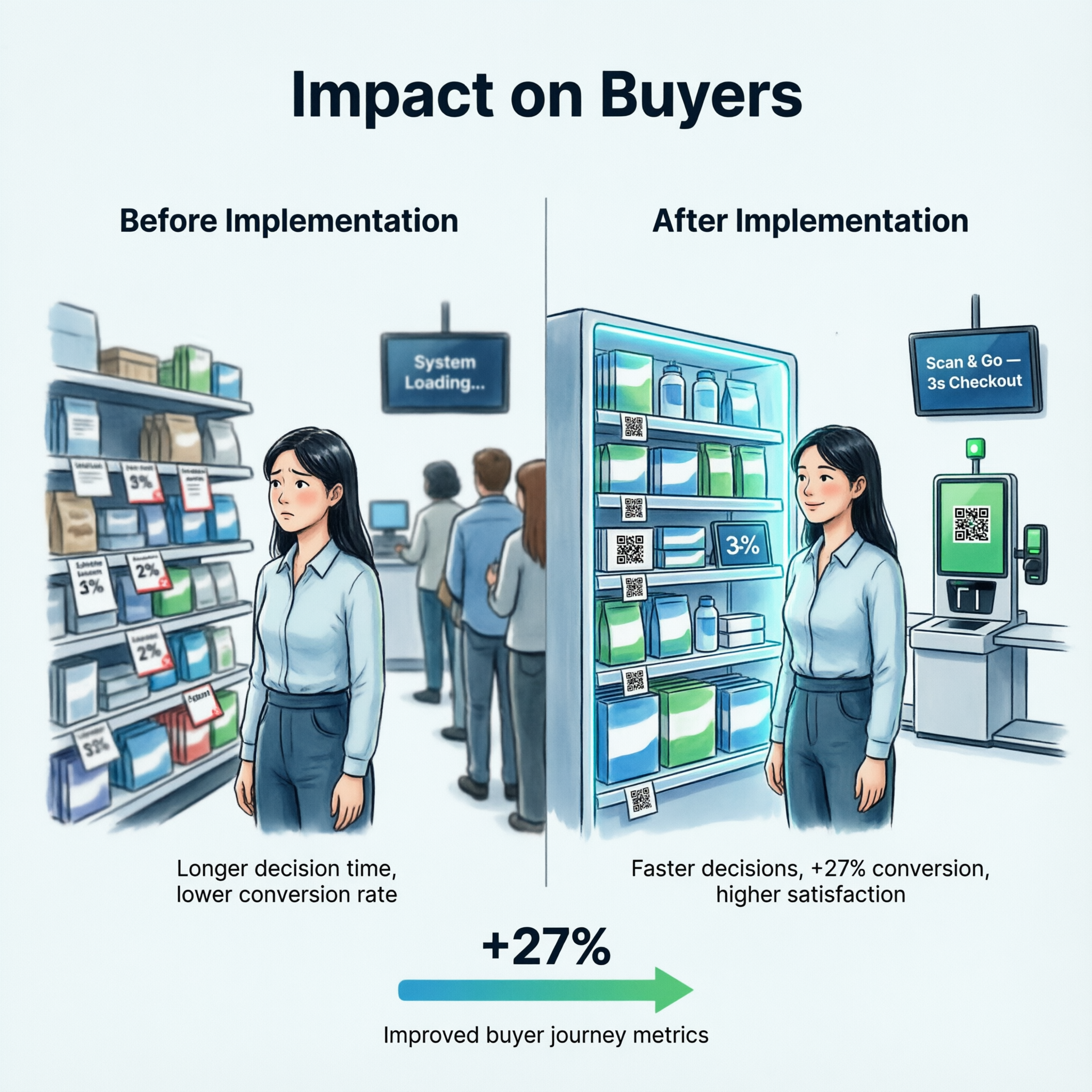
1. More Trustworthy Reviews
One of the biggest benefits for buyers is higher-quality, more reliable reviews.
- Fake and incentivized reviews are being removed
- Remaining reviews are more likely to reflect real experiences
- Less manipulation means more honest product insights
👉 Buyers can now make decisions based on authentic feedback rather than inflated ratings.
2. Reduced Review Quantity
While quality improves, the number of reviews often decreases.
- Products may show significantly fewer reviews
- New listings may have very limited feedback
- Popular products may lose thousands of past reviews
👉 This can make it harder for buyers to quickly judge a product’s reliability.
3. Increased Decision-Making Effort
With fewer reviews available, buyers need to analyze more carefully.
- Read individual reviews in detail instead of relying on volume
- Compare multiple products before purchasing
- Pay closer attention to product descriptions and images
👉 Shopping becomes more thoughtful, but also slightly more time-consuming.
4. Better Product-to-Review Accuracy
Amazon now ensures that reviews match the exact product being sold.
- No more misleading reviews from unrelated variations
- Feedback is specific to the current product version
- Buyers get a clearer understanding of what they’re purchasing
👉 This reduces confusion and improves purchase accuracy.
5. Increased Dependence on Verified Purchases
Buyers will start trusting “Verified Purchase” reviews more than ever.
- These reviews indicate real transactions
- Non-verified reviews may carry less weight or be removed
- Buyers may filter reviews based on authenticity signals
👉 Trust shifts from quantity of reviews → credibility of reviewers.
6. Potential Initial Confusion
In the short term, buyers may feel confused due to:
- Sudden drops in ratings or review counts
- Missing reviews they previously saw
- Inconsistent review histories across products
👉 However, as the system stabilizes, the experience becomes more transparent and reliable.
Final Takeaway
For buyers on Amazon, this update is a double-edged sword:
- ✔️ Pros: More honest, relevant, and trustworthy reviews
- ⚠️ Cons: Fewer reviews and slightly more effort in decision-making
👉 In the long run, the change creates a cleaner, more transparent shopping environment, helping buyers make smarter and more confident purchasing decisions.
Improved Trust in Product Listings
One of the most positive outcomes of the 2026 update on Amazon is the increase in trust across product listings.
With stricter review filtering:
- Only genuine and relevant reviews remain
- Feedback is tied to actual product experiences
- Misleading or exaggerated ratings are reduced
👉 Buyers can now rely more on what they see, making purchasing decisions with greater confidence.
Reduced Review Spam
Another major improvement is the significant reduction in review spam.
Previously, many listings were filled with:
- Repetitive or copy-paste reviews
- Bot-generated feedback
- Overly promotional or fake content
Now, Amazon’s AI systems actively remove such reviews, resulting in:
- Cleaner, more readable review sections
- Higher-quality insights from real users
- Less noise and distraction for buyers
👉 This makes it easier to identify truly helpful reviews.
Possible Confusion Due to Fewer Reviews
Despite the benefits, there is a short-term downside—fewer visible reviews can create confusion.
Buyers may notice:
- A sudden drop in review count
- Lower overall ratings than before
- Limited feedback on newer or updated products
This can lead to:
- Hesitation before purchasing
- More time spent comparing products
- Uncertainty about product quality
👉 While trust improves in the long run, buyers may initially feel unsure due to the reduced volume of reviews.
Final Insight
For buyers on Amazon, the 2026 update creates a more honest and transparent ecosystem, even if it requires a slight adjustment.
👉 The shift is clear: Less noise, more truth—even if it means fewer reviews to rely on.
Role of Artificial Intelligence in Review Moderation
Artificial Intelligence (AI) has become the core engine behind review moderation on Amazon in 2026. With millions of reviews being posted daily, manual moderation is no longer possible at scale. AI now ensures that reviews are authentic, relevant, and policy-compliant—often in real time.
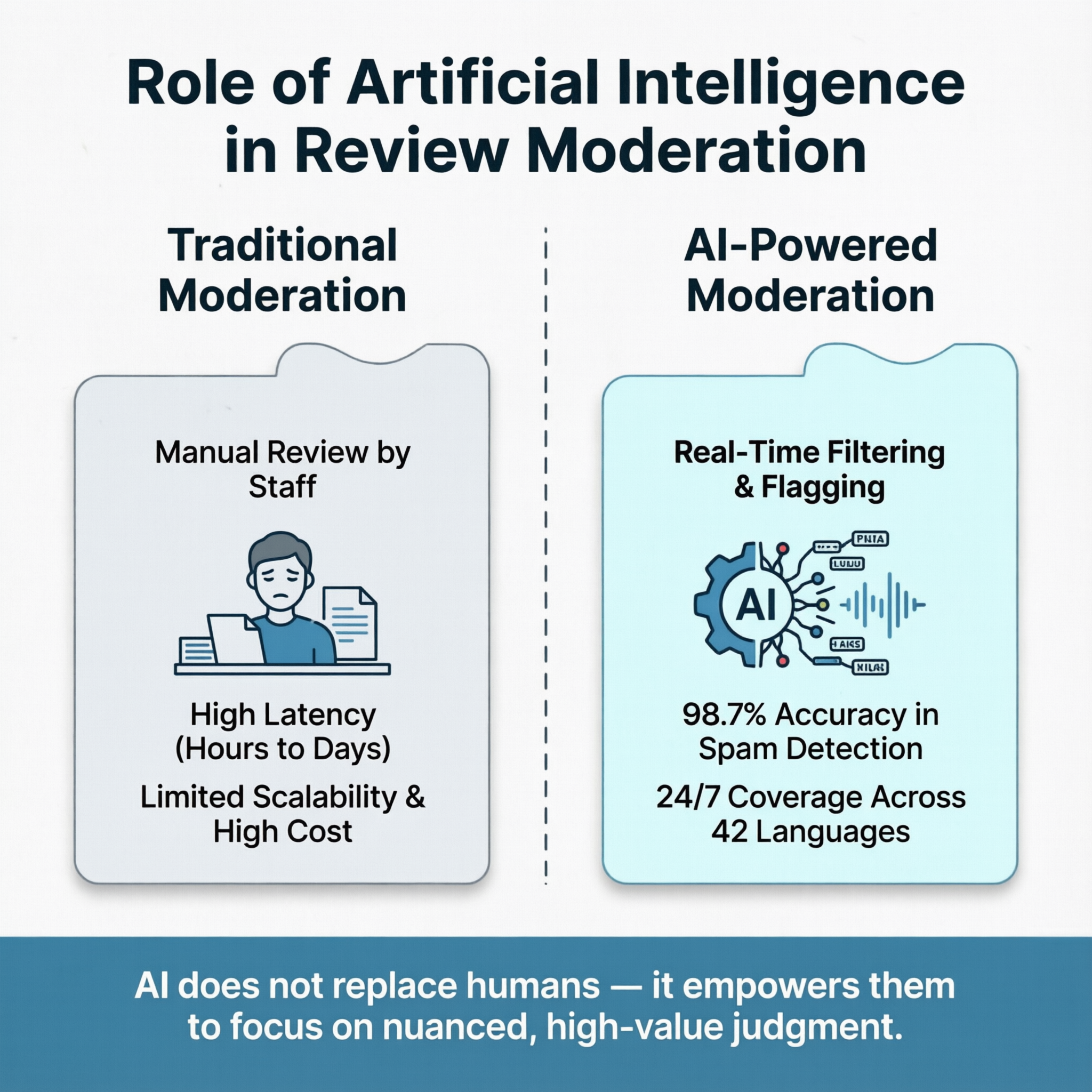
1. Detecting Fake and Manipulated Reviews
AI systems are trained to identify patterns that indicate fake or coordinated activity. They analyze:
- Unusual spikes in review submissions
- Reviewer behavior across multiple products
- Connections between accounts and sellers
👉 This allows Amazon to detect and remove large-scale manipulation attempts automatically.
2. Natural Language Processing (NLP) Analysis
AI uses Natural Language Processing (NLP) to understand how reviews are written. It can detect:
- Repetitive or templated phrases
- Overly promotional or unnatural language
- Sentiment inconsistencies
For example, if multiple reviews use similar wording like “best product ever,” they may be flagged as suspicious.
👉 This ensures reviews reflect genuine human experiences, not scripted content.
3. Behavioral Pattern Recognition
Beyond text, AI studies user behavior patterns. It looks at:
- Purchase history and review timing
- Frequency of reviews across categories
- Device, IP, and location signals
👉 Even if a review looks normal, it can be removed if the behavior behind it appears unnatural.
4. Real-Time Moderation and Removal
One of the biggest advancements in 2026 is real-time moderation.
- Reviews can be flagged and removed within minutes
- No need for manual reporting in most cases
- Continuous monitoring ensures ongoing compliance
👉 This explains why reviews seem to “disappear overnight.”
5. Continuous Learning and System Improvement
AI systems are constantly evolving.
- They learn from new data and emerging manipulation tactics
- Detection models are updated regularly
- Accuracy improves over time
👉 This makes it increasingly difficult for sellers to “game the system.”
6. Reducing Human Bias and Scaling Moderation
AI provides consistency that human moderation cannot match.
- Applies rules uniformly across millions of listings
- Eliminates subjective judgment
- Scales effortlessly with platform growth
👉 This ensures fair and standardized enforcement across Amazon.
Final Takeaway
Artificial Intelligence is no longer just a support tool—it is the decision-maker behind review visibility.
👉 In 2026, success on Amazon depends on aligning with AI-driven rules:
- Authentic customer experiences
- Natural review patterns
- Ethical business practices
Because in today’s system, AI sees everything—and filters accordingly.
How AI Detects Fake Reviews
On Amazon, AI doesn’t just read reviews—it analyzes behavior, language, and context simultaneously to detect fraud.
Key detection methods include:
- Behavioral Analysis: AI tracks reviewer activity—frequency, timing, and purchase history. Sudden spikes or unusual patterns raise red flags.
- Network Detection: It identifies hidden connections between accounts (shared IPs, devices, or activity clusters).
- Text & Sentiment Analysis: Using NLP, AI flags:
- Repetitive phrases
- Overly promotional tone
- Inconsistent sentiment (e.g., 5⭐ rating with negative text)
- Repetitive phrases
- Purchase Verification Signals: Reviews not linked to verified transactions are more likely to be removed.
👉 In simple terms, AI looks beyond the review itself and evaluates the entire ecosystem around it.
Machine Learning Models Behind the Scenes
Behind the scenes, Amazon uses a combination of advanced machine learning (ML) models to power its review moderation system.
Supervised Learning Models
- Trained on labeled datasets (fake vs real reviews)
- Learn patterns from past violations
- Continuously improve accuracy over time
Unsupervised Learning Models
- Detect anomalies without predefined labels
- Identify unusual behavior or review clusters
- Useful for catching new or evolving manipulation tactics
Deep Learning & Neural Networks
- Analyze complex relationships between:
- Review text
- User behavior
- Product data
- Review text
- Provide higher accuracy in large-scale detection
Ensemble Systems
- Combine multiple models for better decision-making
- Reduce errors by cross-validating results
👉 These systems work together to create a multi-layered defense against review manipulation.
Limitations and False Positives
While AI is powerful, it is not perfect. One of the biggest challenges in 2026 is false positives—when genuine reviews are mistakenly removed.
Common Limitations:
- Over-Detection of Patterns:
Legitimate reviews may be flagged if they resemble suspicious patterns (e.g., similar wording or timing). - Lack of Context Understanding:
AI may misinterpret sarcasm, cultural language differences, or unique writing styles. - Aggressive Filtering Systems:
To minimize fake reviews, Amazon sometimes errs on the side of caution—removing borderline cases. - Limited Transparency:
Sellers often don’t receive clear explanations for why reviews were removed.
👉 This can lead to frustration, especially when authentic customer feedback disappears without warning.
Final Insight
AI is the backbone of review moderation on Amazon—powerful, fast, and constantly evolving. But it comes with a trade-off:
👉 Higher accuracy in removing fake reviews
⚠️ Occasional removal of genuine ones
For sellers and buyers alike, understanding this balance is key to navigating the new Amazon ecosystem in 2026.
VIII. Verified vs Unverified Reviews: What Matters Now
In 2026, the difference between verified and unverified reviews has become more important than ever on Amazon. With stricter moderation and AI-driven filtering, not all reviews carry the same weight—and some may not survive at all.
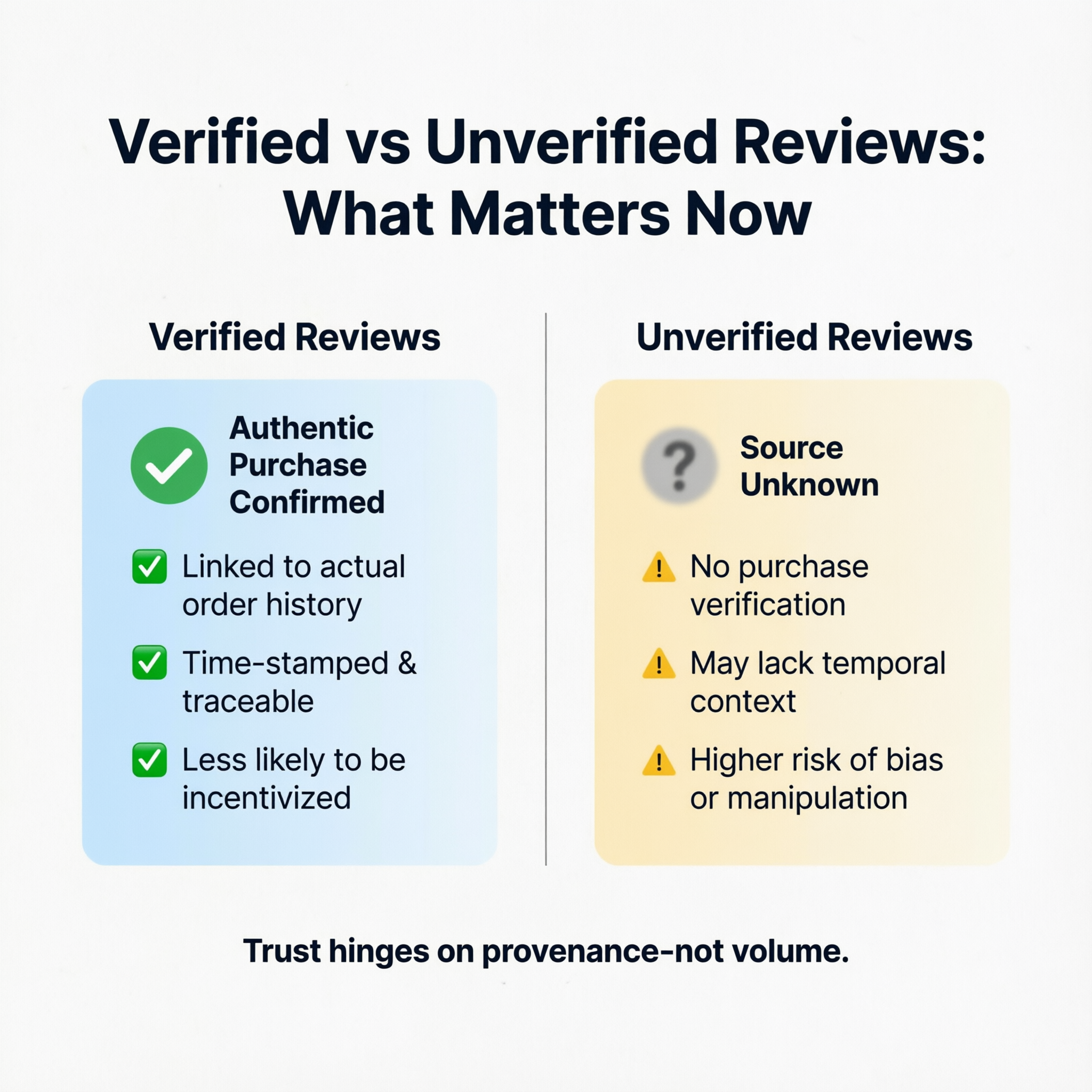
🔍 What Is a Verified Review?
A Verified Purchase review means the customer actually bought the product through Amazon.
Key Characteristics:
- Linked to a confirmed order
- Marked with a “Verified Purchase” badge
- Considered more trustworthy by both customers and Amazon’s algorithm
👉 These reviews are now the gold standard and are far less likely to be removed.
⚠️ What Is an Unverified Review?
An unverified review is posted without a confirmed purchase through Amazon.
Common Scenarios:
- Product bought outside Amazon
- Reviewer received the item through other means
- No clear purchase history linked to the review
👉 These reviews are now:
- Given less visibility and influence
- More likely to be flagged or removed by AI systems
📊 Why Verified Reviews Matter More in 2026
Amazon’s new system prioritizes authenticity and traceability.
Verified Reviews:
- Boost product rankings
- Improve conversion rates
- Build stronger customer trust
Unverified Reviews:
- Carry lower credibility
- May not impact rankings significantly
- Are at higher risk of deletion
👉 The shift is clear: Proof of purchase = proof of trust
⚖️ Impact on Sellers
For sellers on Amazon, this change requires a strategic shift:
- Focus on generating real customer purchases
- Avoid any tactics that produce unverified reviews
- Encourage honest feedback through compliant methods
👉 Sellers can no longer rely on volume—they must rely on authentic customer experiences.
🛒 Impact on Buyers
For buyers, this change improves decision-making:
- Verified reviews provide reliable product insights
- Less risk of being misled by fake feedback
- Easier to identify genuine user experiences
👉 Buyers are increasingly filtering reviews based on credibility, not just ratings.
🚀 Final Takeaway
On Amazon in 2026:
- ✔️ Verified reviews dominate trust and visibility
- ⚠️ Unverified reviews are fading in importance
👉 The new rule is simple: If it’s not verified, it’s not fully trusted.
Importance of Verified Purchase Badge
On Amazon, the Verified Purchase badge has become a critical trust signal in 2026. Why it matters:
- Confirms the reviewer actually bought the product
- Reduces the risk of fake or manipulated feedback
- Increases buyer confidence during decision-making
👉 For customers, a verified badge acts like proof of authenticity, making those reviews far more influential than others.
How Amazon Prioritizes Verified Reviews
Amazon’s algorithm now actively prioritizes verified reviews in multiple ways:
- Higher Visibility:
Verified reviews are more likely to appear at the top under “Top Reviews” - Greater Ranking Impact:
They influence product ranking, conversion rates, and search visibility more strongly - Lower Removal Risk:
Verified reviews are less likely to be flagged or deleted by AI systems - Helpfulness Weight:
They are more likely to receive “helpful” votes from other buyers
👉 In short, verified reviews are not just trusted—they are algorithmically favored across the platform.
Strategies to Increase Verified Reviews
To succeed on Amazon in 2026, sellers must focus on earning verified reviews ethically.
Delivering Excellent Product Experience
- High-quality products naturally generate positive feedback
- Accurate descriptions reduce customer dissatisfaction
Use Amazon’s “Request a Review” in Feature
- Built-in, policy-compliant way to ask customers for feedback
- Ensures requests are neutral and unbiased
Optimize Post-Purchase Communication
- Send polite follow-ups without pushing for positive reviews
- Focus on customer satisfaction, not ratings
Improve Packaging & Unboxing Experience
- A great first impression increases the likelihood of reviews
- Include simple, non-incentivized reminders
Provide Strong Customer Support
- Resolve issues quickly to turn unhappy buyers into satisfied reviewers
👉 The key is simple: Happy, genuine customers = more verified reviews.
Final Insight
In 2026, success on Amazon depends heavily on verified credibility.
👉 The formula is clear:
- Build trust
- Deliver value
- Earn real reviews
Because today, verified reviews aren’t just important—they define your success.